

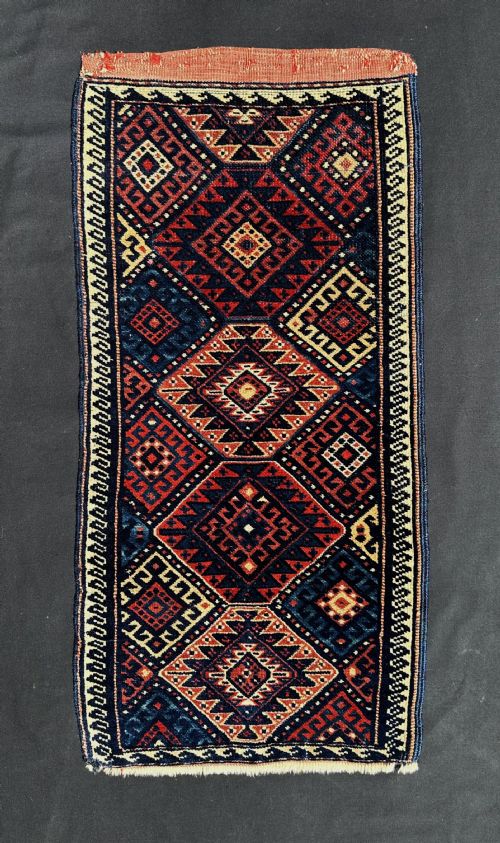


Persian Cushion Face
These persian cushion face pieces are woven tribal bag fronts and pillows brought down from nomadic life to enrich modern seating.
Persian Cushion Face
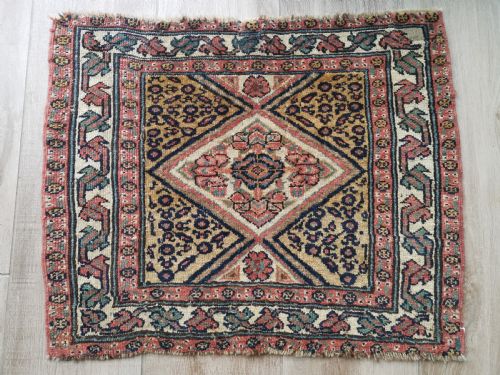
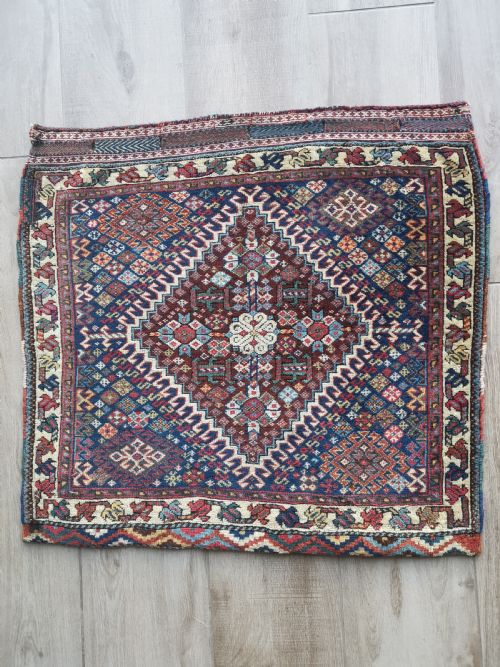
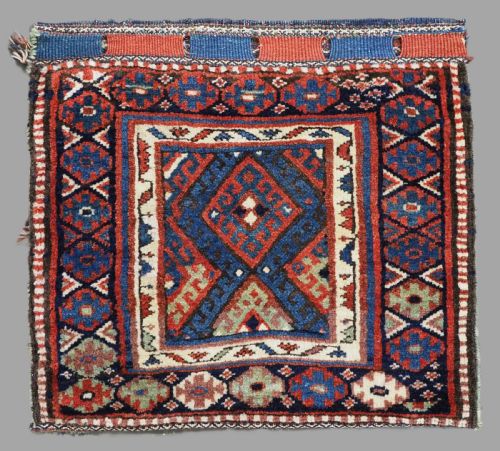
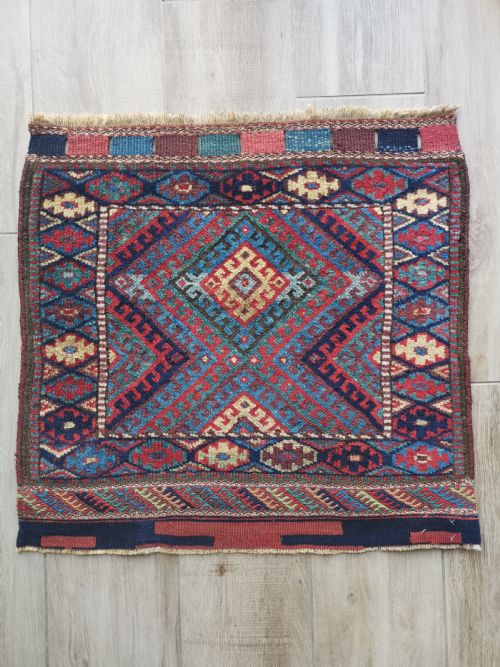
A persian cushion face brings together centuries of nomadic textile tradition in the form of repurposed saddlebags, storage sacks, and pillow faces. These items originate from various tribal groups across Persia, including the Qashqai, Afshar, Shahsavan, Kurdish, and Baluch peoples. Each piece represents a functional utility object from daily tribal life, adapted over time into decorative cushions and textile art.
The objects on this page span the late nineteenth century and the early twentieth century, encompassing periods from eighteen seventy to nineteen twenty. Buyers encounter complete bags with original plain weave backs alongside half-saddlebags and individual bag faces mounted as cushions. The regional origins range from the Khorassan province in the north-east to Fars in the south-west and Kerman in the south.
Tribal weaving styles dominate this selection, showing distinctive regional patterns associated with specific nomadic confederations and tribal groups. Pieces take the form of square pillow covers, bag fronts, and wheat sacks known as tacheh. Their enduring appeal lies in the combination of rustic tribal geometry and the soft textures of traditional wool.
What Varies in Quality
Quality in these tribal textiles rests upon the density of the weave, the clarity of the tribal motifs, and the condition of the wool. Pieces featuring luminous, lustrous wool and well-preserved natural dye variations stand apart from simpler or more heavily restored examples. The presence of complete original backs and intact side cords adds distinct merit to individual bags.
Artistic expression within the design, such as complex bird, dragon, or boteh motifs, elevates specific pieces above standard utility items. The precision of the soumak technique or the fineness of the knotting reflects the skill of the individual tribal weaver. Uniformity in wool preparation and the stability of the foundation fabric further determine the standing of each textile.
Current listings feature materials including hand-spun wool, cotton, and natural vegetable dyes across pieces dated from eighteen seventy to nineteen twenty.
The Persian Cushion Face Glossary
- Soumak
- A flatweave technique involving coloured supplementary weft threads wrapped around the warp to create a textured, durable surface. This method appears frequently on Shahsavan bag faces.
- Balisht
- A traditional Persian term for a pillow or cushion, often applied to small sleeping or resting bags produced by nomadic tribes. These pieces were filled and used inside tribal tents.
- Boteh
- An ancient almond-shaped or paisley motif representing a floral shoot or cypress tree, symbolising life and eternity. It recurs across Afshar and other tribal bag faces.
- Khorjin
- The Persian designation for a double saddlebag used by nomads for transport on horses, camels, or donkeys. Many surviving cushions derive from the separated faces of these bags.
- Tacheh
- A large tribal storage sack or wheat-sack utilised for grain and household goods by Luri-Bakhtiari and other western Persian groups. They display robust utility weaves and banded designs.
Persian Cushion Face: Frequently Asked Questions
How do I identify tribal styles?
Tribal styles are identified by specific geometric motifs, colour combinations, and weaving structures characteristic of particular nomadic confederations.
Regions such as Fars, Khorassan, and Azerbaijan each produced distinct patterns associated with groups like the Qashqai, Afshar, and Shahsavan.
Are these pieces authentic antiques?
The listings on this page comprise genuine antique textiles dating from the nineteenth and early twentieth centuries.
They feature hand-spun wool and traditional natural dyes typical of the nomadic production methods of that era.
How do I care for a tribal cushion?
Care for these antique wool textiles requires gentle handling, regular airing, and professional specialist cleaning when necessary.
Avoiding direct, harsh sunlight helps preserve the natural vegetable dyes found in the wool and flatweave structures.