



Antique Baluch Mat
An antique baluch mat brings the rich tribal weaving traditions of the borderlands between Persia and Afghanistan straight onto your floor.
Antique Baluch Mat
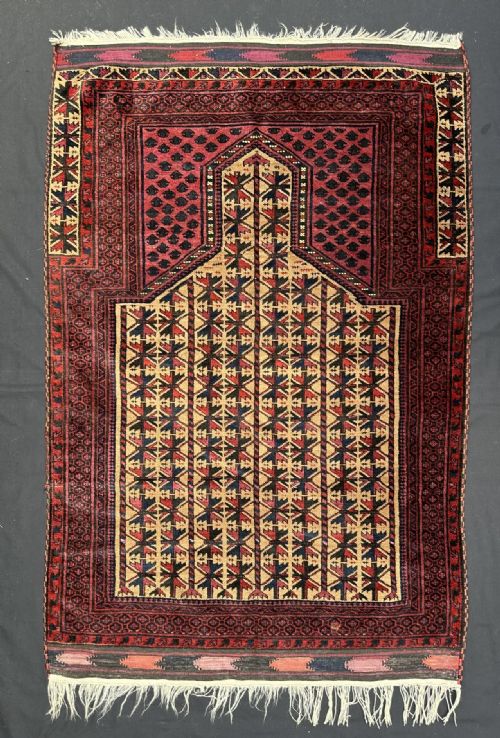
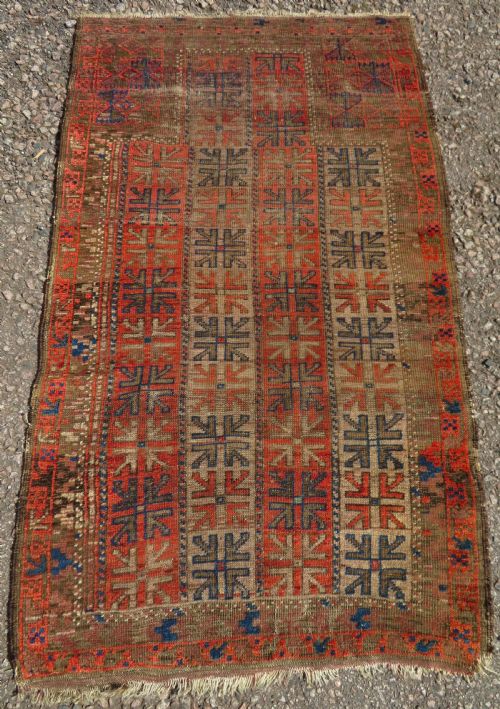
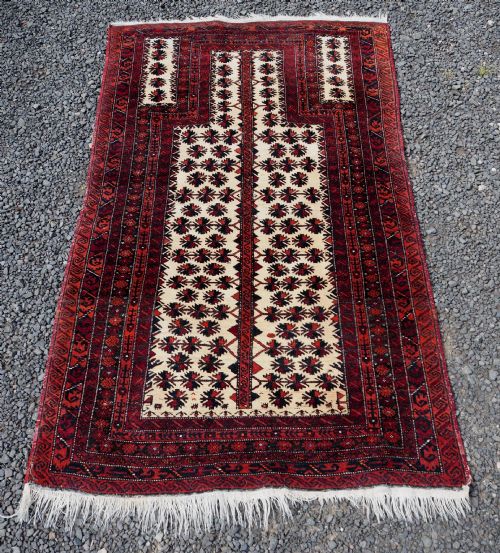
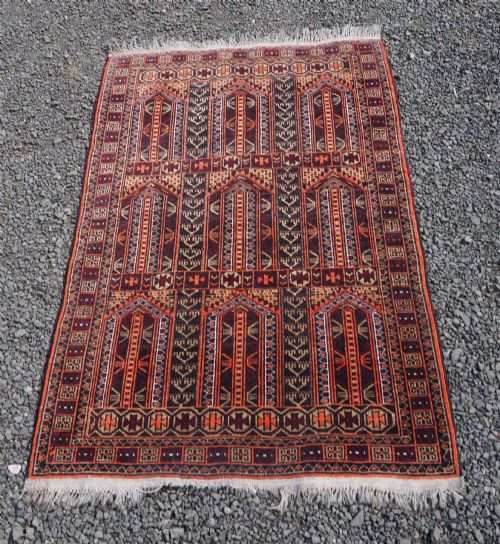
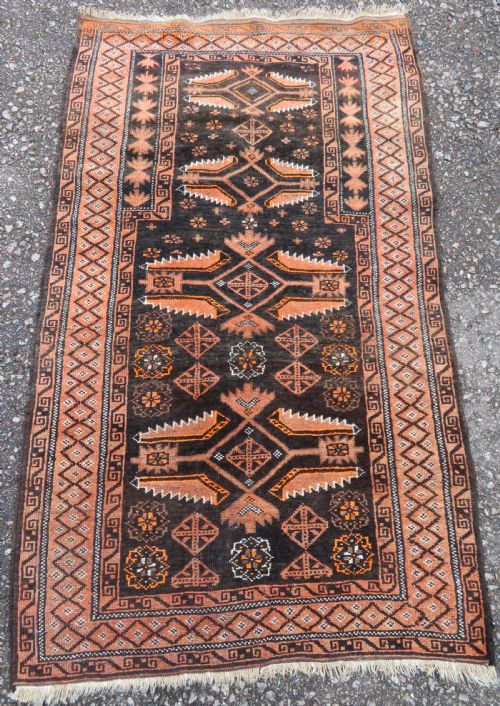
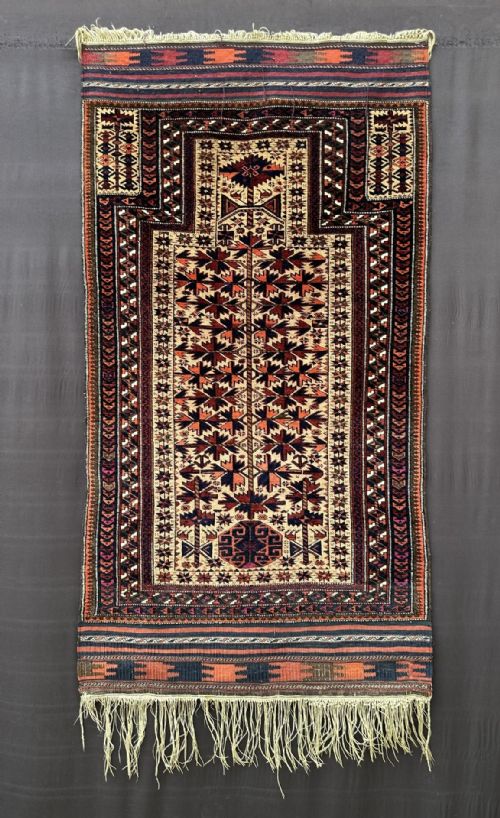
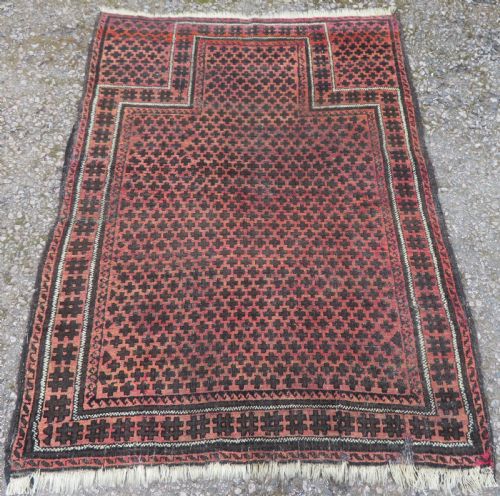
An antique baluch mat represents the portable weaving heritage of nomadic and village groups inhabiting the borderlands of north-east Persia and north-west Afghanistan. These floor coverings and small textiles served practical functions within tent or village life, often taking the form of prayer rugs featuring distinctive mihrab arches.
The format most commonly encountered on this page is the smaller rug or prayer mat, frequently displaying formats such as the seh mihrab or double mihrab design. Specific tribal subgroups, including the Timuri, Taimani, and Salar Khani, produced these distinctive formats during the late nineteenth and early twentieth centuries.
Makers utilised traditional patterns reflecting their specific regional heritage, incorporating motifs like the tree of life, lotus leaf, and shrub designs. These textiles connect the modern interior directly with nineteenth-century nomadic artistry from regions like Khorasan and Ferdows.
What varies in quality
The fineness of the knotting and the complexity of the tribal design distinguish superior examples from standard village pieces. Well-executed pieces display crisp geometry in motifs like the gul, tree of life, or repeated leaf patterns.
The choice of materials also influences the standard of the piece, particularly where soft camel wool or exceptionally rich natural dyes remain well preserved. The balance of the colour palette and the clarity of uncommon mihrab structures mark out the most accomplished weaving.
Materials recorded across the inventory include wool, cotton, natural dyes, camel hair, and goat hair.
The Antique Baluch Mat Glossary
- Mihrab
- A niche design symbolising the direction of prayer, frequently appearing in multiple arches on these prayer rugs.
- Gul
- A medallion motif often octagonal in shape, used repeatedly across tribal rugs to identify specific groups.
- Sofre
- A flat-woven dining or spreading cloth utilised by nomadic communities for communal meals.
- Pushti
- A small rug or mat designed for smaller spaces or specific functional placement within a dwelling.
- Dokhtar-e-qazi
- A traditional tribal design attribution associated with specific weaving groups in the borderlands.
Antique Baluch Mat: Frequently Asked Questions
What is a baluch mat?
A baluch mat is a small hand-woven textile created by nomadic and village tribes originating from the borderlands of Persia and Afghanistan. These pieces were traditionally utilised for daily domestic life and prayer.
Most surviving examples date from the late nineteenth and early twentieth centuries. They are recognised by their deep natural colour palettes and distinct tribal iconography.
How were these rugs used?
Nomadic weavers used these small formats as portable floor coverings, sitting mats, and dedicated prayer rugs within tents and village homes. Specific variations like saddle bag faces served functional transport needs.
Their compact size made them easy to roll up and move during seasonal migrations. Today, collectors typically place them as accent rugs in light-traffic areas.
How do I care for an antique rug?
Living with these textiles requires gentle maintenance, primarily consisting of careful, regular suction vacuuming without a rotating brush. Keeping them out of direct sunlight preserves the natural dyes used in the wool.
Professional cleaning suited to antique textiles ensures the wool and cotton foundations remain stable. Treating them with the same care as other historical fabrics guarantees longevity.
How do I identify tribal variations?
Identifying specific tribal origins involves examining structural details such as the border designs, knotting density, and specific motifs like the seh mihrab or tree of life. Different groups like the Timuri or Taimani utilised distinct pattern vocabularies.
Comparing the secondary colours and wool preparation also provides clues to regional production within the Khorasan and borderland areas.