
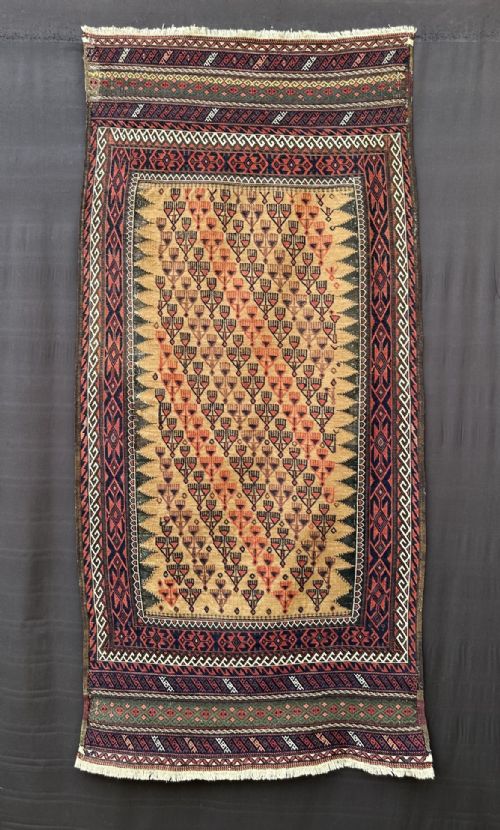
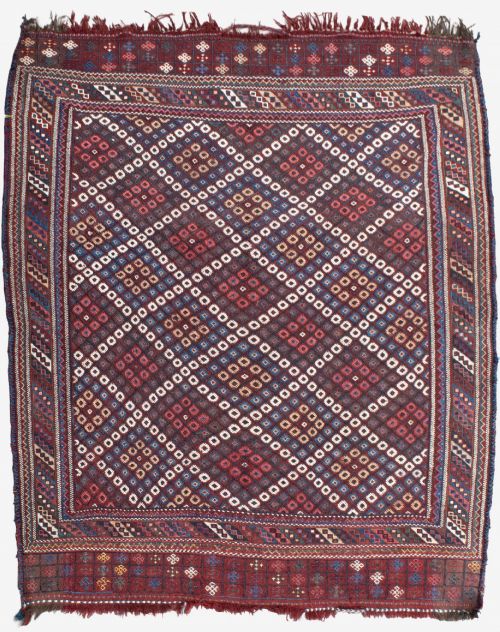


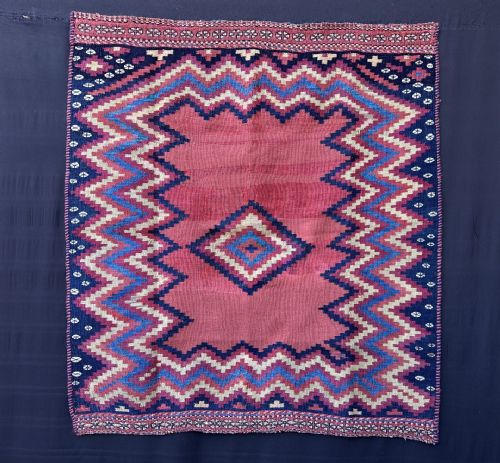


Persian Bread Sofreh
These Persian bread sofreh textiles are tribal flatweaves made for daily sustenance and communal dining, offering an authentic piece of nomadic heritage for your interior.
Persian Bread Sofreh
A persian bread sofreh is a flatweave textile traditionally utilised by nomadic and tribal groups across Persia as a cloth for eating or preparing bread. The pieces available here span from the late nineteenth century through to the early decades of the twentieth century, originating from regions such as Kerman, Luristan, and the borderlands of Persia and Afghanistan.
You will encounter various tribal attributions among these flatweaves, including Afshar nomads, Luri-Bakhtiari tribes, Timuri Sangtshuli, and Djhan Beghi makers. Most examples function as utility cloths woven in flatweave or kilim techniques, occasionally doubling as wall hangings or dining covers.
The forms range from square or rectangular eating cloths to elongated flatweave rugs. Each item carries the distinct regional aesthetic of its specific tribal origin, reflecting the domestic and nomadic life of Persian weavers from the eighteen-seventies to nineteen-twenty.
What varies in quality
The distinction between ordinary and exceptional examples rests in the crispness of the tribal design and the handling of natural dyes. Pieces with richer colour saturation and more complex geometric arrangements demonstrate superior mastery by the individual weaver.
Structural integrity and the fineness of the flatweave execution also separate standard utility items from finer works. Tighter weaves and better-preserved wool or camel hair foundations reflect the original skill poured into the textile.
The listings span production dates from eighteen-seventy to nineteen-twenty, featuring wool, cotton, camel hair, and natural dyes.
The Persian Bread Sofreh Glossary
- Sofreh
- A spread or cloth used for meals or bread preparation. These flatweaves served practical functions in nomadic households before entering the collector market.
- Kilim
- A tapestry-woven carpet or flatweave lacking a pile. This technique creates a smooth, reversible textile ideal for utility cloths.
- Flatweave
- A textile produced by interchaining warp and weft threads without knotting tufts. Sofreh examples rely entirely on this method.
- Natural Dyes
- Colourants derived from plants, insects, and minerals rather than synthetic formulas. They yield the characteristic rich tones seen in nineteenth-century Persian pieces.
- Camel Hair
- Fibres taken from camels, utilised in tribal weaving for undyed brown or golden shades. It adds durability and a distinct texture to the textile.
Persian Bread Sofreh: Frequently Asked Questions
What is a persian bread sofreh?
A persian bread sofreh is a traditional flatweave textile made by nomadic and tribal groups in Persia. These cloths were used domestically for preparing, serving, and wrapping bread during communal meals.
Over time, collectors have come to value them for their striking geometric patterns and authentic tribal origins. They function well today as wall hangings or decorative flatweave rugs.
How were these cloths used?
Nomadic families spread these flatweaves on the ground or low tables to contain food and catch crumbs during meals. They also served to wrap and protect freshly baked bread.
Because they were made for daily domestic service, their survival reflects the durable wool and cotton materials used by the weavers. Today, owners typically display them on walls or floors.
How do I date these textiles?
Dating relies on stylistic analysis, structural characteristics, and the specific natural dye palettes typical of nineteenth and early twentieth-century weaving. Pieces from the eighteen-seventies through to nineteen-twenty often exhibit distinct regional traits linked to specific tribes like the Afshar or Luri-Bakhtiari.
Examining the wear patterns and wool quality also helps establish the approximate age of each piece. Comparing tribal motifs to documented historical examples narrows down the production period further.
How do I care for a sofreh rug?
Keep these antique flatweaves out of direct sunlight to protect the natural dyes from fading over time. Gentle vacuuming without a beater bar removes surface dust safely.
Professional textile cleaners should handle any deeper maintenance or washing requirements. Avoid folding them along the same crease repeatedly to preserve the wool and cotton foundation.