
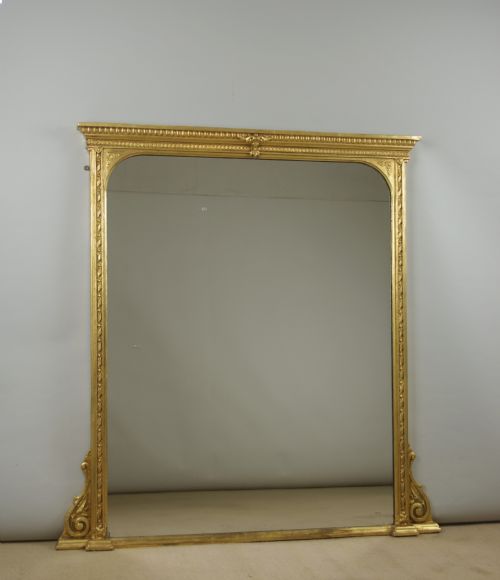

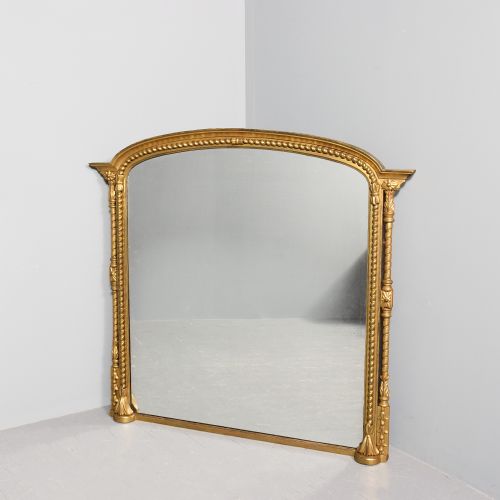

Period Overmantel Wall Mirror
A period overmantel wall mirror commands attention above a fireplace, uniting the proportions of a room with reflected light.
Period Overmantel Wall Mirror
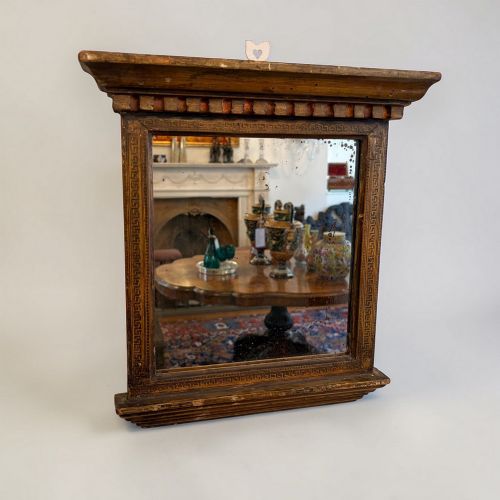
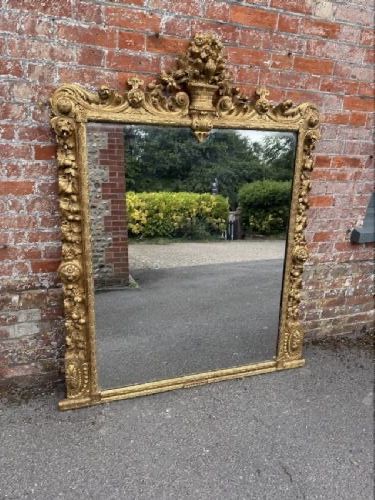
A period overmantel wall mirror is a large reflector designed to hang specifically above a mantelpiece, anchoring the hearth within historical interiors. These pieces appear frequently in nineteenth-century and Regency incarnations, shaped to balance the width of a chimney breast.
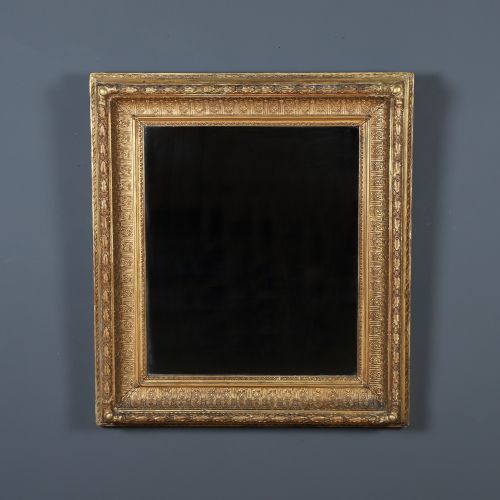
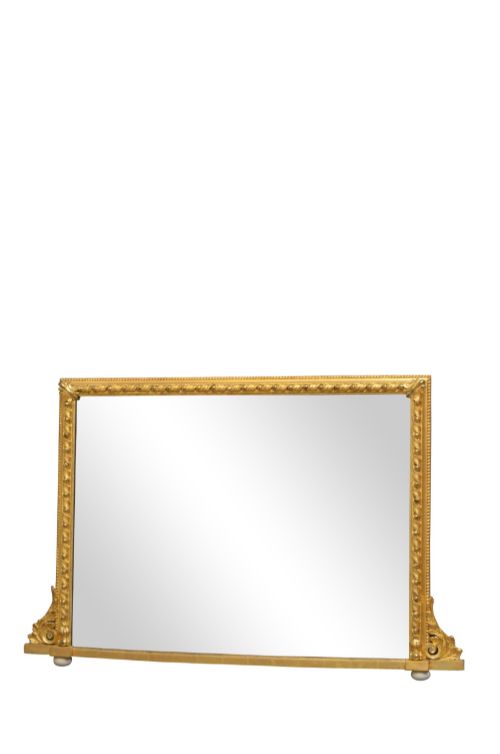
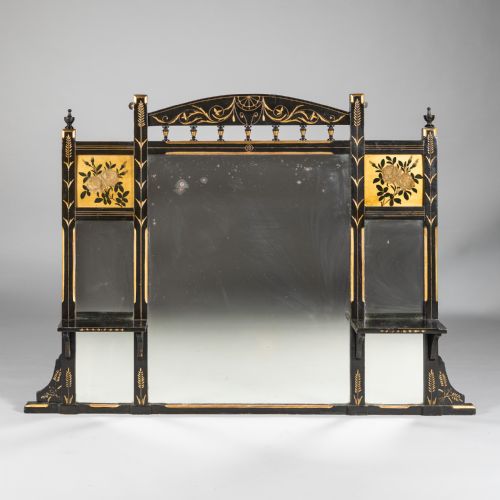
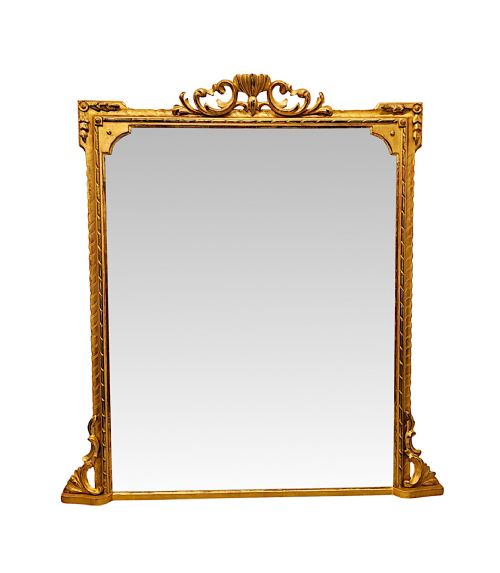
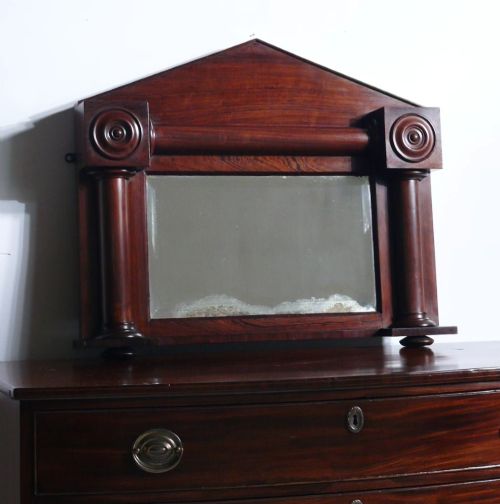
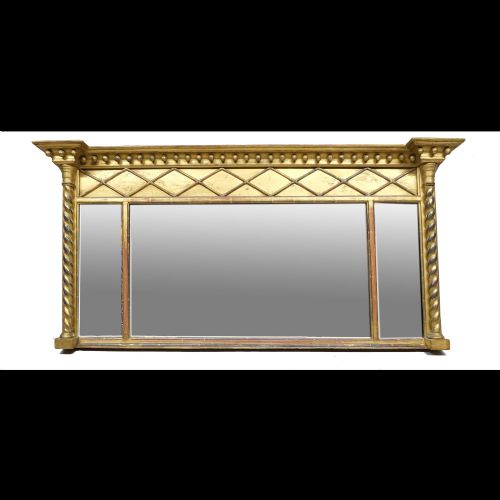
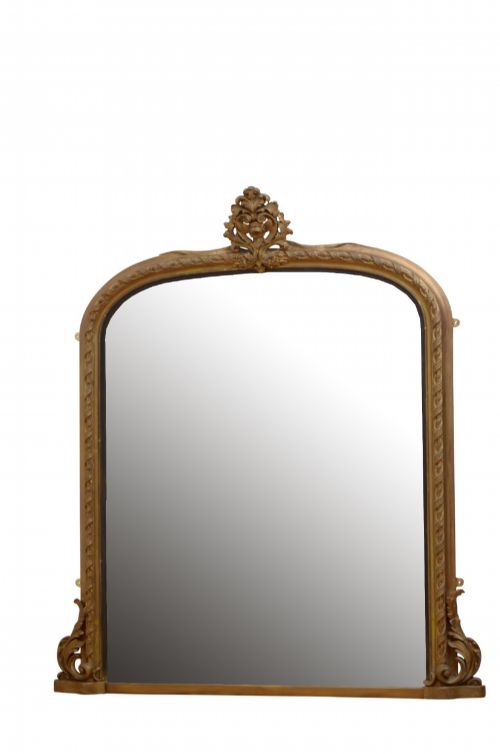
The selection here encompasses substantial giltwood frames alongside restrained ebonised wood and painted versions. Makers historically tailored these mirrors to reflect candlelight and brighten dark parlours, utilising generous proportions that dominate a wall.
How they were made
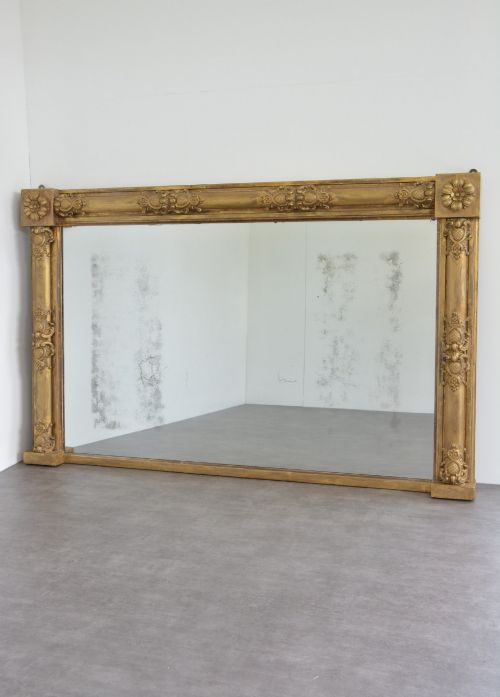
Craftsmen built these frames using carved wood, gesso, and applied gold leaf to achieve brilliant metallic surfaces. Elaborate ornamentation relied on moulded plaster relief details fixed to wooden carcases.
Mirrors deployed single or multiple glass plates, sometimes incorporating original foxed surfaces that show natural ageing. Ebonised finishes and parcel-gilding provided contrasting dark tones popular during the Victorian era.
Listings span the eighteenth, nineteenth, and early twentieth centuries, featuring Regency, Victorian, and French Rococo styles.
What varies in quality
The depth and crispness of the wood carving dictate the visual weight of the frame, separating mass-produced mouldings from bespoke craftsmanship. Superior examples display finely rendered motifs such as laurel wreaths and relief panels rather than simple cast plaster.
The integrity of the original mirror plate influences the character, where surviving foxing adds authentic depth without obscuring reflection. Construction methods visible on the reverse, including period wooden backs, reveal the original joinery intact.
The Period Overmantel Wall Mirror Glossary
- Overmantel
- A large mirror or painting specifically proportioned to hang above a mantelpiece. These pieces visually extend the height of the fireplace.
- Gesso
- A plaster mixture applied to wood frames to create a smooth surface for gilding. Carvers cut intricate details directly into this layered preparation.
- Trumeau
- A decorative wall mirror incorporating a painted panel or oil painting above the glass plate. Originating in France, these pieces served as architectural wall decorations.
- Pier mirror
- A tall narrow mirror designed to hang on the wall space between windows. They frequently match the style of contemporary overmantels.
- Foxed glass
- Mirror plate showing mottled dark spots caused by the degradation of the silver backing over time. Collectors prize this aged characteristic for authenticity.
Period Overmantel Wall Mirror: Frequently Asked Questions
Where should an overmantel mirror hang?
These mirrors traditionally mount directly above a fireplace mantelpiece to reflect light across the room. Their scale requires secure fixing to substantial wall anchors.
They also function effectively on large principal walls within reception rooms, replacing artwork as a focal point.
How do I identify a Regency overmantel?
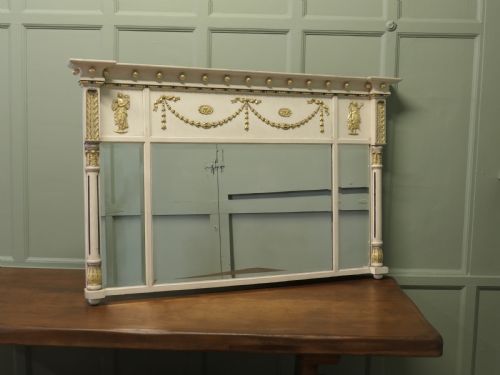
Regency examples often feature classical motifs such as laurel wreaths, reeded frames, and architectural pediments. The influence of French taste appears in distinct decorative panels.
Proportions tend to emphasise horizontal width with tripartite mirror plates divided by slender margins.
What is foxed glass?
Foxed glass refers to the natural ageing of the reflective silver backing, creating charming mottled dark patches. This characteristic develops over decades of exposure to ambient conditions.
Original foxed plates confirm the historical authenticity of the mirror frame.
How do Victorian mirrors differ from Georgian ones?
Victorian overmantels frequently embrace heavier proportions and darker finishes, including ebonised wood and parcel-gilding. Aesthetic movement and Rococo revival styles dominate this later period.
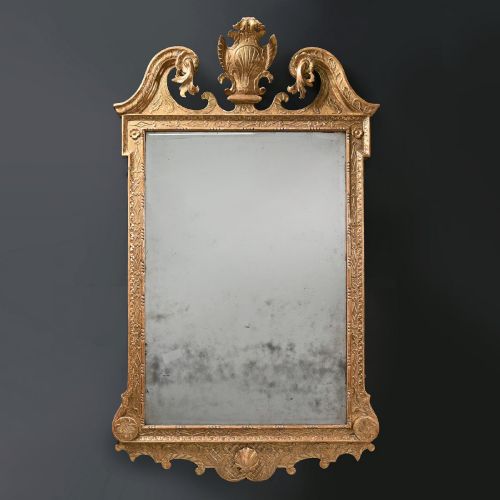
Georgian and George II examples rely on crisp carved gesso and giltwood with lighter, more restrained architectural lines.