

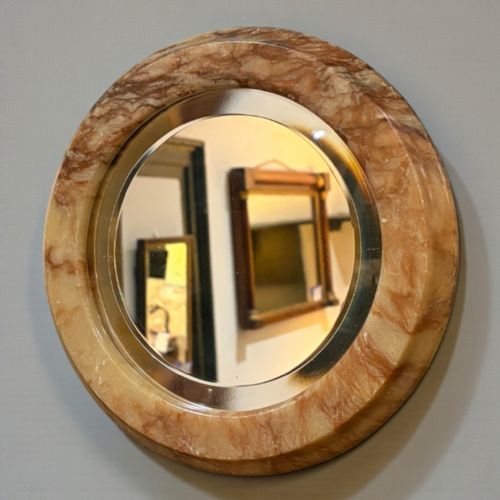
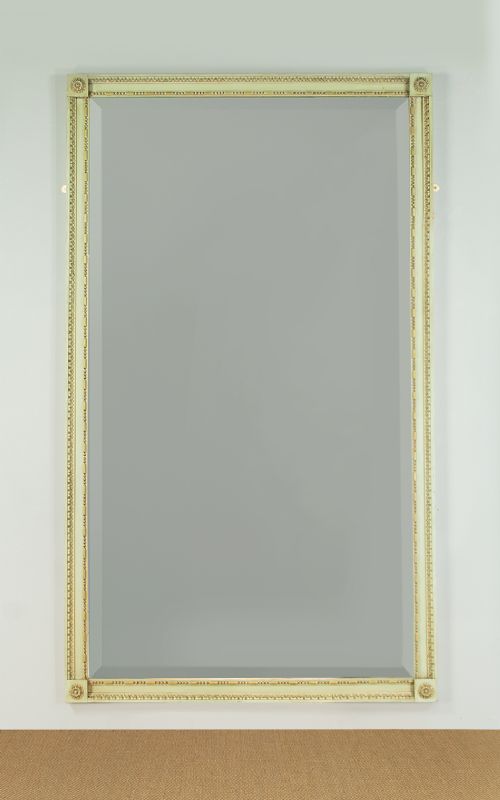
Cream Wall Mirror
When you search for a cream wall mirror, you find pale, painted frames that bring light and soft definition to a room.
Cream Wall Mirror
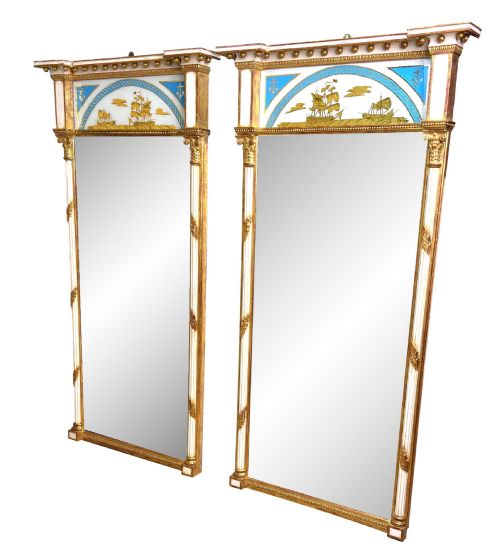
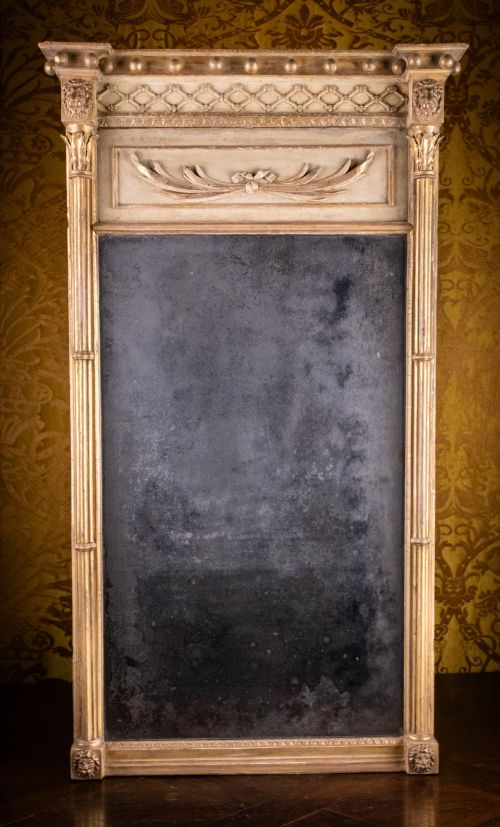
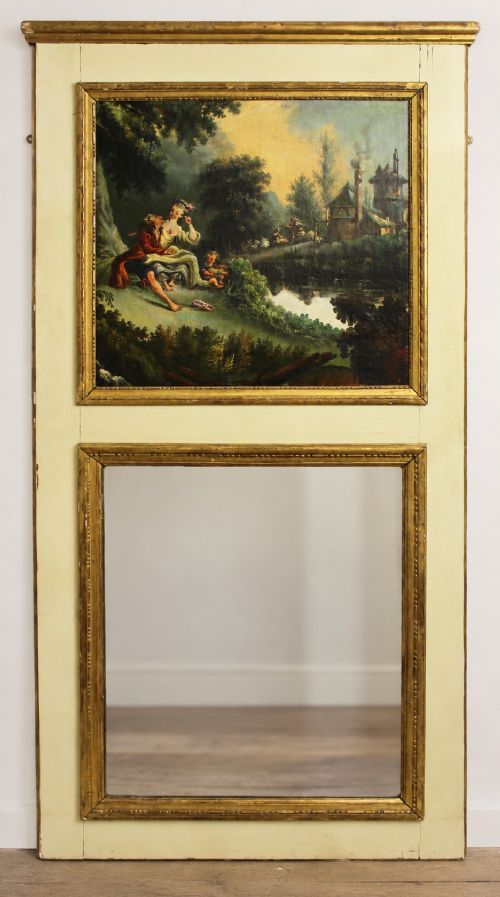
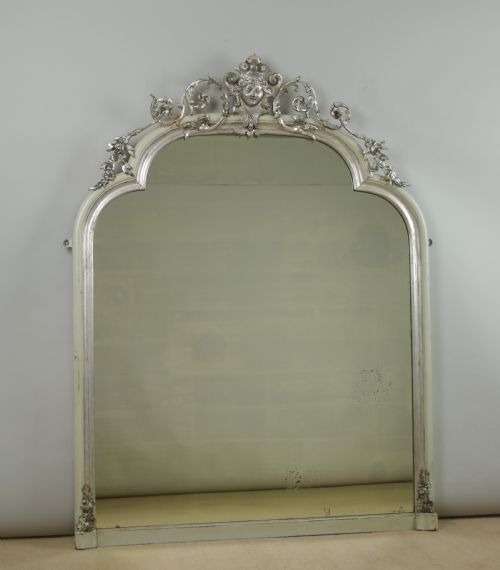
A cream wall mirror typically takes the form of a tall overmantel, an arched French trumeau, or a simpler round or oval pier glass. These pieces span from the eighteenth century through the nineteenth century and into the early decades of the twentieth.
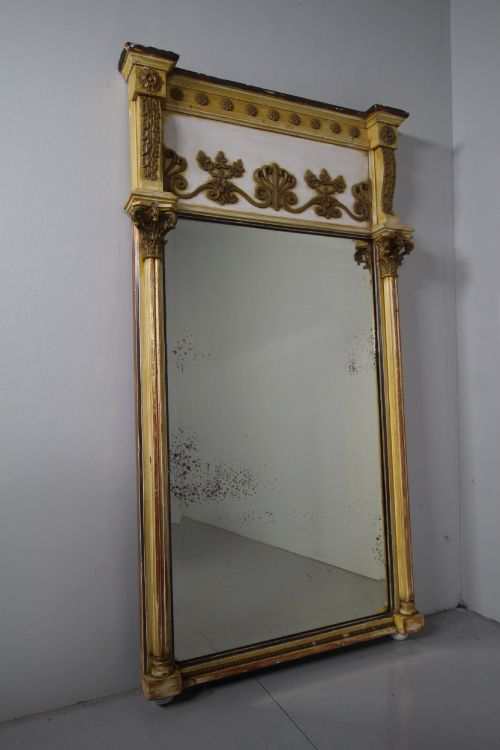
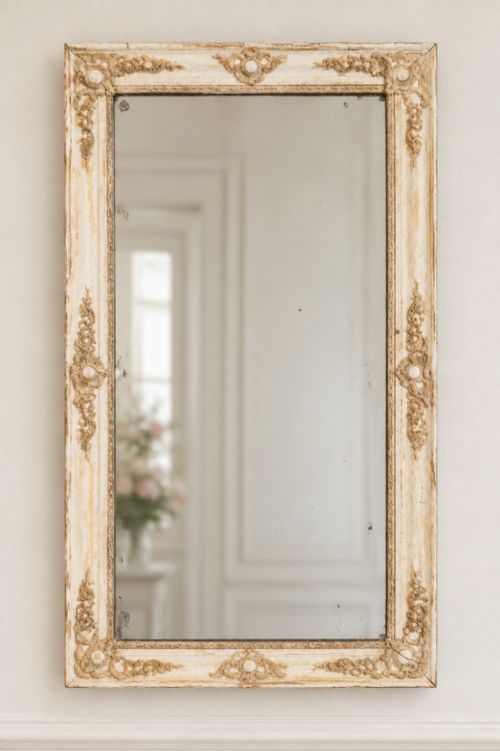
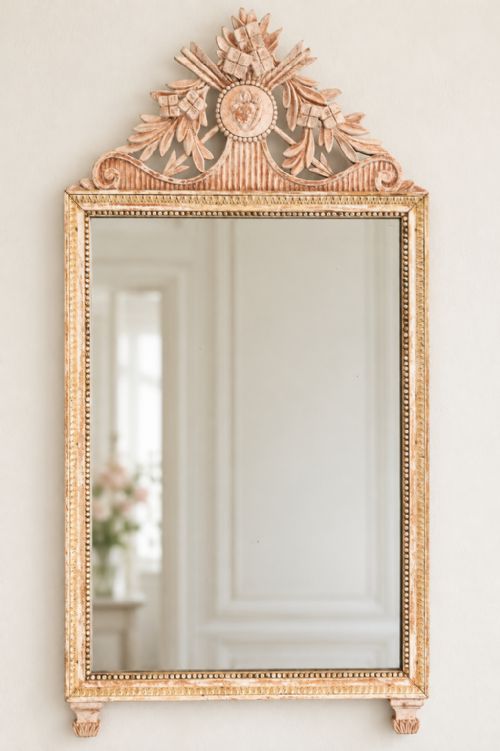
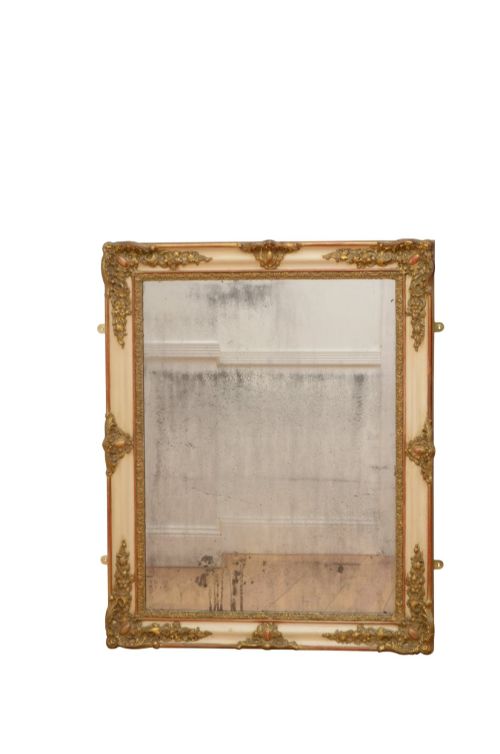
The most common examples on this page are nineteenth-century French mirrors finished in cream paint alongside gilt highlights or exposed red gesso beneath distressed surfaces.
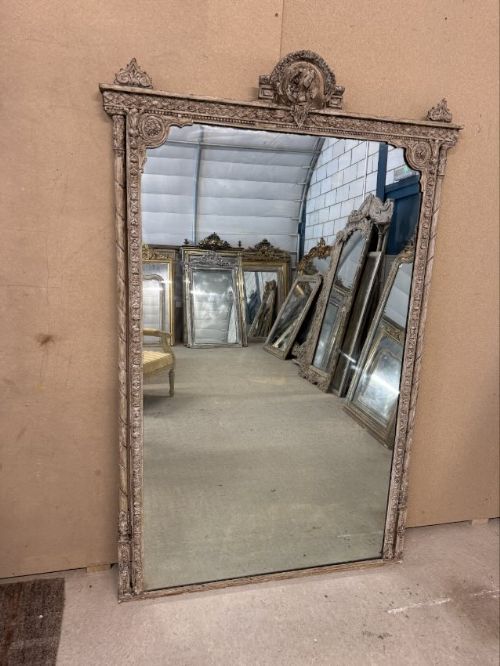
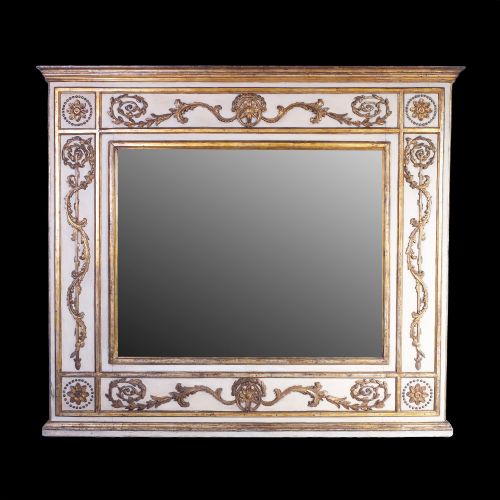
Makers and designers drew upon styles such as Regency, Rococo Revival, Neoclassical, and French Chateau, producing both restrained architectural frames and highly decorative pieces with carved floral mouldings.
Materials and construction
Makers built these frames primarily from wood, often applying layers of gesso to create smooth surfaces or raised ornamentation before painting and gilding them with gold leaf or silver.
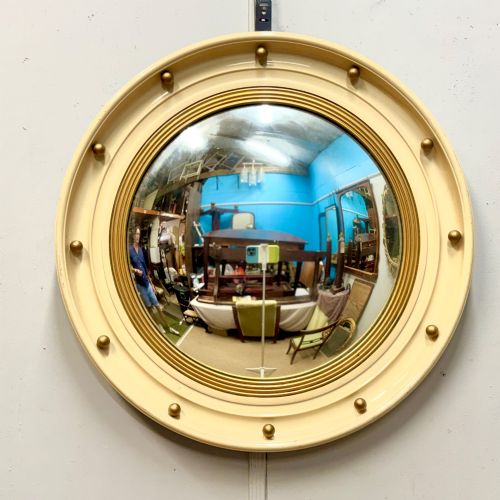
Mirror glass varied from flat plates to convex surfaces, sometimes showing slight foxing or crackle finishes developed over decades of age.
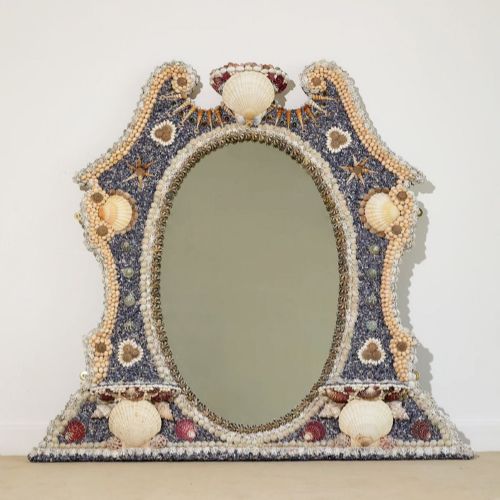
Parcel-gilt detailing, carved wooden elements, and hand-painted pastoral scenes or floral motifs completed the construction of these decorative objects.
Cream Wall Mirror Retail Price Guide 2026
Typical asking prices for cream wall mirror among the pieces listed under this phrase on Sellingantiques today, from the lower quarter to the upper quarter. They describe what is for sale here now, not the wider market.
Listings feature eighteenth-century carved Italian work alongside nineteenth-century French trumeau mirrors and early twentieth-century pieces in cream and gilt.
Evaluating quality
Quality in a cream wall mirror rests upon the depth and crispness of the hand-carved gesso work and the integrity of the original painted surface rather than a modern factory finish.
Desirable examples retain their original mirror glass, subtle crackle, and genuine wear where the underlying red gesso or bare wood shows through the cream paint over time.
The Cream Wall Mirror Glossary
- Trumeau
- A decorative wall mirror often incorporating an oil painting or panel above the glass plate. These tall pieces were designed to sit between windows or above mantelpieces in French interiors.
- Gesso
- A plaster-like mixture applied to wooden frames as a base for paint and gilding. Artisans carved and moulded this material to create ornate floral and scroll decorations.
- Overmantel
- A large mirror specifically proportioned to hang above a fireplace mantel. They frequently feature arched tops and landscape orientations.
- Convex glass
- A curved, outwardly projecting mirror plate that provides a wide-angle reflection of the room. It is sometimes known as a witch's eye mirror.
- Parcel gilt
- A decorative technique where only specific raised details, carvings, or mouldings of a frame are gilded. This leaves the surrounding cream painted areas to contrast with the gold leaf.
Cream Wall Mirror: Frequently Asked Questions
How do I style a cream wall mirror?
Hang your mirror above a mantelpiece or low console table to reflect natural light around the living space. The neutral pale tones allow the frame to complement both traditional period furniture and more contemporary interior schemes.
Ensure the wall fixings are robust enough to support the weight of heavy wooden and gesso frames. Positioning the glass opposite a window maximises the brightening effect in smaller rooms.
How do I tell an 19th-century mirror from a later copy?
Examine the backboards, the fixings, and the way the gesso has aged beneath the paint layers. Older pieces show natural shrinkage in the wood and hand-applied preparation rather than uniform modern manufacturing.
Look closely at the mirror glass itself for slight distortions, oxidisation, or hand-bevelling typical of older production methods. Original French frames often display layers of red gesso showing softly through the worn cream surface.
Were these mirrors always painted cream?
Many nineteenth-century French and English mirrors received cream paint finishes during their original production, often combined with parcel gilding. Over the decades, subsequent decorative updates or gentle cleaning have interacted with the base layers.
Original surfaces frequently feature a crackle finish or distressing where the cream topcoat has aged over underlying red gesso. This natural patina separates period items from modern reproductions.