




Classical Relief Overmantel Mirror
A classical relief overmantel mirror brings architectural presence and reflected light to a room, framing classical scenes above a fireplace.
Classical Relief Overmantel Mirror
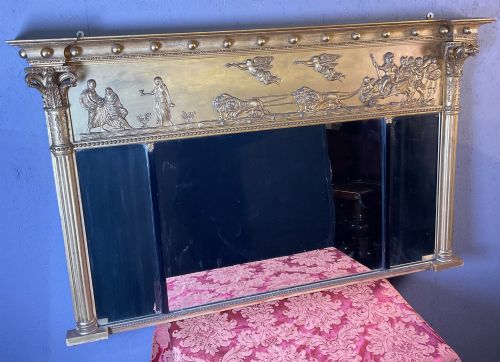
When you search for a classical relief overmantel mirror, you encounter large horizontal looking glasses designed specifically to hang above mantelpieces. The most common examples on this page date from the nineteenth century, drawing heavily on Regency and Victorian neo-classical design principles.
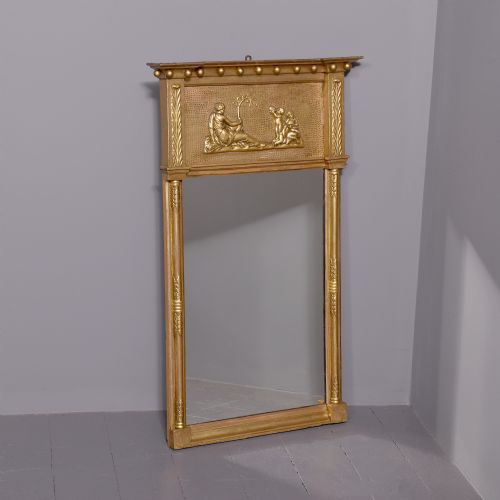
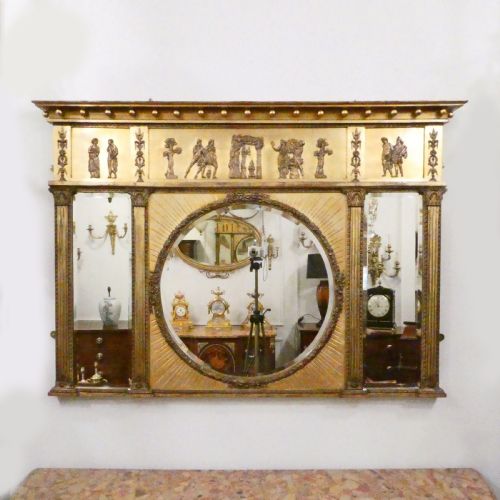
These mirrors frequently feature architectural framing, incorporating tripartite glass plates and decorative relief panels. Subjects range from mythological figures like Bacchus and cherubs to narrative classical scenes rendered in gesso or composition over wood.
Makers of the period produced both pier mirrors and wider overmantel formats to suit formal drawing rooms and parlours. You will find pieces finished in gold leaf, giltwood, and occasional ebonised details that emphasise the classical moulding.
Materials and Construction
The primary structure relies on solid wood frames built to support heavy glass plates. Craftsmen applied gesso and composition ornamentation to the wooden carcase, creating sharp relief details for classical motifs before applying gold leaf or paint.
Mirror glass of this era is set within tripartite or single plate configurations, sometimes showing a crackle finish or age-related foxing. Giltwood and composition elements were hand-applied, uniting sculptural friezes with functional reflective surfaces.
Classical Relief Overmantel Mirror Retail Price Guide 2026
Typical asking prices for classical relief overmantel mirror among the pieces listed under this phrase on Sellingantiques today, from the lower quarter to the upper quarter. They describe what is for sale here now, not the wider market.
Listings feature nineteenth century pieces spanning the Regency, Victorian, and French Empire styles, executed in giltwood, gesso, and gold leaf.
Judging Quality and Execution
Construction methods also dictate quality, particularly the joinery of the heavy wooden frames and the retention of original mirror plates. Finer pieces maintain their cohesive aesthetic through meticulous surface finishes and robust structural integrity.
The Classical Relief Overmantel Mirror Glossary
- Overmantel mirror
- A large horizontal mirror specifically proportioned to hang on the wall directly above a fireplace mantelpiece.
- Gesso
- A plaster-like mixture applied to wood frames and carved or moulded into decorative classical reliefs before gilding.
- Composition
- A durable mixture of whiting, resin, and glue pressed into moulds to create repeatable ornament for mirror frames.
- Tripartite plate
- A mirror glass divided into three distinct vertical sections within a single overarching frame.
- Giltwood
- Timber that has been coated with a thin layer of gold leaf over a prepared base surface.
Classical Relief Overmantel Mirror: Frequently Asked Questions
Where should I hang an overmantel mirror?
These mirrors are traditionally positioned on the chimney breast directly above a fireplace opening. Their horizontal proportions anchor them securely within the architectural space of a principal room.
Ensure the wall fixings are rated to support substantial weight, as nineteenth century giltwood and composition frames are considerably heavy.
What is a tripartite mirror plate?
A tripartite plate consists of three separate pieces of mirror glass mounted side by side within one main frame. This division was structurally necessary and aesthetically favoured during the Regency period.
The side panels often feature smaller dimensions, creating a balanced triptych composition beneath the primary relief panel.
How do I distinguish Regency from Victorian examples?
Regency pieces typically display leaner neo-classical lines, restrained use of ebonised detail, and crisp architectural motifs dating from the early nineteenth century. Victorian interpretations often incorporate heavier gesso work and slightly more elaborate ornamentation while maintaining classical themes.
Examining the underlying timber construction and the style of the relief panel helps clarify the specific nineteenth century period.
Can these mirrors be cleaned safely?
Dust the giltwood and composition relief gently with a soft brush to prevent accumulation in the crevices. Avoid using modern chemical sprays on antique gold leaf or aged mirror plates.
Clean the glass sparingly with a damp cloth, taking care not to let moisture seep behind the silvering or into the frame joints.