
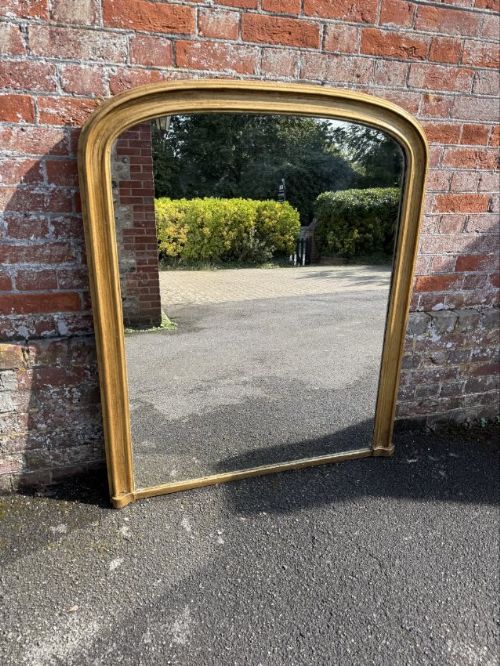

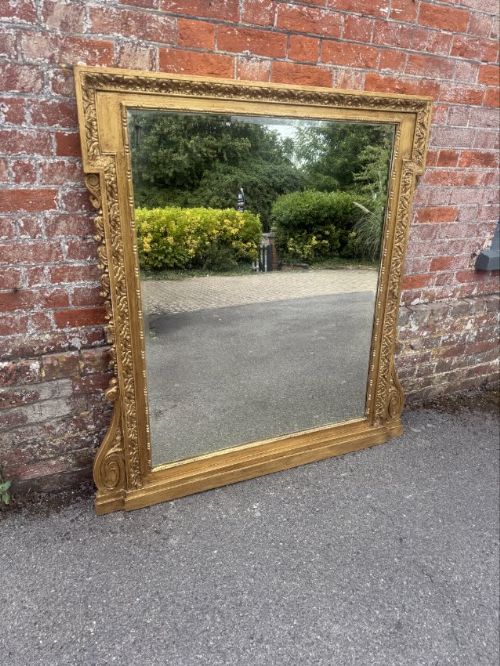
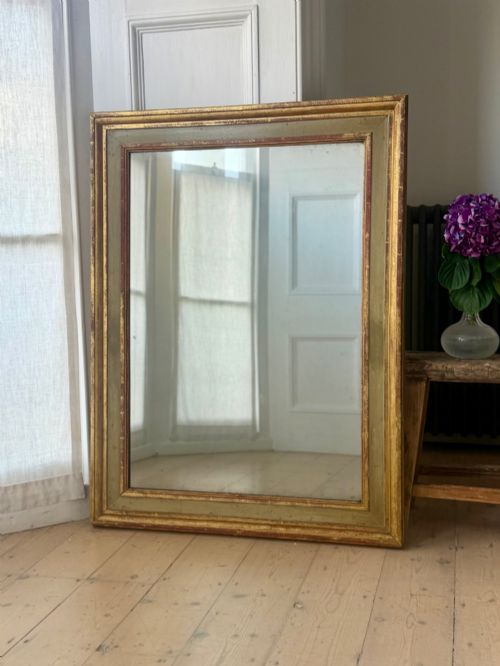
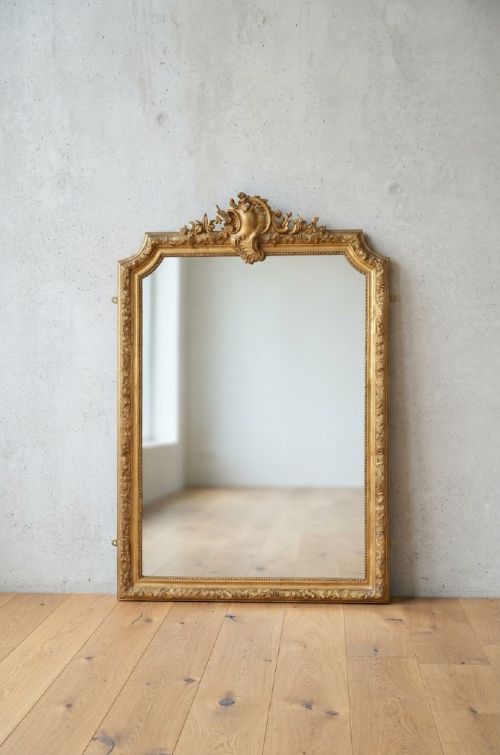
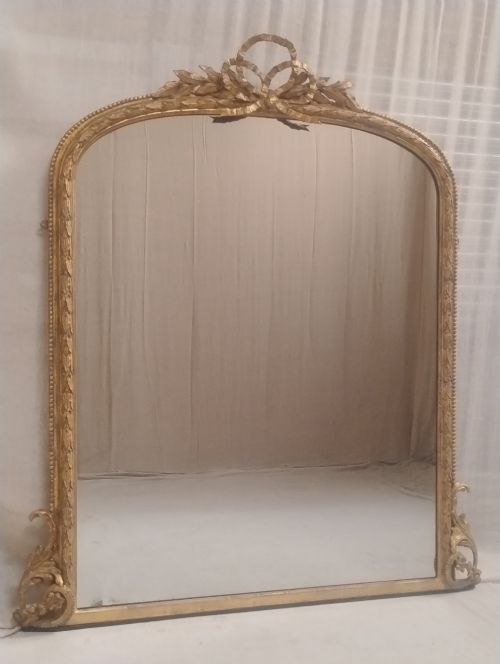
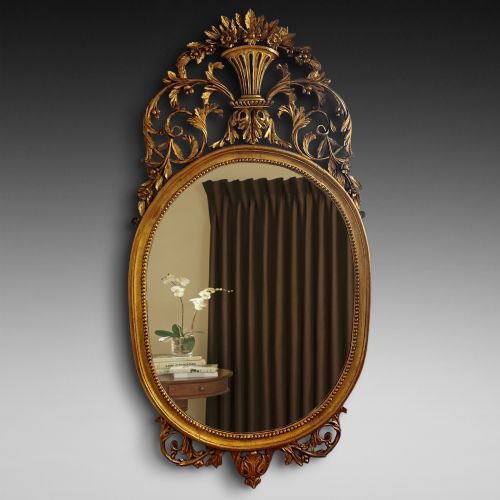
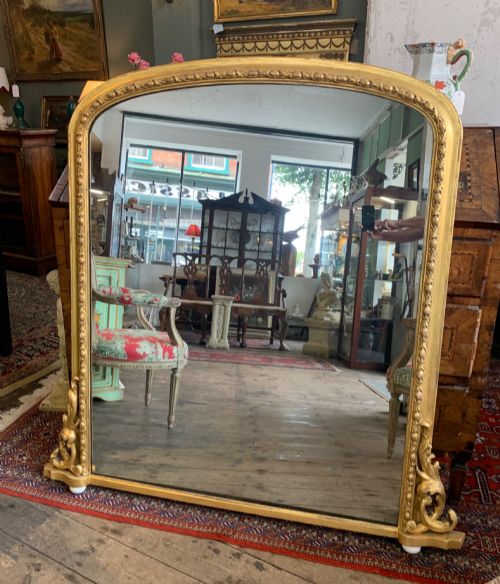
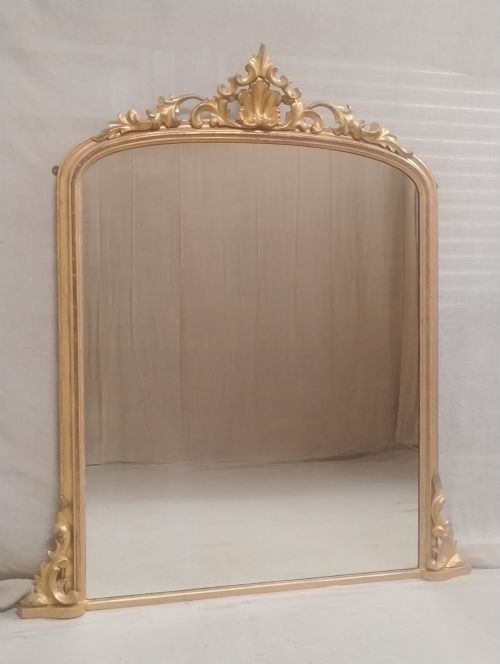
Gilt Framed Mantel Mirror
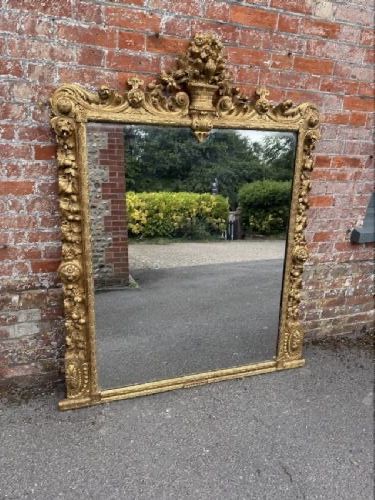
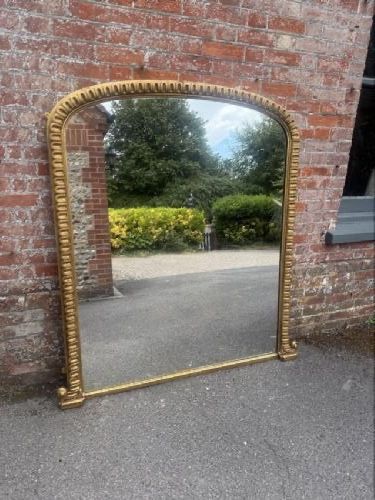
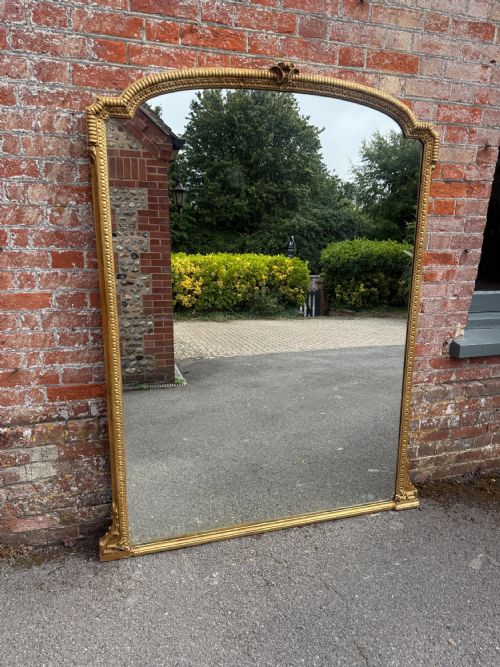
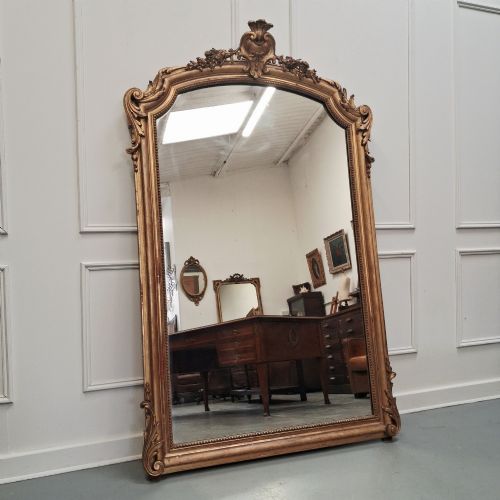
When sourcing a gilt framed mantel mirror, you are looking at nineteenth-century statement pieces designed to sit above a fireplace and reflect light across a room.
Gilt Framed Mantel Mirror
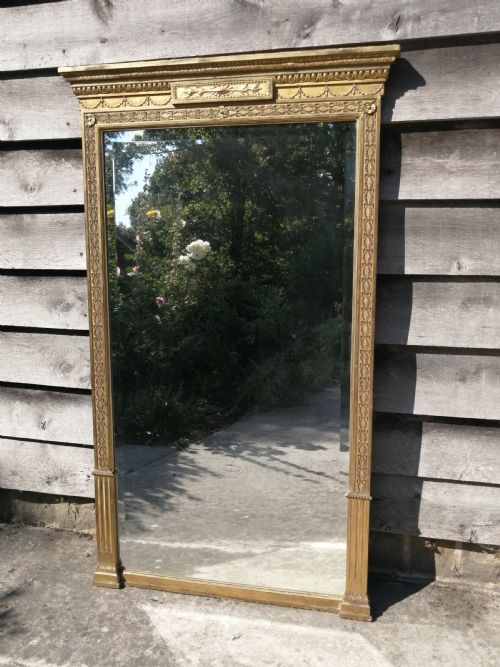
A gilt framed mantel mirror typically takes the form of a large overmantel mirror, wall mirror, or pier mirror designed to anchor the proportions of a chimney breast. These architectural furnishings emerge predominantly from the nineteenth century, spanning Regency, Victorian, and French periods.
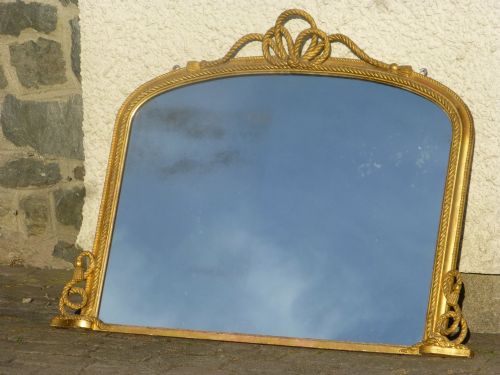
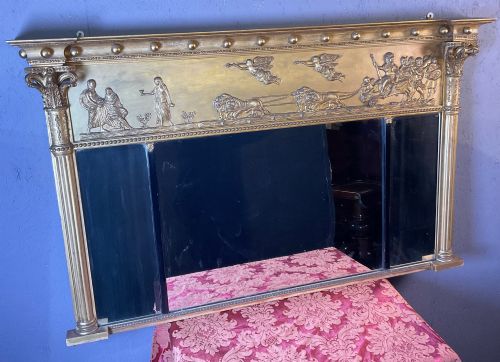
The most common formats on this page are large arched top, shaped top, and rectangular overmantel mirrors featuring substantial timber frames. Pieces range from restrained early Victorian designs to heavily ornamented French Rococo and Louis Philippe examples.
Beyond standard overmantels, buyers encounter distinct regional variations including English country house mirrors and French marriage mirrors. These objects function simultaneously as practical reflective surfaces and decorative focal points within period interiors.
Materials and construction
Makers constructed the core structures using carved wood, frequently layering gesso and composition ornament over timber to build up intricate relief details such as scrolls, rope twists, and cresting. Guilders then applied gold leaf or silver gilt directly onto the prepared surfaces.
Reflective plates include original mirror glass, mercury glass, and silvered plates that often display natural age-related foxing. Frames utilise sturdy joinery to support heavy glass plates, occasionally incorporating secondary painted finishes alongside traditional giltwood.
Listings feature nineteenth-century pieces incorporating gesso, gold leaf, and original foxed mirror glass across Victorian and Regency styles.
Assessing quality
Quality rests in the crispness of the hand-carved wood and gesso detailing, where superior examples retain sharp, deep relief work rather than softened composition mouldings. The integrity of the original gilt surface and the depth of the frame add significantly to a piece's visual weight.
The presence of original mirror plates, particularly early mercury glass or lightly foxed historic plates, distinguishes untouched examples from later replacements. Structural framing that supports large scale without sagging indicates superior initial carpentry.
The Gilt Framed Mantel Mirror Glossary
- Gesso
- A plaster-like mixture applied to wood frames to create a smooth surface for gilding or to be moulded into relief decoration. This foundational layer allows for intricate decorative elements.
- Giltwood
- Timber that has been coated in gold leaf or gilt. It provides the characteristic metallic brilliance seen on period frames.
- Overmantel mirror
- A large mirror specifically proportioned to hang on the wall directly above a mantelpiece. These pieces frequently feature landscape orientations to match the width of the fireplace below.
- Mercury glass
- An early type of double-walled glass blown with a silver-mercury amalgam poured between the layers. It creates a distinctive mottled reflection.
- Foxing
- The speckled brown spots and age-related oxidation that occur on antique mirror plates over time. This chemical ageing process develops naturally in historic glass.
Gilt Framed Mantel Mirror: Frequently Asked Questions
How do I hang a heavy overmantel mirror?
These substantial pieces require secure anchoring directly into masonry or robust wall studs using heavy-duty brackets that match the weight of the timber and glass.
Professional installation is strongly advised given the considerable mass of nineteenth-century wood, gesso, and thick glass plates.
What is the difference between an overmantel and a pier mirror?
An overmantel mirror is specifically designed to sit horizontally above a fireplace mantel, whereas a pier mirror is taller and narrower.
Pier mirrors traditionally hung on the narrow wall space between windows, often reflecting light back into the centre of the room.
How can I tell if the mirror plate is original?
Original plates often exhibit characteristic foxing, slight distortions, and hand-beveled edges consistent with nineteenth-century glass manufacturing techniques.
Later replacements usually appear excessively clear, flat, and lack the subtle imperfections found in historic mercury or early silvered glass.
How do I clean a giltwood frame?
Dust the intricate gesso and carved wood surfaces gently with a soft, dry brush to prevent dislodging delicate areas of the gold leaf.
Avoid using liquid cleaners, moisture, or chemical solvents, as these substances can strip the historic gilding and damage the composition ornaments.