


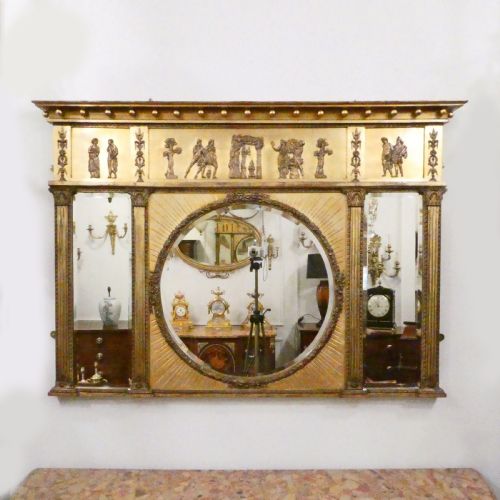


Classical Frieze Overmantel Mirror
A classical frieze overmantel mirror brings architectural dignity and historic gravitas to a room, reflecting light while anchoring the chimney breast.
Classical Frieze Overmantel Mirror
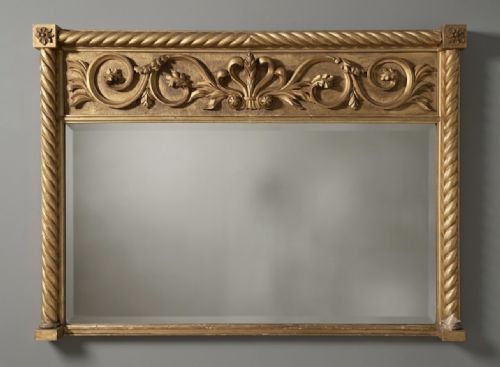
When you search for a classical frieze overmantel mirror, you are looking at large horizontal wall glasses designed to sit directly above a fireplace mantelpiece. The pieces available here span the Regency, Victorian, and Georgian styles, originating primarily across the nineteenth century.
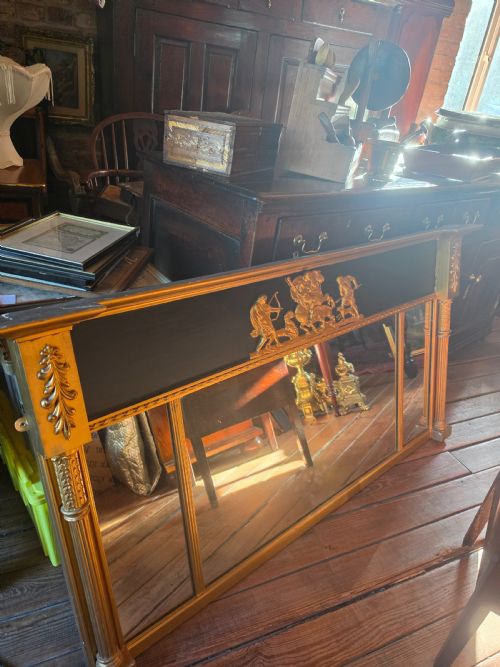
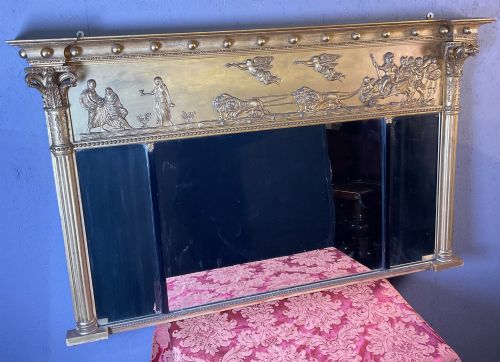
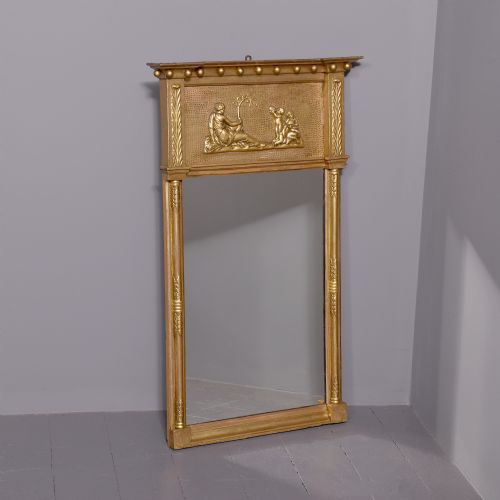
You are most likely to meet examples in the Regency and Victorian idioms, executed in giltwood, gesso, and painted wood. These mirror forms often incorporate architectural motifs, triple plates, and decorative friezes across the upper section of the frame.
Many items reflect later revivals, such as Regency Revival and French Neoclassical aesthetics, demonstrating how nineteenth-century cabinet makers reinterpreted earlier classical designs. The forms range from simple rectangular wall mirrors to elaborate triptych arrangements intended to expand the perceived width of a drawing room.
What Varies in Quality
The distinction between standard and superior examples lies in the crispness of the hand-carved details and the depth of the gesso mouldings. Pierced acanthus leaf friezes and deeply sculpted classical motifs indicate a higher standard of craftsmanship than mass-produced composition ornament.
Original mercury or early silvered glass plates retain subtle distortions and foxing that distinguish period surfaces from later replacements. The integrity of the original water gilding and the weight of the timber carcass further separate ordinary wall mirrors from fine decorative works.
Classical Frieze Overmantel Mirror Retail Price Guide 2026
Typical asking prices for classical frieze overmantel mirror among the pieces listed under this phrase on Sellingantiques today, from the lower quarter to the upper quarter. They describe what is for sale here now, not the wider market.
Some mirrors preserve traces of old candle soot lodged deep within their carved acanthus leaves from decades by the hearth.
The Classical Frieze Overmantel Mirror Glossary
- Overmantel mirror
- A large horizontal mirror specifically scaled to hang above a fireplace mantelpiece. These pieces often feature decorative friezes along the top border to complement the architecture of the hearth.
- Giltwood
- Timber, typically pine or gesso-coated wood, covered with a thin layer of gold leaf. This material defines the bright, reflective frames characteristic of Regency and Victorian interior decoration.
- Gesso
- A plaster-like mixture applied to wooden frame bases and carved or moulded into relief details. It provides a smooth ground for subsequent gilding and painting.
- Triptych
- A mirror divided into three distinct glass panels within a single frame. This configuration was popular in the Regency period to span wider chimney breasts.
- Composition
- A mouldable paste of whiting, resin, linseed oil and glue pressed into metal dies to create decorative ornaments. It allowed makers to produce intricate classical motifs more quickly than hand carving.
Classical Frieze Overmantel Mirror: Frequently Asked Questions
How do I hang a heavy overmantel mirror safely?
These large mirrors require fixing directly into structural wall studs or masonry using heavy-duty brackets suited to the weight of timber and glass. Professional installation is standard practice given the substantial proportions of nineteenth-century frames.
Position the mirror at a height that balances the mantelpiece below and reflects the opposite side of the room effectively.
Were these mirrors always meant for above a fireplace?
While primarily built to occupy the wall space above a mantelpiece, many forms function equally well as pier glasses positioned between tall windows. Their horizontal proportions were deliberately chosen to echo the width of the hearth below.
Makers frequently designed matching pier and overmantel mirrors for unified nineteenth-century drawing room schemes.
How do I distinguish a Regency mirror from a Victorian one?
Regency mirrors typically display strict neoclassical restraint, featuring architectural elements like columned sides, ball-stud friezes, and carved acanthus details. Victorian examples often introduce heavier proportions, bolder gesso ornamentation, and eclectic revivals of earlier styles.
Examining the construction methods on the reverse of the frame helps clarify the period of manufacture.
Can I clean the original giltwood frame safely?
Dusting with a soft, dry brush prevents the accumulation of dirt without disturbing fragile gesso or gold leaf layers. Avoid using water, chemical solvents, or commercial polishes on gilded surfaces.
Professional conservators should handle any repairs to cracked gesso or worn gilding to preserve the historic finish.