
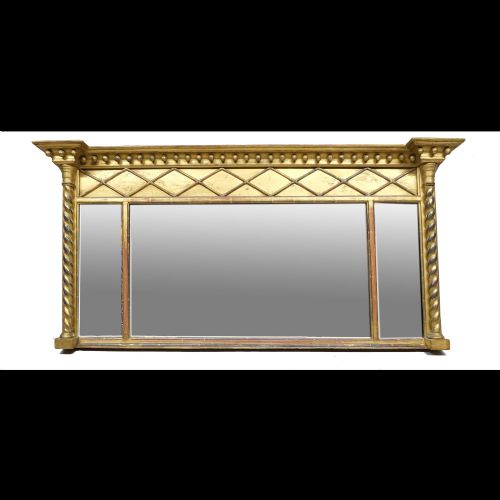


Gilt Triple Plate Mirror
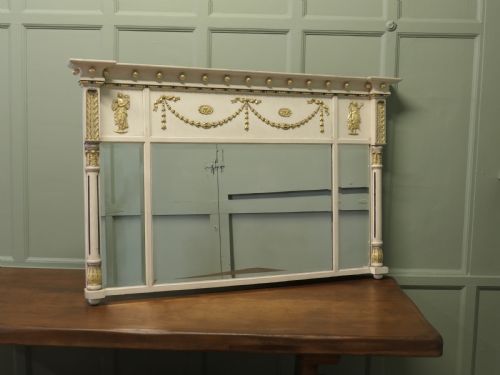
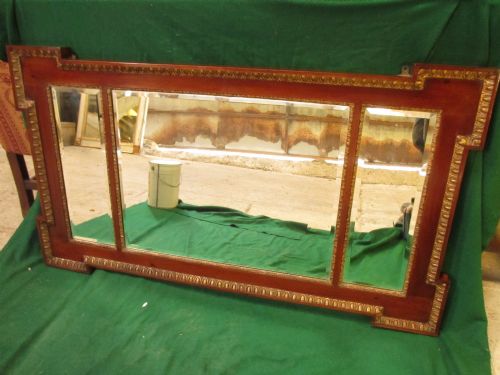
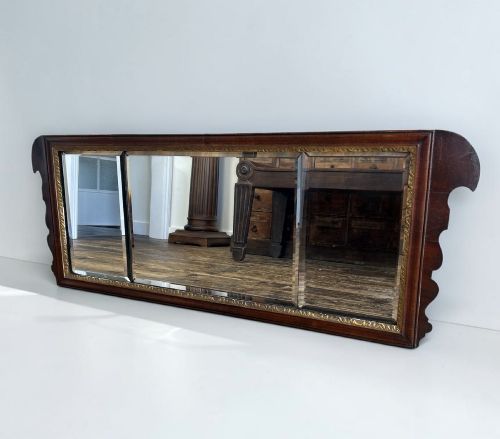
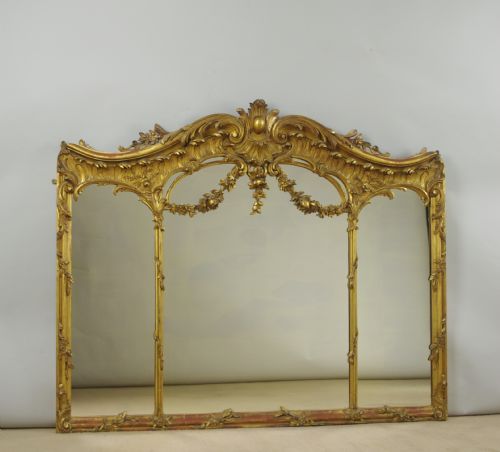
A gilt triple plate mirror brings distinct period light and length to a room, functioning primarily as a substantial overmantel or wall piece.
Gilt Triple Plate Mirror
A gilt triple plate mirror consists of a wide frame divided internally into three distinct glass sections, creating an expansive horizontal format designed to sit above a fireplace. This search phrase encompasses pieces spanning from the 18th century through to the Victorian era, showing strong representation from the Georgian and Regency periods. The 19th-century examples dominate the selections, often adopting architectural proportions intended to reflect light across an entire drawing room.
The primary variants found on this page are large overmantel mirrors and wall mirrors, executed in styles that range from restrained George I walnut and parcel gilt designs to elaborate Regency and Rococo Revival interpretations. Makers often integrated architectural friezes, such as laurel wreaths or classical motifs, directly above the tripartite glass panels. These objects serve both a practical reflective purpose and a decorative function, anchoring large wall spaces with traditional proportions.
Materials and Construction
The frames are constructed from timber foundations such as mahogany, walnut, or softwood, which are then finished with layers of gesso and gold leaf to create the characteristic gilt surface. Composition ornament, a mouldable mixture of whiting, resin, and glue, is frequently applied over the timber ground to form crisp relief details like friezes and floral swags. The tripartite mirror glass is fitted into separate internal rebates, often retaining its original bevelling or silvering character.
Joinery methods reflect the period of origin, utilising pegged mortise and tenon joints for the structural wooden frames before the application of decorative surface treatments. Parcel gilt examples combine exposed dark hardwoods like walnut or mahogany with selective gilding on carved mouldings and decorative highlights. The integration of ebonised details alongside giltwood appears in several Regency and Victorian pieces to create strong chromatic contrast.
Some Regency frames secretly hide painted chariot friezes galloping silently across the timber.
Assessing Quality
Quality in these mirrors rests upon the crispness of the carved or moulded ornamentation and the depth of the original gilding applied over the gesso ground. Superior examples display sharply defined architectural friezes and well-proportioned tripartite divisions that maintain structural integrity across a wide span. The condition and originality of the mirror glass plates also dictate the standing of a piece, with surviving early plates showing authentic tonal variation.
The handling of secondary timbers behind the primary frame and the precision of the mitred joints reveal the competence of the original workshop. Finer pieces manage the transition between the three glass panels with subtle dividing mouldings rather than heavy, clumsy divisions that disrupt the reflected view. The harmony between the original gilding and the underlying composition or wood carving ultimately separates standard production items from finer regional works.
The Gilt Triple Plate Mirror Glossary
- Giltwood
- Timber that has been coated with a thin layer of gold leaf over a prepared gesso ground. This finish provides the bright, reflective surface characteristic of formal period frames.
- Gesso
- A plaster-like mixture applied to wooden frame foundations to create a smooth surface for subsequent gilding and low-relief moulding. It allows for intricate decorative detailing.
- Composition
- A moulded material composed of whiting, glue, and oil pressed into decorative shapes for frame embellishments. It hardens to replicate the appearance of hand-carved wood.
- Parcel Gilt
- A decorative treatment where only specific portions of a wooden frame, such as carved mouldings, receive gilding while the base wood remains visible. Walnut and mahogany are typical base woods for this technique.
- Overmantel Mirror
- A wide mirror designed specifically to hang on the wall directly above a fireplace mantelpiece. These pieces frequently utilise multiple glass plates to span the width of the hearth.
Gilt Triple Plate Mirror: Frequently Asked Questions
Where should I hang an overmantel mirror?
These mirrors traditionally anchor the space directly above a fireplace, where their horizontal format balances the proportions of the mantel below. They function equally well on any principal wall in a reception room to bounce natural light around the interior.
Because of their substantial weight and width, they require secure wall fixings tied directly into structural studs or masonry. Positioning them at eye level ensures they reflect the room rather than the ceiling.
How do I identify a Regency period mirror?
Regency pieces often incorporate classical architectural motifs such as column supports, ball-stud mouldings, and distinct friezes featuring chariots, griffins, or laurel wreaths. The framing utilises confident proportions that lean heavily into neoclassical design tastes.
Examining the construction behind the frame reveals period-specific timber usage and joinery techniques that separate these 19th-century works from later reproductions. The integration of ebonised accents alongside giltwood is another common hallmark of this era.
How do I care for antique giltwood?
Giltwood surfaces require gentle dusting with a soft, dry brush to prevent the accumulation of particles without disturbing the delicate gold leaf layer. Moisture and chemical cleaning agents must be avoided entirely to protect the underlying gesso.
Placing the mirror away from direct sunlight and fluctuating humidity prevents the wooden substrate from expanding and causing the gesso ornamentation to crack or flake. Proper environmental control preserves the original finish for decades.