
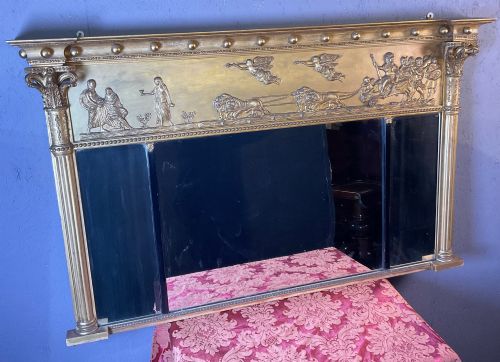
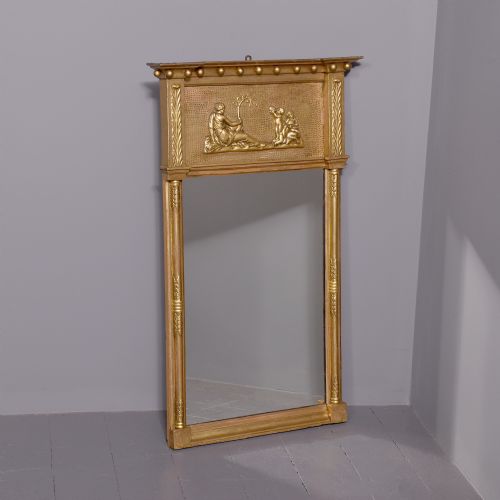

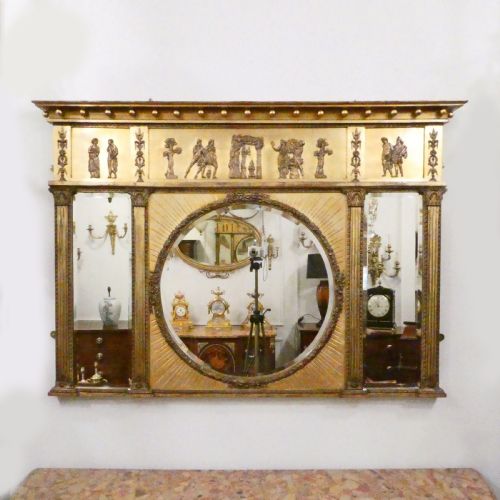


Gilded Classical Frieze Mirror
These gilded classical frieze mirrors bring architectural dignity to a room, catching the light and anchoring a wall with neoclassical restraint.
Gilded Classical Frieze Mirror
A gilded classical frieze mirror is a striking rectangular looking glass defined by its decorative horizontal band, or frieze, situated above or within the frame. These pieces serve as both functional reflecting surfaces and grand decorative statements, traditionally hung above a mantelpiece or between tall windows as pier glasses. You will encounter them most frequently in Regency, 19th century, and Victorian incarnations, ranging from compact pier mirrors to expansive triple plate overmantels.
The aesthetic draws heavily on classical antiquity, showcasing architectural motifs that reflect neoclassical taste. The listings feature overmantel mirrors and wall mirrors spanning the 1800s, 19th century, and Victorian periods, often styled in the Regency manner or later revivals. They bring scale and light to domestic interiors, combining practical reflection with sculptural ornament.
How They Were Made
Makers constructed the structural frames from wood, applying layers of gesso to build up smooth surfaces and intricate relief details. Composition ornament, often shortened to compa, was pressed into moulds and applied to form the decorative friezes and leaf motifs before gilding. Early examples like the early Regency pier glass utilise traditional water gilding techniques with gold leaf applied over a prepared bole.
The reflective surfaces consist of mirror glass or mirror plate, sometimes divided across multiple panels in triptych or triple plate configurations. Giltwood and gold leaf finish the exteriors, providing the characteristic metallic sheen that catches the natural light of a room.
What Varies in Quality
Quality rests significantly on the crispness of the carved or moulded ornamentation within the frieze, such as the depth and definition of acanthus leaf details. Pierced or hand-carved wooden elements outshine mass-produced compa substitutes in tactile richness and durability. The method of gilding also dictates the finish, with genuine gold leaf displaying a warmer, more enduring lustre than later paints or bronzing powders.
The construction of the frame joints and the clarity of the mirror plate further distinguish finer pieces. Triple plate and triptych mirrors require precise alignment and joining of the glass panels to maintain visual harmony across the surface.
The Gilded Classical Frieze Mirror Glossary
- Frieze
- A decorative horizontal band situated along the upper portion of the mirror frame, often carved or moulded with classical motifs. It forms the visual centrepiece of the classical mirror design.
- Giltwood
- Timber that has been coated with gold leaf or gold paint to give the appearance of solid gold. This material defines the warm metallic aesthetic of these frames.
- Gesso
- A plaster-like mixture applied to the wooden frame to create a smooth surface for carving and gilding. It allows for sharp relief work in the decorative details.
- Pier Glass
- A tall mirror designed specifically to hang on the pier, the solid section of wall between two windows. These tall glasses maximise available daylight in a room.
Gilded Classical Frieze Mirror: Frequently Asked Questions
Where should I hang a gilded classical frieze mirror?
These mirrors find their traditional home above a mantelpiece or fireplace, where their horizontal width balances the hearth below. They also work effectively as pier mirrors mounted on narrow wall spaces between windows to reflect natural light.
Ensure the wall fixings can support the substantial weight of the wood, gesso, and glass construction. Positioning them opposite a window will maximise the spread of daylight throughout the space.
How do I tell a Regency mirror from a Victorian revival?
Original Regency pieces typically date from the early decades of the 19th century and often feature hand-carved wooden elements alongside water gilding. The motifs tend to reflect strict neoclassical proportions and clean architectural lines.
Victorian pieces and later 1880 or 1900 revivals frequently make greater use of moulded composition ornament over gesso. Examining the construction behind the frame and the quality of the gilding helps reveal the period of manufacture.
How do I clean a antique giltwood frame?
Dust the frame gently with a soft, dry brush or a feather duster to remove loose particles without disturbing the fragile surface. Avoid all liquid cleaners, commercial polishes, and water, as moisture damages traditional gesso and gold leaf.
If the glass requires cleaning, apply a modest amount of glass cleaner to a cloth rather than spraying the mirror directly. This prevents liquid from seeping behind the plate or staining the surrounding gilt.