
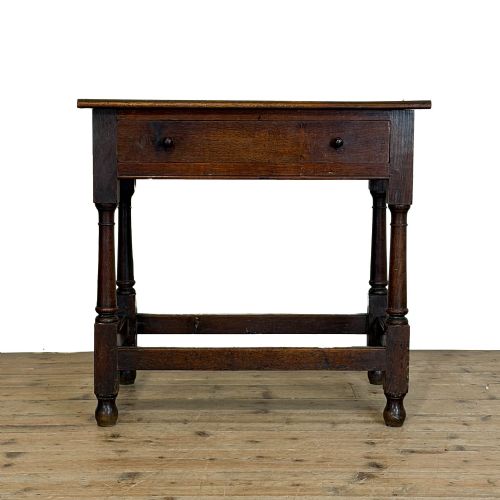
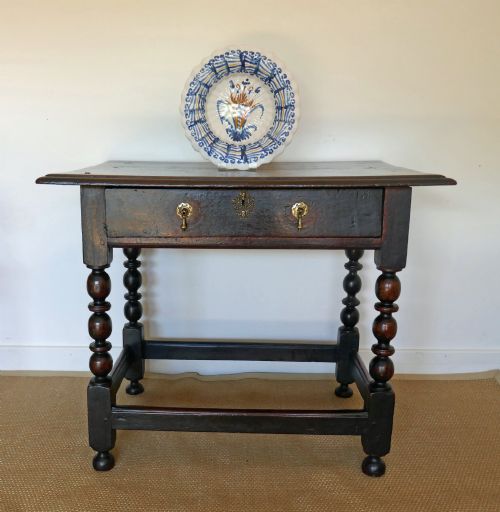
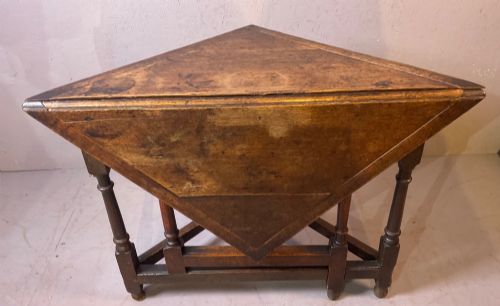
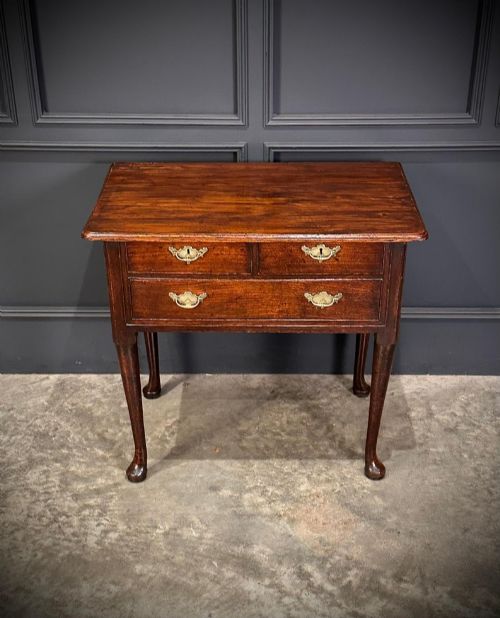




Period Oak Console Table
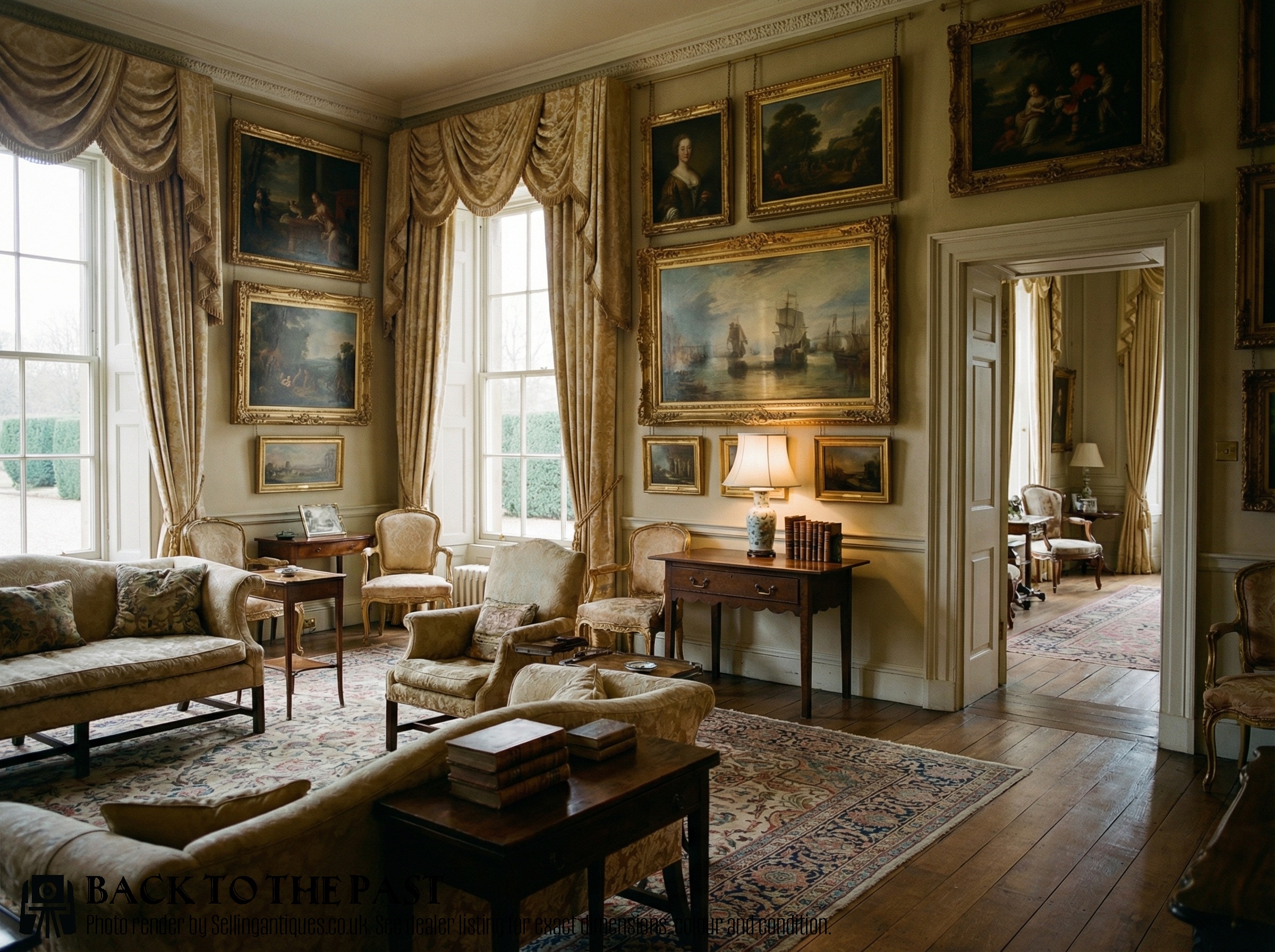
A period oak console table anchors a room with tactile presence, offering sturdy timber surfaces shaped through centuries of domestic use.
Period Oak Console Table
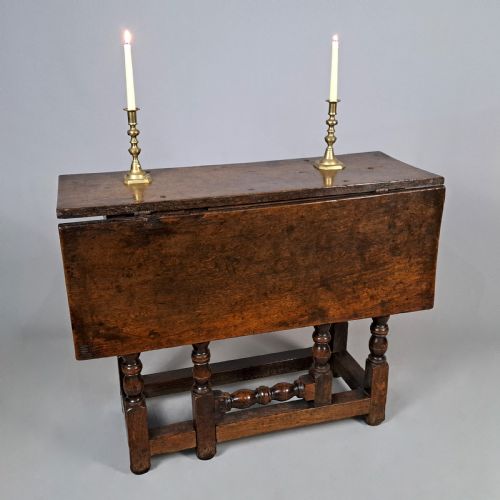
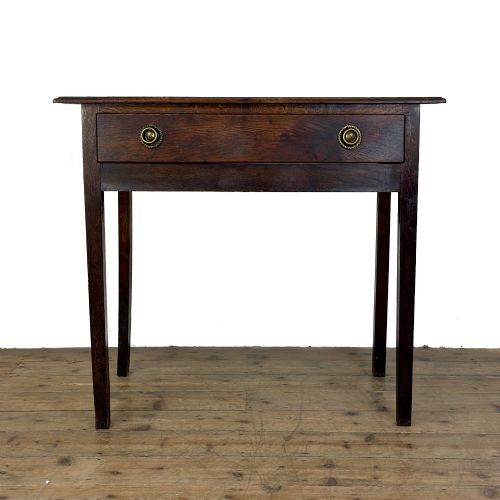
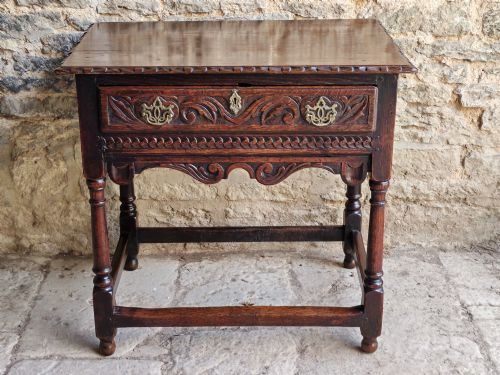
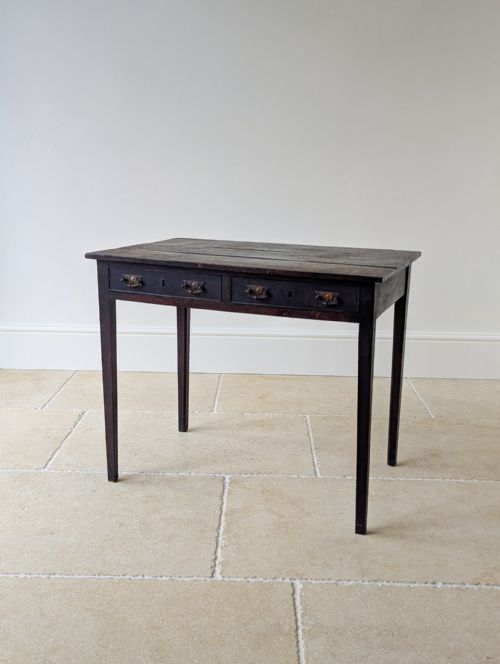
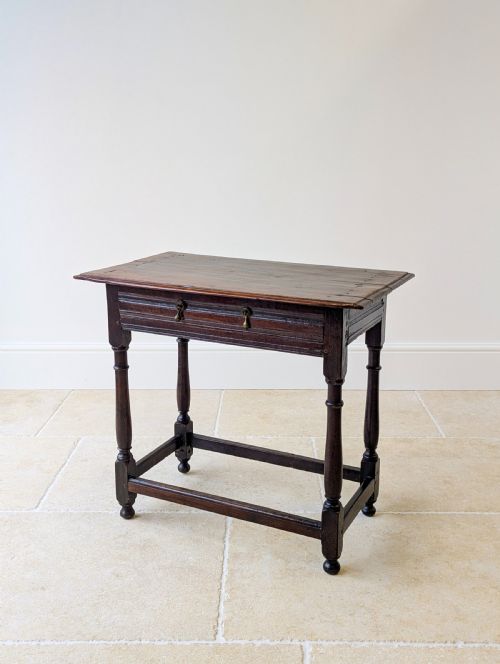
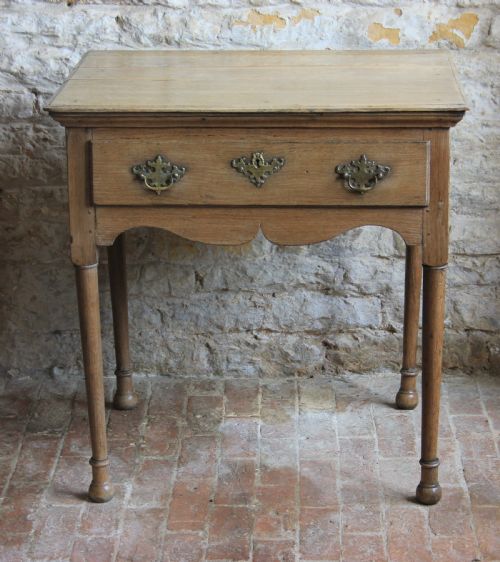
A period oak console table spans seventeenth-century origins through the Georgian era, encompassing lowboys, side tables, and servers built from native hardwoods. These tables served practical functions in hallways, parlours, and dining spaces, evolving from joined joined frameworks into refined drawer-fitted designs.
Materials and construction
Makers relied principally on solid oak, frequently supplemented by secondary fruitwood or mahogany linings and panel elements. Structural integrity depended on traditional joinery methods, including pegged mortise and tenon joints.
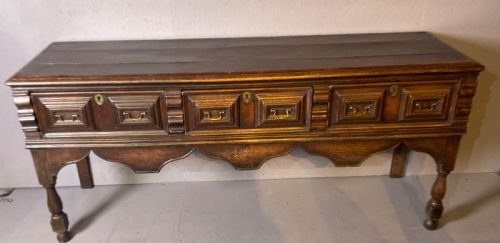
Hardware details incorporate forged iron and brass handles, while decorative enrichment often relied on geometrically moulded drawer fronts and turned legs rather than applied veneers.
Period Oak Console Table Retail Price Guide 2026
Typical asking prices for period oak console table among the pieces listed under this phrase on Sellingantiques today, from the lower quarter to the upper quarter. They describe what is for sale here now, not the wider market.
The inventory records regional cabinetmaking traditions originating from England and Wales during the Georgian and Stuart eras.
Distinguishing quality
Quality rests in the retention of original surfaces, patination, and timber depth achieved through age and wax accumulation. Tables retaining their early brasses, uncompromised drawer linings, and undisturbed structural framing command greater appreciation.
Proportion and the crispness of moulded decoration distinguish superior regional pieces from simpler utility furniture. The harmony of timber grain across the top board indicates careful selection by the original maker.
The Period Oak Console Table Glossary
- Lowboy
- A small table with one or more drawers, typically standing on four legs and used historically as a dressing or side table. These pieces often feature shaped aprons.
- Credence table
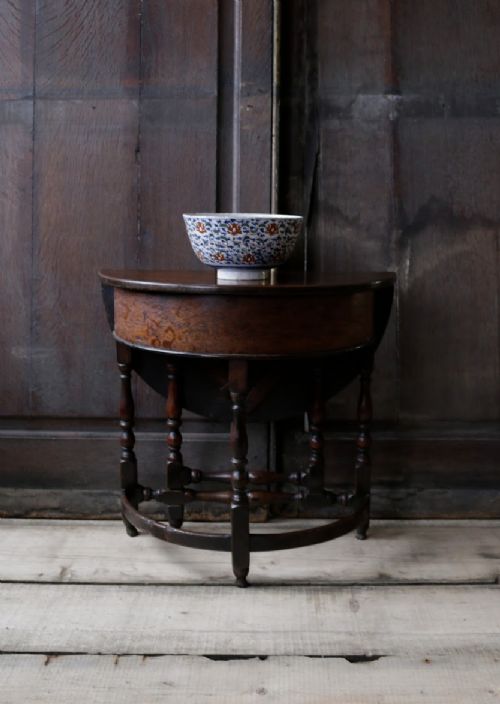
- A folding table with a hinged top supported by a swinging leg, originating in medieval and seventeenth-century domestic interiors for serving food or displaying plate.
- Geometric moulding
- Raised decorative panels applied to drawer fronts in symmetrical patterns, characteristic of late seventeenth-century joinery.
- Fruitwood
- Dense timber harvested from fruit-bearing trees such as pear or apple, utilised by period makers for turning and secondary construction.
- Country house
- A term denoting vernacular furniture produced for provincial estates, prioritising robust construction and utility over metropolitan sophistication.
Period Oak Console Table: Frequently Asked Questions
How do I date an oak console table?
Dating relies on examining tool marks, joint construction, timber shrinkage, and the style of turning or mouldings. Seventeenth-century examples typically show hand-split boards and pegged mortise joints, whereas eighteenth-century versions display finer sawn timber.
Secondary woods and hardware fittings further clarify the timeline, as brass handles and iron fixings evolved distinct profiles across the Charles II, Queen Anne, and Georgian periods.
Where were these tables used historically?
These tables functioned as versatile surfaces in halls, dining rooms, and parlours for serving food, holding lamps, or writing. Lowboys frequently served as dressing tables in bedchambers before migrating to reception rooms.
Larger servers and dresser bases operated in domestic kitchens and dining spaces to store tableware and display provisions.
How should I care for period oak timber?
Maintain antique oak by applying traditional beeswax sparingly to nourish the grain and protect the surface from moisture. Avoid placing tables near direct heat sources or strong sunlight, which causes timber to split and finishes to fade.
Dust regularly with a dry, soft cloth to prevent particulate accumulation in carved details and mouldings.
What is the difference between a lowboy and a side table?
A lowboy is a specific form of low side table equipped with one, two, or three drawers and distinctively proportioned cabriole or turned legs. They were originally designed at a height suitable for sitting.
General side tables encompass a broader range of heights, drawer configurations, and base designs, including gateleg and credence mechanisms.