


Period Music Rack
A period music rack holds sheets and scores within structured divisions, serving as both a functional stand and a refined piece of furniture.
Period Music Rack
When you search for a period music rack, you are looking at items designed to hold sheet music, scores, and periodicals in domestic parlours and drawing rooms. The selection includes standalone music stands, adjustable duet stands, and partitioned canterburys.
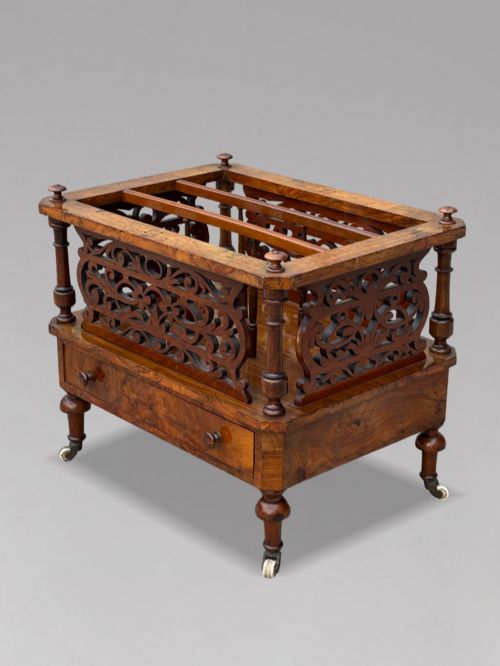
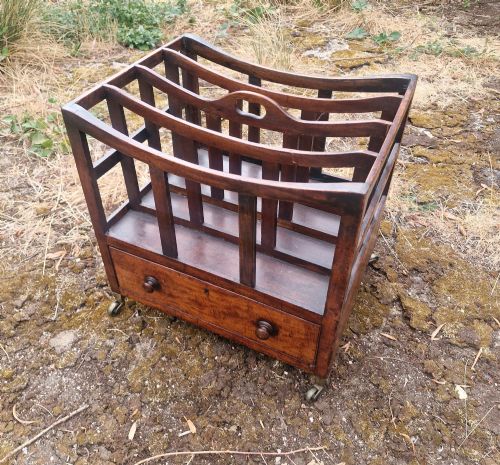
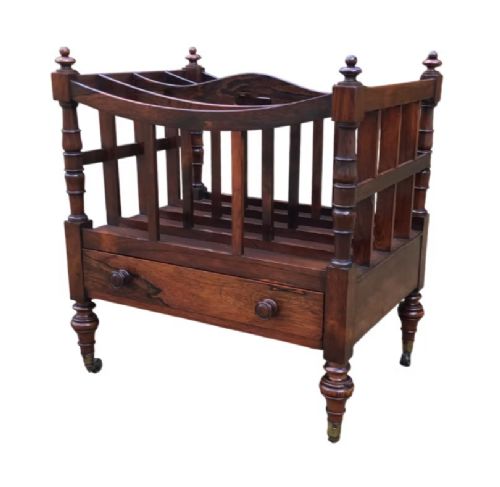
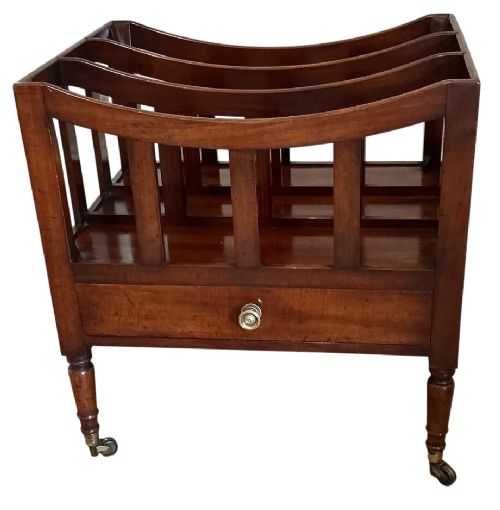
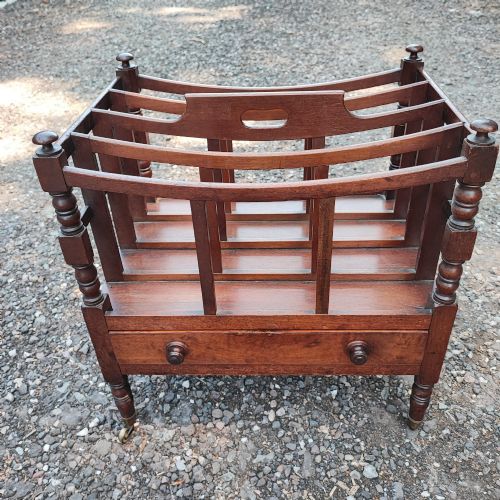
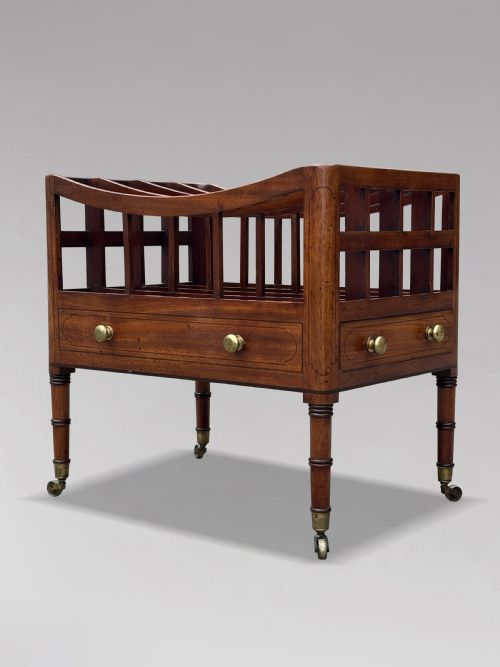
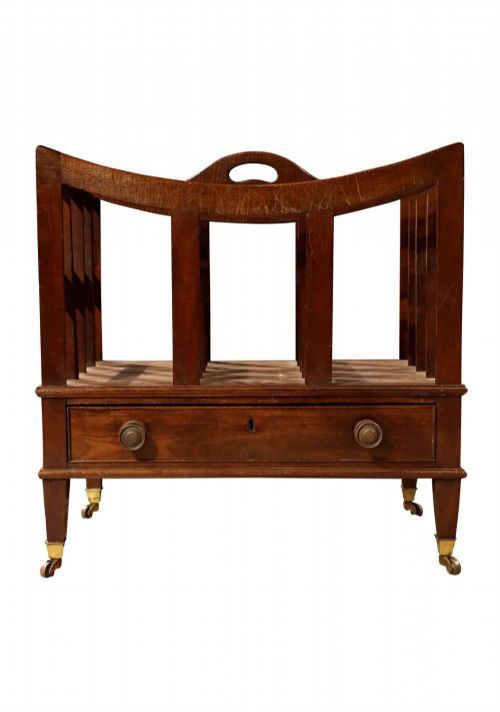
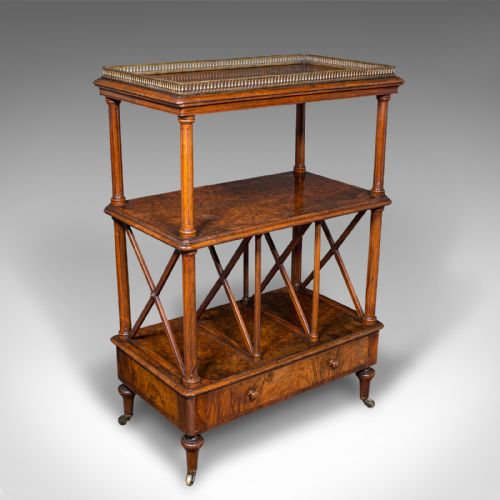
The version you are most likely to meet on this page is the canterbury, a low stand featuring slatted partitions for upright storage, frequently paired with a drawer below. These pieces date from the Georgian, Regency, and Victorian eras, alongside Edwardian examples.
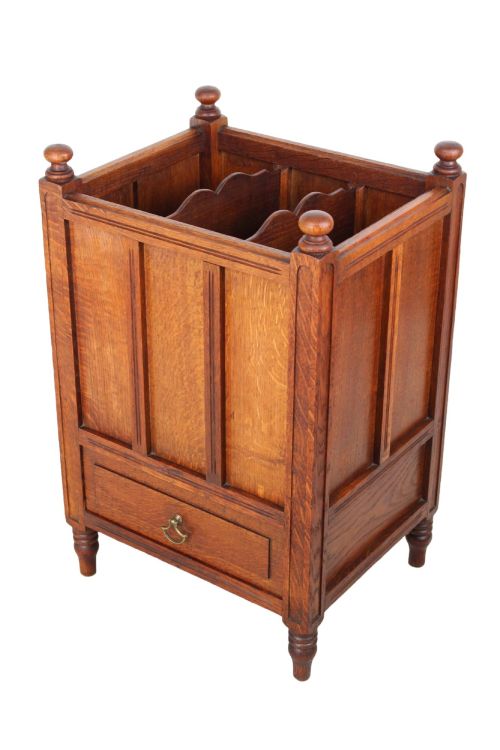
Makers designed these items to sit beside a piano or seating area for easy access during practice or performance. The inventory spans simple oak magazine racks to elaborate rosewood and mahogany canterburys.
How they were made
Cabinet makers relied primarily on dense hardwoods such as mahogany, rosewood, and walnut to construct the main frames and partitions. Burr walnut veneer and oak also appear, providing varied grain patterns across different decades.
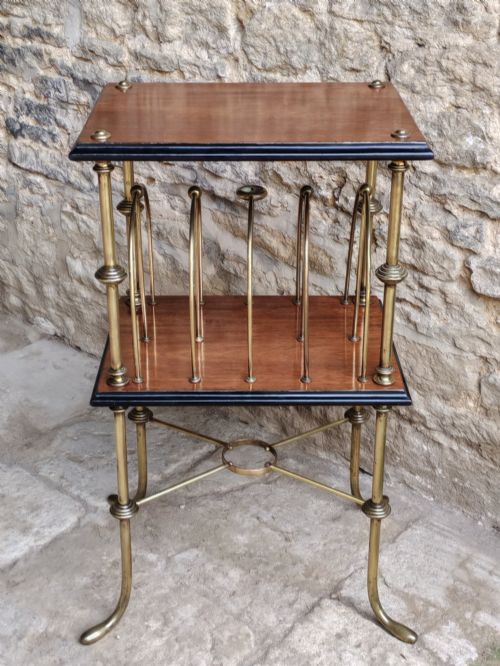
Brass fittings, including castors, carrying handles, and adjustable music desk brackets, added mobility and fine detail to Regency and Victorian designs. Carved wooden ornamentation and painted finishes further distinguished individual items.
Some nineteenth-century makers evidently expected musicians to practice with the enthusiasm of a sea captain, hence the popular boat-shaped design.
What varies in quality
The grade of timber selected for the frame and the complexity of the turned or carved supports dictate the overall standard of a piece. Finer examples utilise solid rosewood or figured mahogany with precise joinery at the corners and dividers.
The integration of functional elements, such as smooth drawers, sturdy brass castors, and reliable adjustment mechanisms on music stands, separates standard utilitarian items from superior workshop production.
Gillows·Harrods
The Period Music Rack Glossary
- Canterbury
- A low stand with upright partitions designed for holding sheet music, folios, or magazines, often fitted with a small drawer at the base.
- Duet stand
- A music stand with a wider desk or dual surfaces to accommodate two musicians reading from the same sheet simultaneously.
- Whatnot
- An open set of multi-tiered shelves used for displaying ornaments or holding books and papers within a reception room.
- Boat shaped
- A descriptive term for canterburys featuring curved, concave sides reminiscent of a hull, popular during the Regency period.
- Etagere
- A piece of furniture consisting of a set of open shelves for displaying small objects, sometimes combined with a lower cabinet or rack.
Period Music Rack: Frequently Asked Questions
What is a music canterbury?
A music canterbury is a specialised storage rack featuring vertical partitions designed to keep sheet music and scores organised and upright beside an instrument.
Cabinet makers developed these stands to clear surfaces in music rooms while keeping performance materials close at hand.
How do I date a mahogany canterbury?
Dating relies on stylistic markers, such as the curved lines typical of the Regency period or the heavier proportions found in later Victorian pieces.
Construction details, timber selection, and the presence of brass castors or turned legs also offer clues to the approximate decade of manufacture.
Can these stands hold modern magazines?
Most period music racks and canterburys feature partitions deep and wide enough to accommodate contemporary magazines and oversized books.
Their original purpose was storing paper folios, making them suitable for modern reading materials in a living space.
What is the difference between a rack and a stand?
A music rack or canterbury provides horizontal or vertical storage compartments for books and folded sheets of paper.
A music stand incorporates an adjustable desk to hold scores at a reading angle for a standing or seated musician.