
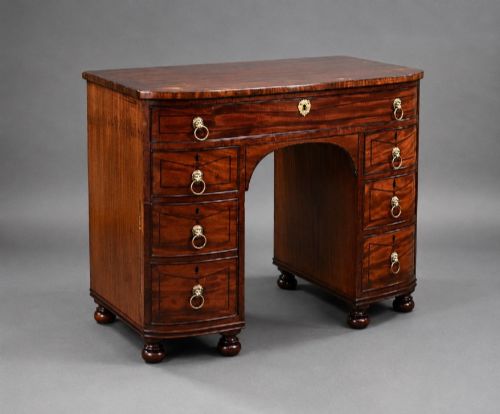
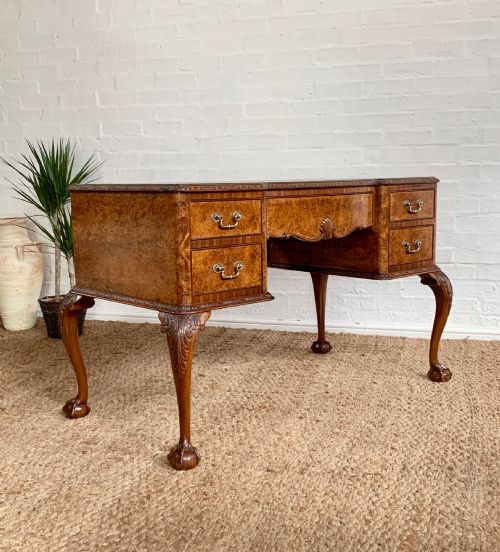

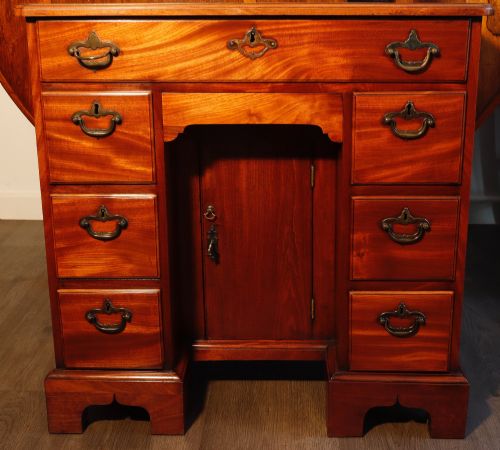
Pedestal Vanity Table
A pedestal vanity table serves as a dedicated morning station, bringing fitted mirrors and timber drawers together for grooming.
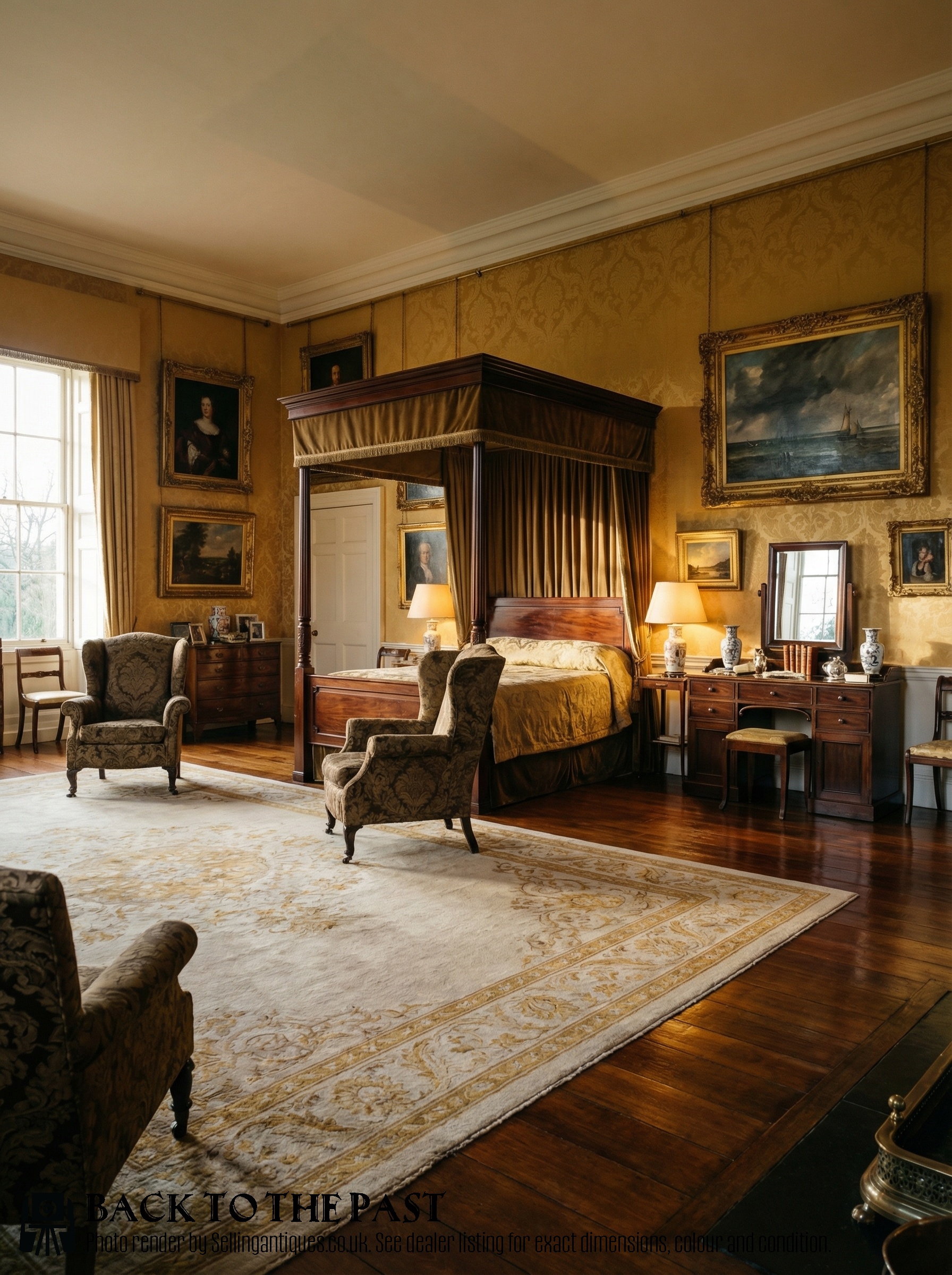
Pedestal Vanity Table
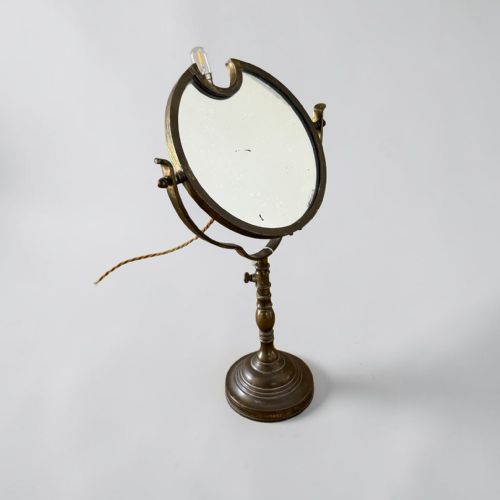
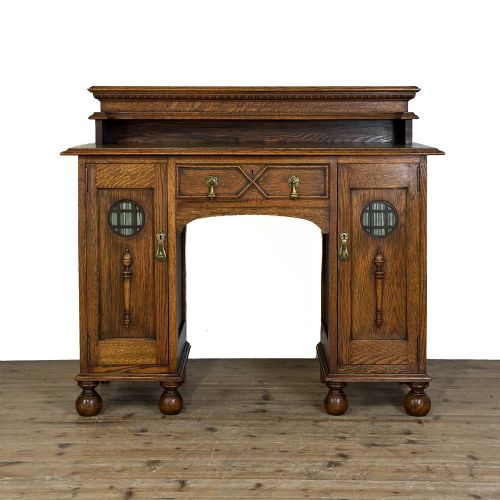
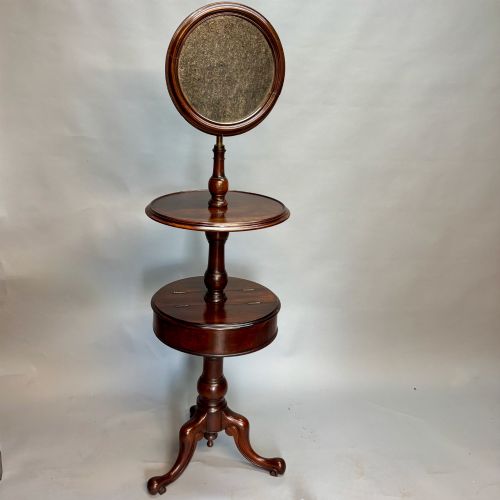
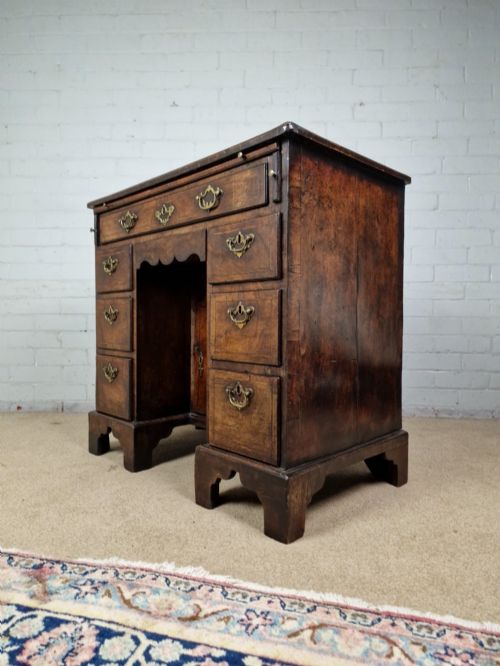
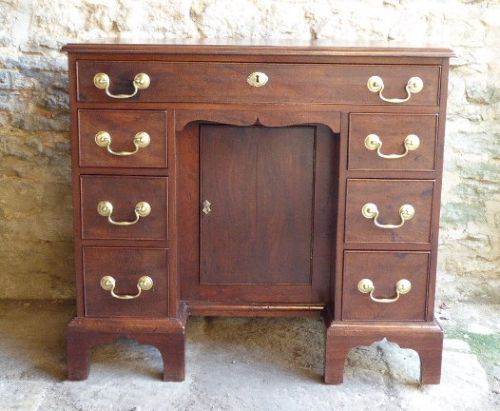
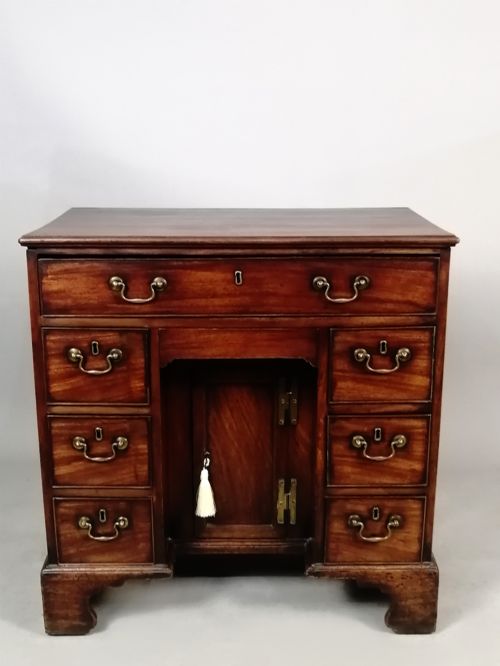
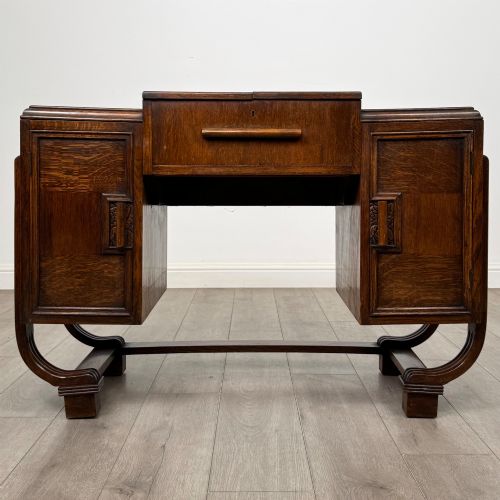
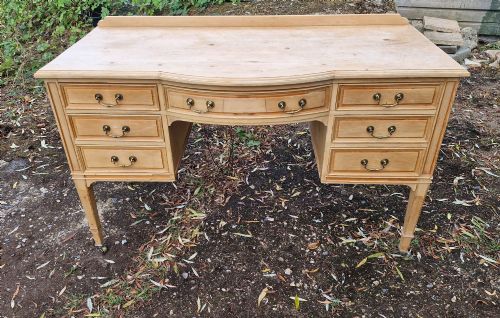
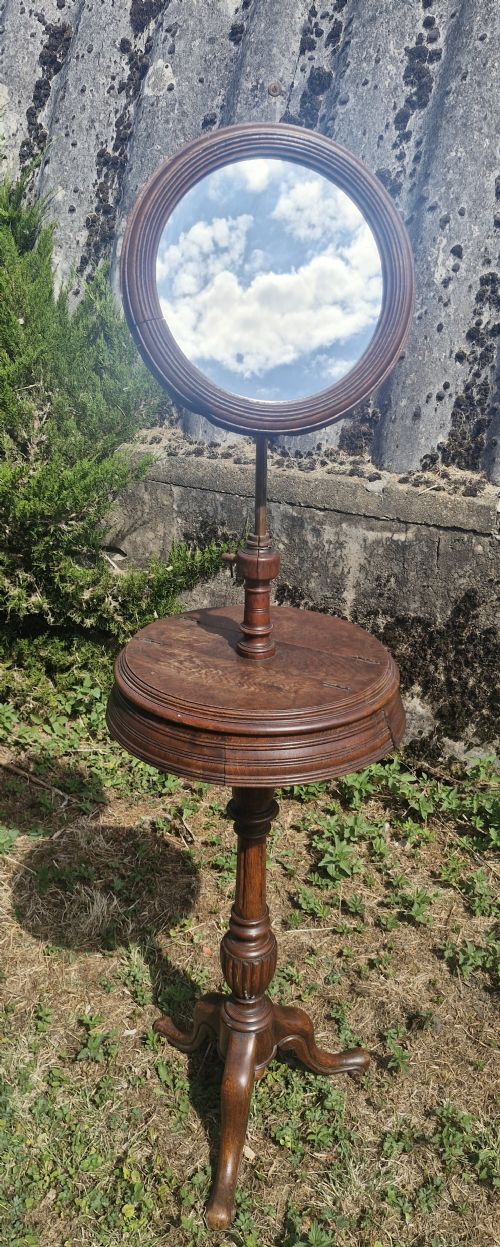
A pedestal vanity table sits on supporting drawer columns, offering a surface for mirrors and toiletries. These pieces appear across the eighteenth, nineteenth, and twentieth centuries in forms such as dressing tables, kneehole desks, and shaving stands.
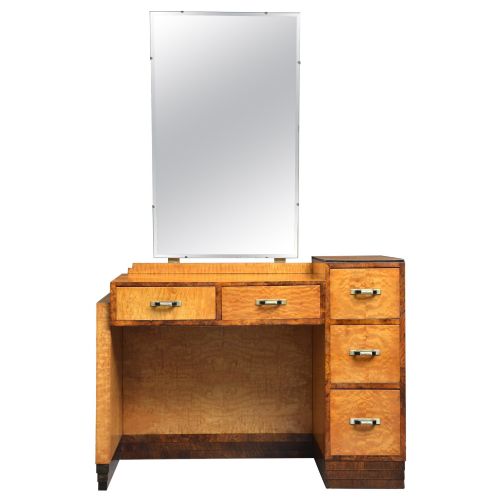
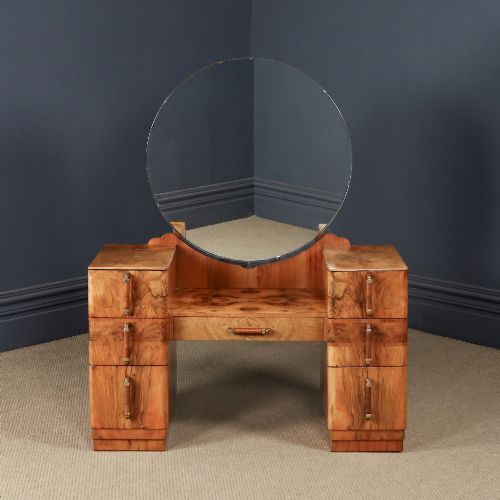
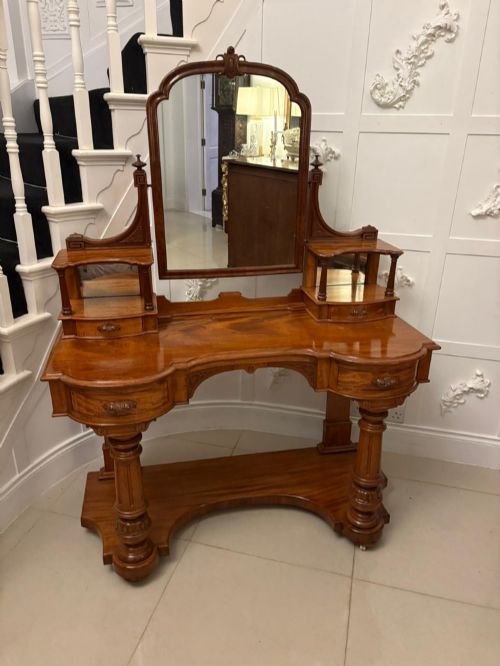
The version most commonly met on this page is the burr walnut or mahogany pedestal dressing table from the art deco era or the Victorian period. These examples typically feature central mirrors flanked by banks of small drawers.
Makers adapted the pedestal format across Georgian, Regency, and Edwardian revivals, utilising oak, pine, and maple alongside traditional cabinet timbers.
What varies in quality
The selection of timber veneer determines much of the visual character, with matched burr walnut or figured maple representing higher output than plain pine or secondary woods. Finely carved mouldings and original brass handles distinguish superior workshop production from simpler commercial pieces.
The integration of the mirror assembly and the smooth operation of multiple pedestal drawers indicate the original standard of construction.
Some nineteenth-century gentlemen kept their shaving gear tucked into adjustable mirrored stands before the daily routine began.
Heal & Sons·Harry and Lou Epstein
The Pedestal Vanity Table Glossary
- Pedestal
- A structural support column containing drawers that sits beneath the main surface of the table.
- Kneehole
- A recessed central space beneath a desk or dressing table designed to accommodate the user's legs.
- Burr walnut
- A decorative timber veneer taken from the growth growths of the walnut tree, showing swirling grain patterns.
- Shaving stand
- A specialised small table or cabinet fitted with an adjustable mirror for grooming.
- Dovetail
- A traditional interlocking joint used to join drawer corners securely.
Pedestal Vanity Table: Frequently Asked Questions
How do I date a pedestal vanity table?
Dating relies on timber choices, construction methods, and stylistic details. Georgian and Victorian pieces show traditional solid woods and hand-cut joints, while nineteen-thirties examples often display art deco veneers and rounded mirrors.
Hardware and secondary woods inside the drawers provide further clues to the period of manufacture.
What is the difference between a desk and a vanity table?
A pedestal vanity table typically includes an integrated mirror and compartments sized for cosmetics or grooming items. Desks focus on writing surfaces and kneehole spaces without the mirror superstructure.
Many nineteenth-century and art deco examples bridge both functions through adjustable or detachable mirrors.
How were these tables used originally?
Owners used them in bedrooms and dressing rooms for morning routines, hair styling, and applying cosmetics. The pedestal drawers kept personal items and accessories close at hand.
They also served as writing desks when paired with a matching stool or chair.
How do I care for walnut veneer?
Walnut veneer requires protection from direct sunlight and excessive moisture to prevent fading and lifting. Regular dusting with a dry cloth maintains the polished surface.
Applying occasional wax preserves the natural timber sheen without harming the historic finish.