

Pedestal Fruit Dish
When you bring home a pedestal fruit dish, you invite a century of dining ritual onto the table.
Pedestal Fruit Dish
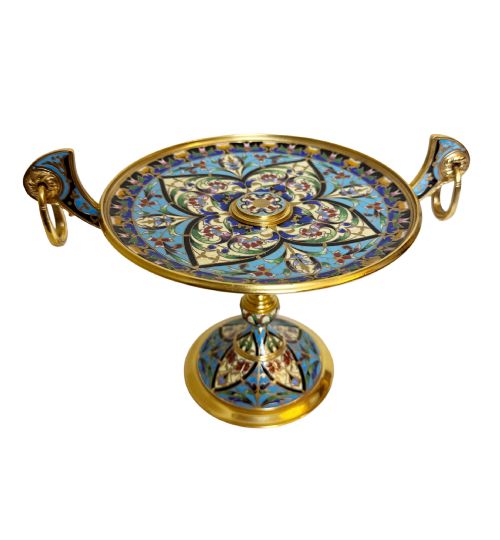
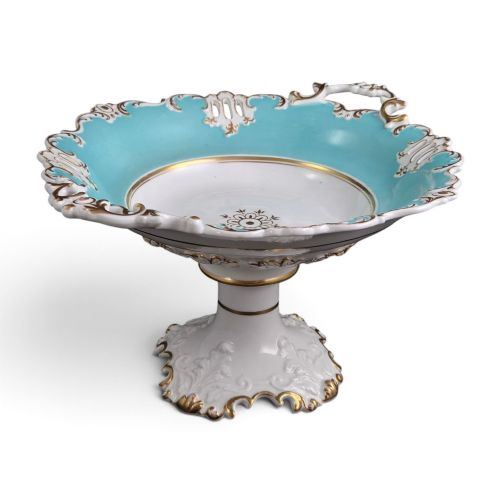
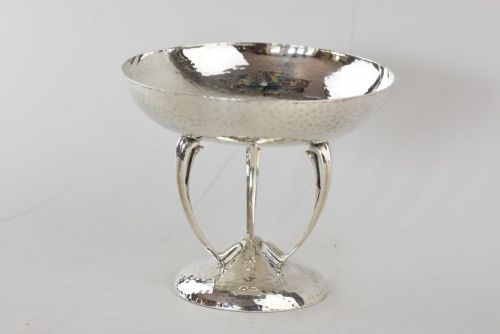
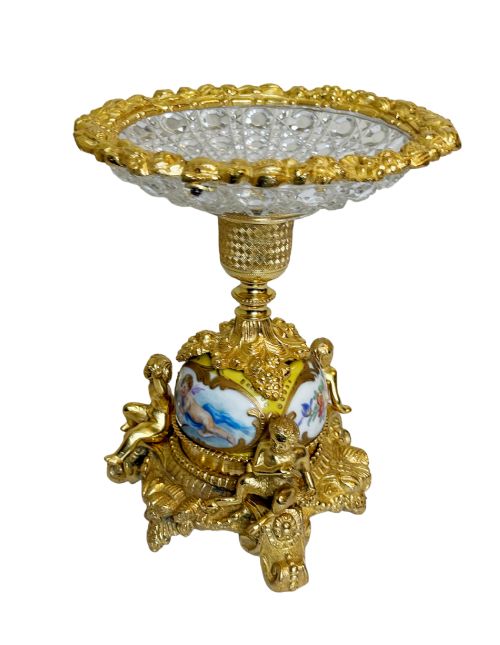
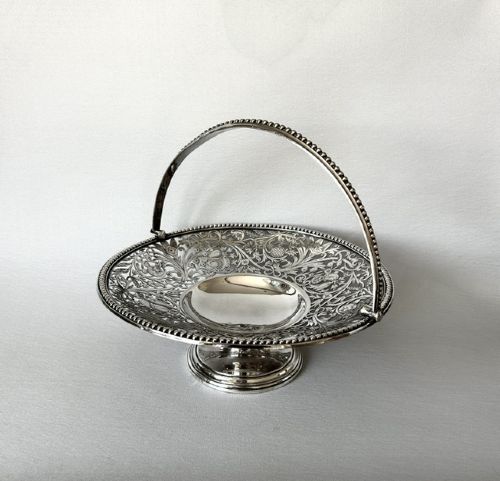
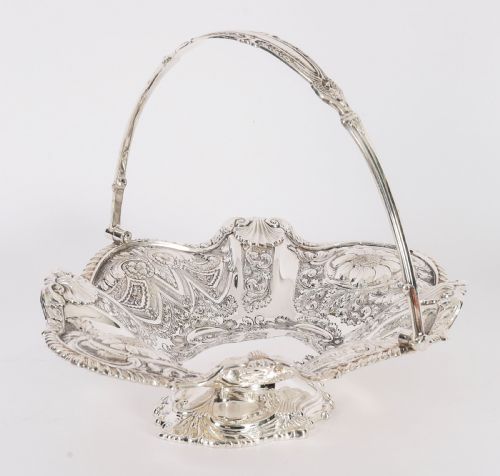
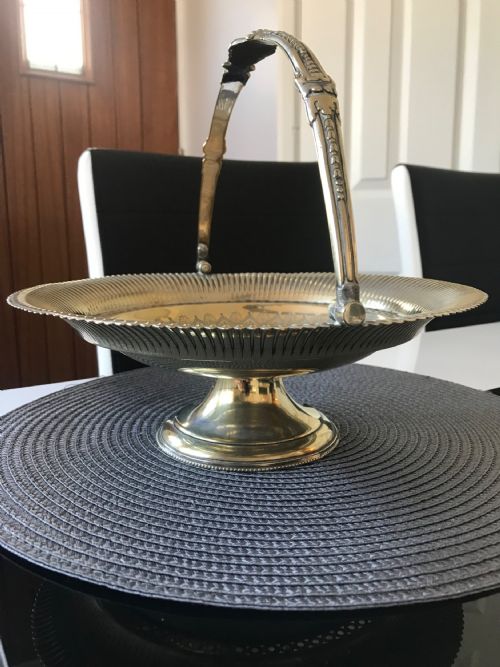
A pedestal fruit dish raises a central bowl above the dining table on a footed base, presenting fruit with height and presence. You will find these listed under various historical terms such as tazza, comport, or centrepiece, depending on the maker and period.
The pieces appearing here span from the Georgian and Victorian eras through the Edwardian years into Art Deco and Arts and Crafts designs. Ceramic, glass, and sterling silver dominate the selections, alongside plated metals and gilt bronze.
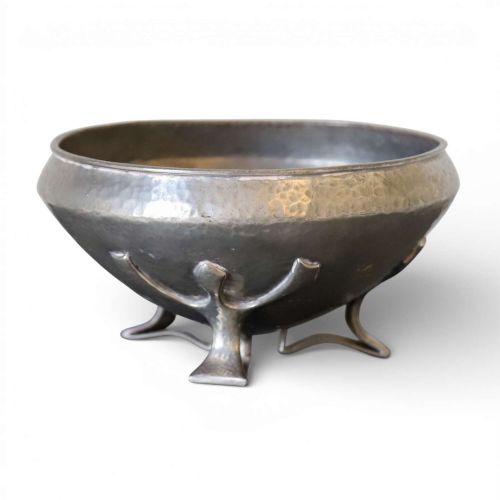
Victorian ceramic and glass comports sit alongside heavy Edwardian silver dishes and later oak or pewter vessels. Each form served to organise the dessert course or anchor a dining table arrangement.
Methods and Materials
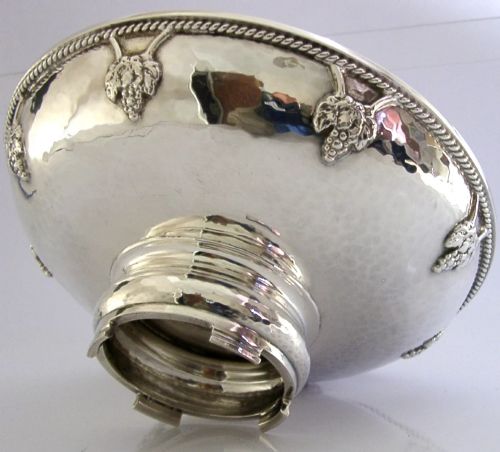
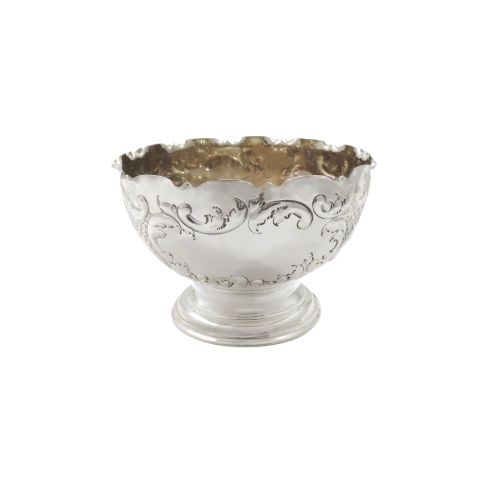
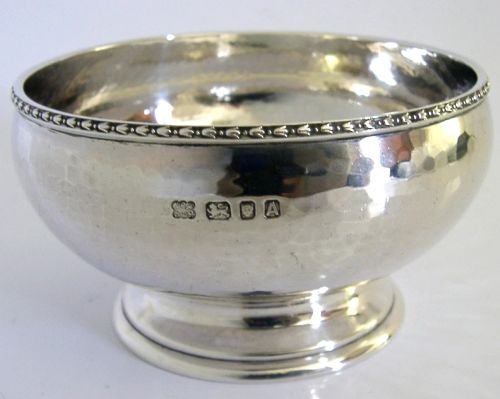
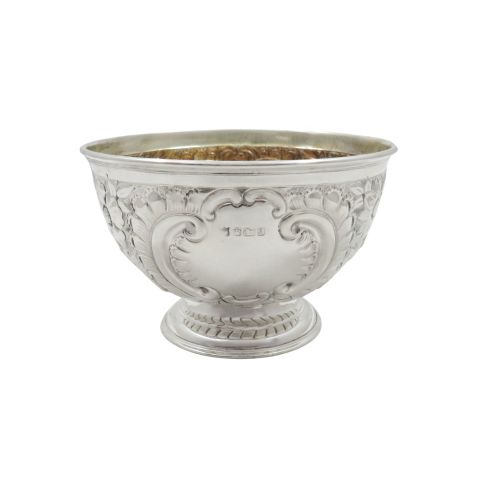
Silversmiths shaped sterling and plated metals through hammering, piercing, and repoussé work, mounting bowls securely onto cast or spun pedestal feet. Pewter vessels from the Arts and Crafts period display similar hand-finished surfaces and patination.
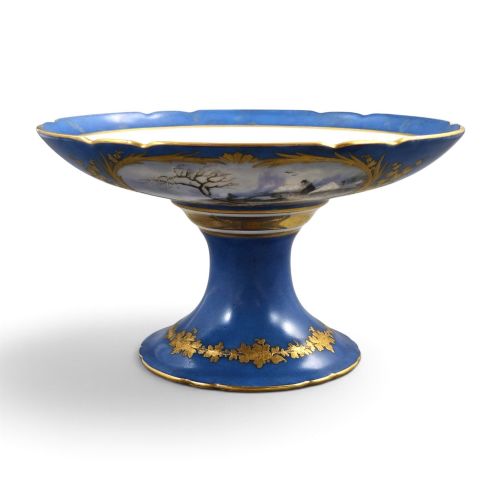
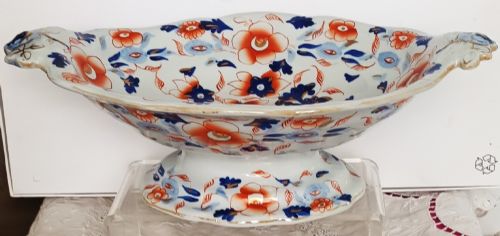
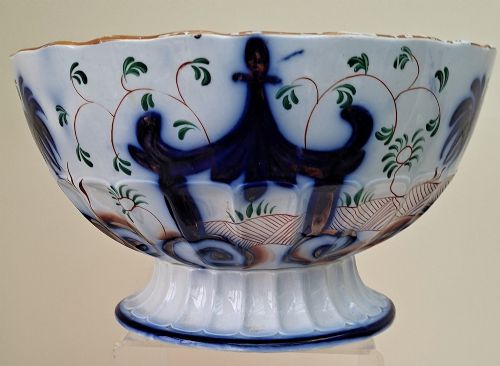
Ceramic comports in porcelain, ironstone, and earthenware rely on moulded bodies painted with transfer prints or hand-applied enamels. Glass examples combine mould-blowing with deep wheel-cut decoration or gilt highlights.
Gilt bronze mounts often support porcelain or cut crystal bodies, screwed or pinned together with traditional threaded fittings. Oak and other timbers feature carved details like fruiting vines, joining the diverse material vocabulary of these serving vessels.
Materials span sterling silver, silver plate, porcelain, cut glass, ironstone, earthenware, pewter, and oak.
Assessing Quality
Quality rests in the crispness of the casting, the depth of hand-chased or cut detail, and the structural integrity of the pedestal joint. A heavy gauge of metal or a thick, resonant cut-glass blank signals superior production.
Makers known for exceptional standards, such as Liberty & Co or documented silversmiths, apply their craft with precision evident in balanced proportions and clean hallmarks. Ceramic pieces show refinement in the registration of transfer printing and the smoothness of the glaze.
Wear should appear honest and proportionate to age, without compromising the stability of the raised bowl. The harmony of design across the foot, stem, and bowl distinguishes ambitious commissions from everyday utilitarian wares.
A E Jones·Goldsmiths and Silversmiths Company·Liberty & Co·Oliver Baker·Charles Boyton·Schierholz Plaue·Walker & Hall
The Pedestal Fruit Dish Glossary
- Tazza
- A shallow bowl or plate mounted on a pedestal foot, used historically for serving small foods or fruit.
- Comport
- A footed dish or bowl designed for the dessert course, standing slightly higher than standard tableware.
- Repoussé
- A metalworking technique where the artisan hammers the design from the reverse side to create raised relief on the front.
- Planished
- A metal surface finish showing small, controlled hammer marks left deliberately by the silversmith.
- Ironstone
- A heavy, durable type of earthenware developed in the nineteenth century as a robust alternative to porcelain.
Pedestal Fruit Dish: Frequently Asked Questions
What is a tazza?
A tazza is a flat or shallow dish elevated on a stem and a foot, originating as a ceremonial vessel before becoming a dining table centrepiece.
In modern usage, the term often overlaps with pedestal fruit dishes and comports, serving to display fruit or sweetmeats.
How were these dishes used?
Victorian and Edwardian households placed these raised vessels in the centre of the dining table to serve fruit, nuts, or small cakes during the dessert course.
Their height allowed dishes to pass easily over other table settings while adding architectural interest to the dining room.
How do I care for silver and glass?
Sterling silver and silver plate require gentle cleaning with non-abrasive polishes to maintain the metal finish without wearing down the underlying plating or hallmarks.
Glass and ceramic comports should be washed by hand in warm soapy water, avoiding sudden temperature changes that might stress antique materials.
How can I tell the period?
Stylistic clues such as Rococo Revival curves, Arts and Crafts hand-hammering, or Art Deco geometry help narrow down the date of manufacture.
Maker marks, registration numbers, and hallmarks stamped into the metal or printed beneath the glaze provide precise chronological markers.