




Patterned Fabric Stool
A patterned fabric stool brings warmth and character to a room, offering both a place to rest tired feet and an extra seat.
Patterned Fabric Stool
A patterned fabric stool is a practical and decorative household piece found across several distinct historical periods. When searching for a patterned fabric stool, buyers encounter formats ranging from compact footstools to large ottomans and adjustable piano seats.
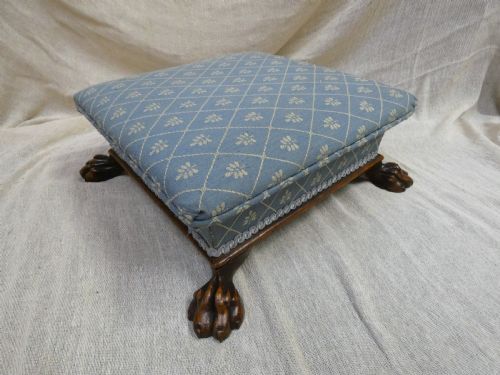
The pieces listed here span the Georgian, Victorian, and Edwardian eras, stretching into the early twentieth century. Makers of these periods employed diverse structural forms, including waisted ottoman stools, cushion top footstools, and dressing table seats.
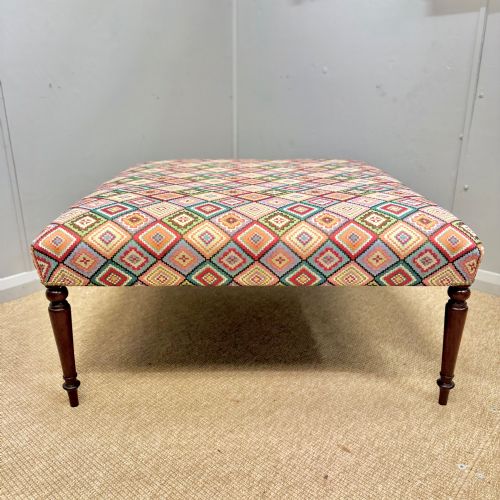
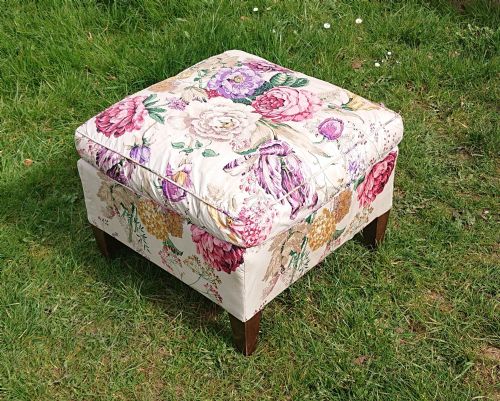
English country house aesthetics and revival styles dominate the selection available. Buyers most frequently meet nineteenth-century examples upholstered in textiles such as kilim and distinctive printed cottons.
How they were made
Craftsmen utilised heavy hardwoods such as mahogany, rosewood, oak, and general timber to construct the underlying frames of these stools. These durable woods were frequently carved, gilded, or polished to display rich grain patterns.
Upholstery formed a central part of the construction process, employing fabrics like cotton alongside traditional textile coverings. Brass components, including adjustable mechanisms and castors, completed the functional design of many piano and dressing table stools.
Materials seen across these listings include fabric, mahogany, brass, timber, cotton, rosewood, wood, and oak.
What varies in quality
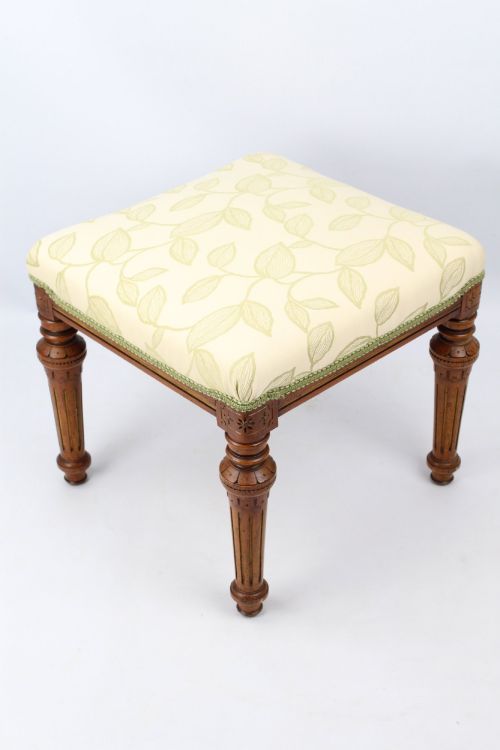
The calibre of a patterned fabric stool rests heavily on the execution of its woodwork and the integrity of its frame construction. Superior examples exhibit precise carving in dense timbers like rosewood and mahogany rather than basic shaping in lesser woods.
The choice and execution of the textile covering dictate much of the visual appeal. Pieces featuring distinctive period weaves like kilim or recognisable aesthetic textiles stand apart from standard utilitarian upholstery.
The Patterned Fabric Stool Glossary
- Kilim
- A flat-woven textile often utilised as a durable and decorative covering for nineteenth-century footstools. These coverings introduce geometric patterns and rich colour palettes to traditional wooden frames.
- Ottoman
- A padded seat or footstool lacking a back or arms, frequently designed with internal storage space. Larger examples serve central roles in country house interiors.
- Prie Dieu
- A devotional chair or low stool designed for prayer, typically featuring an upright back or an upholstered top resting on turned wooden supports. Victorian iterations often employ rosewood and Gothic revival motifs.
- Waisted
- A frame profile that curves inwards toward the centre, creating a distinctive hourglass silhouette. This shape appears on nineteenth-century ottoman stools.
- Gilt
- A thin layer of gold leaf or paint applied to a wooden surface to create a decorative metallic finish. This technique highlights carved details on Victorian dressing table stools.
Patterned Fabric Stool: Frequently Asked Questions
What is an ottoman stool?
An ottoman stool is a heavily upholstered seat or footrest that often includes hidden internal storage beneath the cushion top. These versatile pieces function as casual seating or low tables in traditional living spaces.
Larger country house versions provide substantial presence while maintaining a practical domestic purpose. Their textile covers tie together the surrounding colour scheme of a room.
How do I date a footstool?
Dating a footstool involves examining the primary timber used in the frame alongside stylistic clues like carved motifs and turned legs. Georgian and Victorian pieces often display distinct revival influences and dense hardwoods.
Upholstery style and textile choice also offer clues, though many pieces have been recovered over time. Hardware such as brass castors or adjustment screws helps narrow down the period of manufacture.
Where should I place a piano stool?
An adjustable piano stool works well beside a desk, dressing table, or in a corner as an occasional seat. Their mechanical height adjustment provides practical utility in smaller living spaces.
Pairing these compact stools with accent chairs creates functional seating groups without overwhelming a room. Their turned wooden legs and upholstered tops introduce period character to modern interiors.
What is a Gothic revival stool?
A Gothic revival stool incorporates architectural motifs inspired by medieval design, such as pointed arches, heavy tracery, and dark woods. These Victorian interpretations brought dramatic silhouettes into nineteenth-century homes.
Such pieces often feature carved rosewood or oak frames paired with rich upholstery fabrics. They serve as striking statement items in traditional or eclectic interiors.