

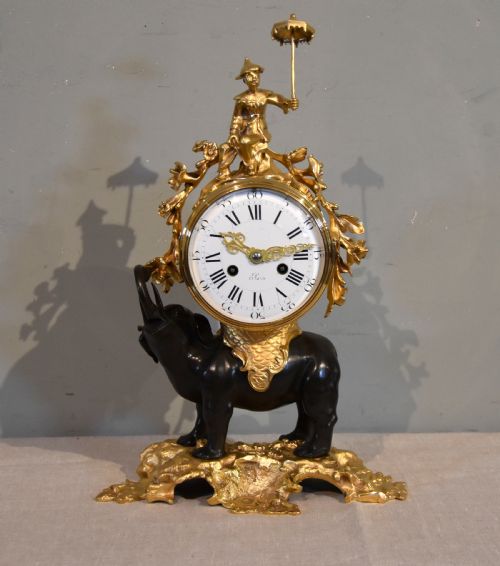
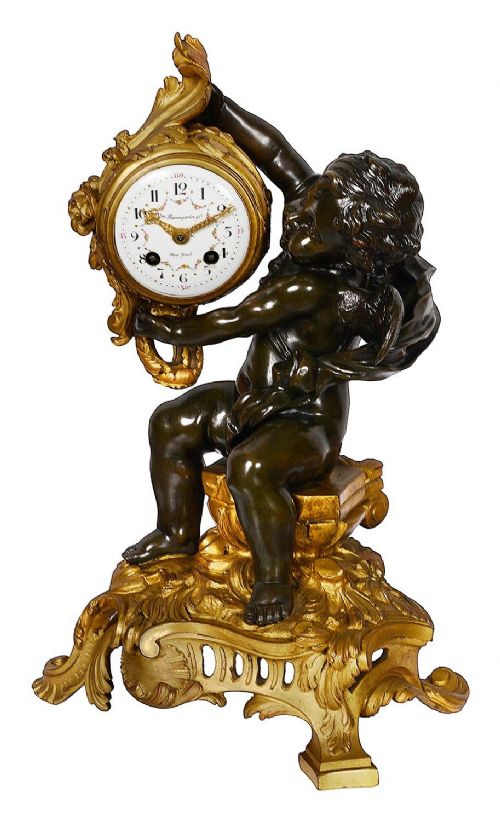


Patinated Bronze Mantel Clock
A patinated bronze mantel clock brings weight, classical form and precise mechanics to a room, anchoring a mantelpiece with enduring presence.
Patinated Bronze Mantel Clock
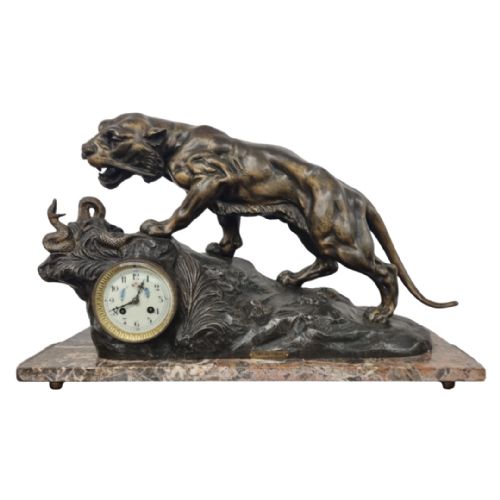
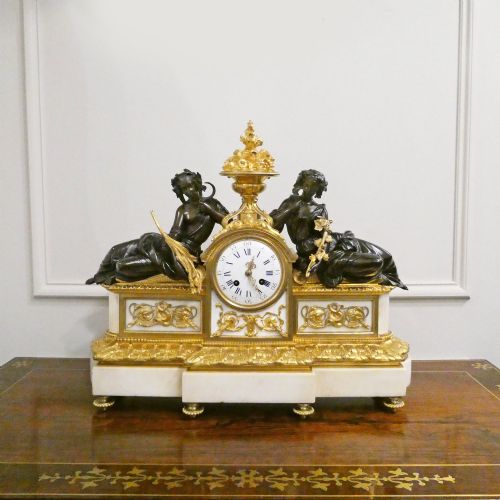
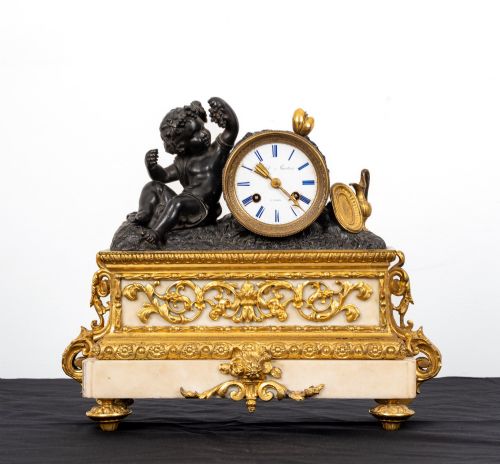
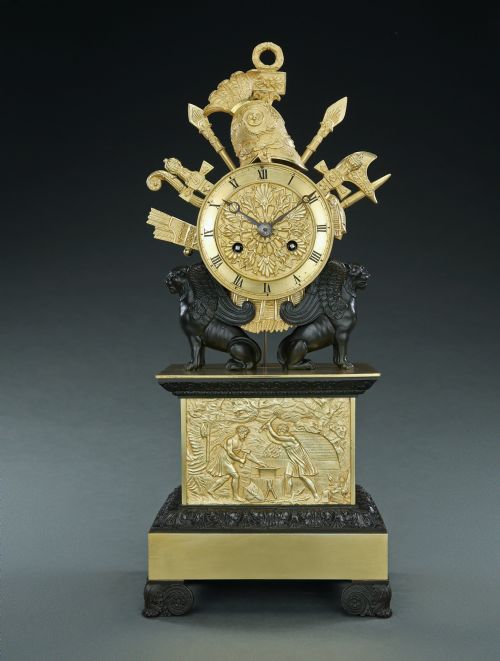
A patinated bronze mantel clock stands as a formal timepiece designed for display on a fireplace shelf or console table. These works appear across nineteenth-century styles, including French Empire, Regency, and Rococo Revival, alongside Victorian interpretations.
Most examples combine dark patinated bronze with contrasting ormolu, marble, or brass elements. Subjects range from classical figural groups and mythological scenes to animal forms and architectural portico designs.
Buyers encounter standalone mantel clocks as well as larger clock garniture sets accompanied by matching side ornaments. The predominant origins lean toward French workshops operating during the 1800s and early 1900s.
Materials and construction
Foundry workers cast the primary figures and cases in bronze before applying chemical patination to achieve dark brown or nearly black surfaces. Ormolu, or gilded bronze, provides sharp highlights through mercury gilding or electroplating.
Carved marble bases in white, sienna, or rouge varieties support the heavy bronze bodies, while enamel dials display Roman or Arabic numerals. Movement makers fitted mechanical brass clockworks driven by weights or springs, often utilising fusee or pendulum regulations.
Patinated Bronze Mantel Clock Retail Price Guide 2026
Typical asking prices for patinated bronze mantel clock among the pieces listed under this phrase on Sellingantiques today, from the lower quarter to the upper quarter. They describe what is for sale here now, not the wider market.
Distinctions in quality
The precision of the bronze casting and the depth of the subsequent chasing separate standard production from exceptional work. Finer examples exhibit crisp detail in hair, drapery, and animal musculature without soft edges or visible casting flaws.
The integration of the patinated bronze with gilt ormolu accents determines visual balance. Superior pieces maintain crisp contrast between the dark patination and the bright mercury gilding on solid marble plinths.
R Varnier·Vincenti·Siffel and Cartier·William Payne·Japy Freres·Ravrio·Hessen Paris·Lemerle Charpentier·Raingo Fres Paris·Bellenot Paris·Deniere and Cailleaux·Deniere Paris
The Patinated Bronze Mantel Clock Glossary
- Patinated bronze
- Bronze that has been treated with chemical solutions to produce a stable dark surface colour. This dark tone contrasts sharply with gilt mounts and marble bases.
- Ormolu
- Gilded bronze produced by applying a gold amalgam to the metal surface and heating it to drive off the mercury. The technique yields a rich, durable golden finish.
- Clock garniture
- A matching set comprising a central clock flanked by two decorative side pieces such as urns or candelabra. These sets create symmetrical arrangements on a mantelpiece.
- Fusee
- A conical pulley connected to the mainspring by a cord or chain to maintain even tension as the spring unwinds. This mechanism improves the timekeeping accuracy of the clock.
- Portico clock
- A clock case shaped like an architectural temple with supporting columns. The pendulum often swings visibly within the open central space.
Patinated Bronze Mantel Clock: Frequently Asked Questions
How do I wind a mantel clock?
Most mechanical mantel clocks use a key inserted into dedicated holes on the enamel dial to tension the mainsprings. Turn the key gently until you feel resistance, taking care not to overwind the movement.
Ensure you stop winding the moment you feel firm resistance to protect the internal brass gears and spring steel from damage.
Where should I place my clock?
Position the clock on a sturdy, level surface such as a mantelpiece, sideboard, or console table away from direct sunlight and dampness. A stable foundation prevents vibrations that can disrupt the pendulum beat.
Allow enough clearance around the case for air circulation and ensure the clock stands completely plumb so the escapement ticks evenly.
How do I tell if a clock is French?
Examine the movement backplate for stamped foundry marks, maker names, or medals awarded at nineteenth-century expositions. French pieces frequently feature distinctive cast bronze mounts and elaborate marble or ormolu garnitures.
Stylistic cues such as Empire motifs, Rococo scrolls, or Napoleon III neoclassical details also point directly to Parisian workshops of the period.
What is a fusee movement?
A fusee movement incorporates a conical grooved pulley that equalises the power delivered by the mainspring as it runs down. This mechanical arrangement ensures consistent force reaches the escapement from a fully wound state to empty.
Clocks with fusee movements generally offer superior timekeeping accuracy compared to standard spring-driven alternatives.