



Pastoral Oil Landscape
These pastoral oil landscape paintings capture rural idylls with herds, shepherds and quiet rivers across centuries of European and British artistry.
Pastoral Oil Landscape
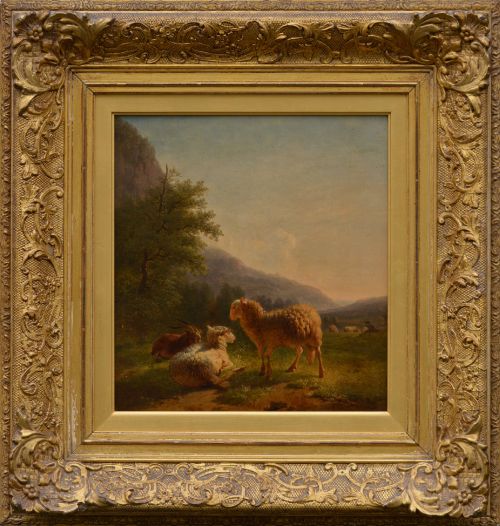
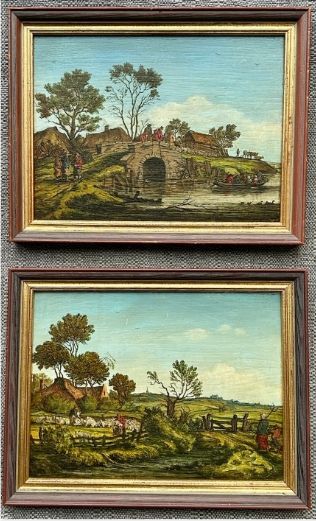
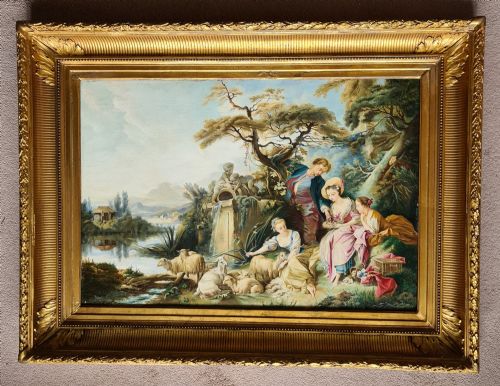
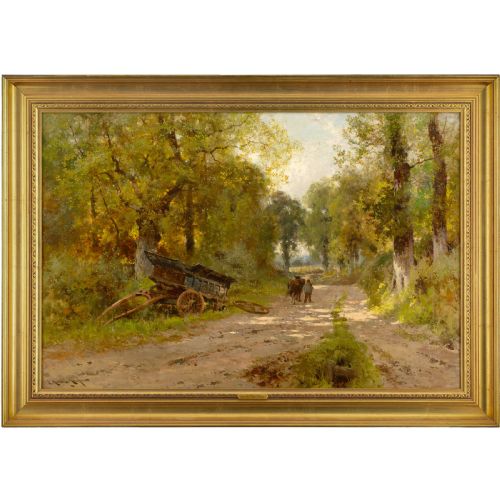
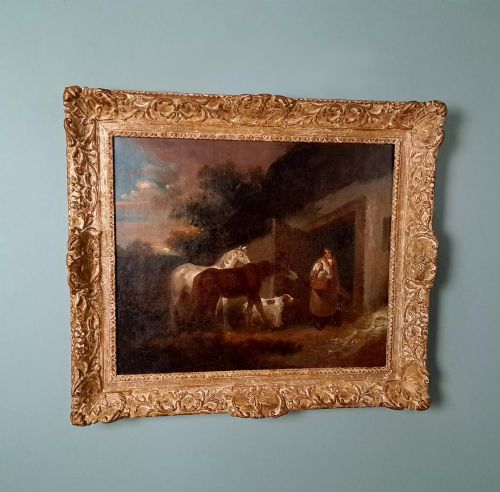
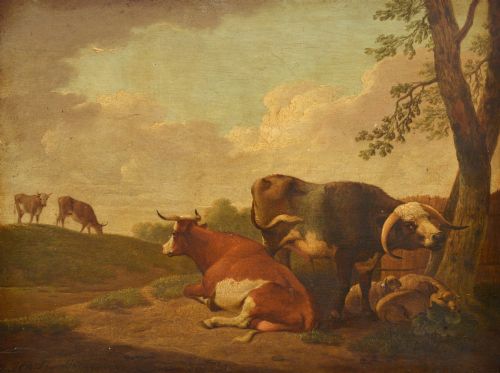
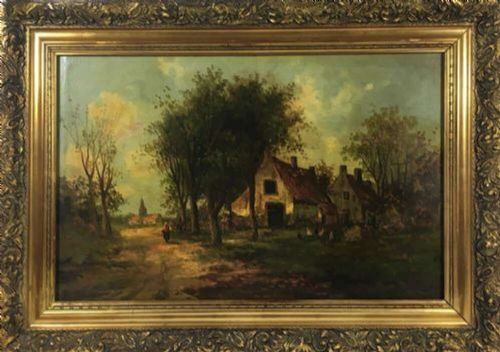
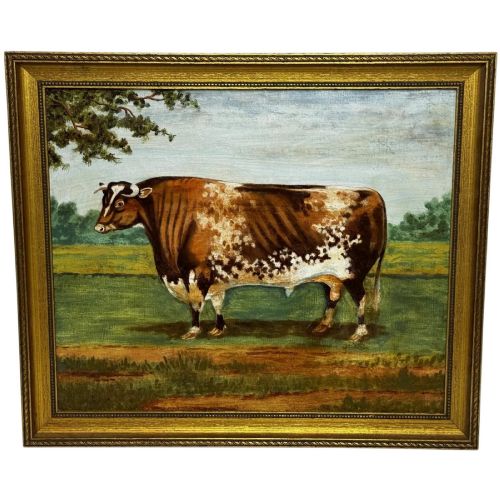
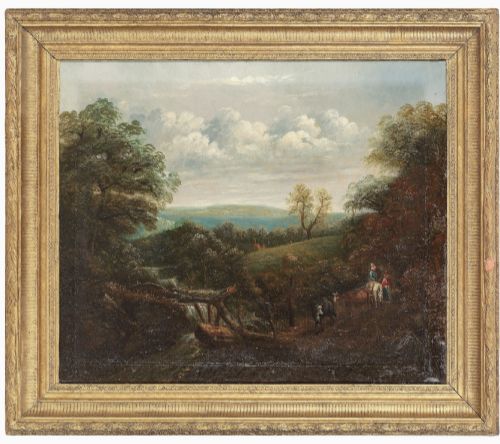
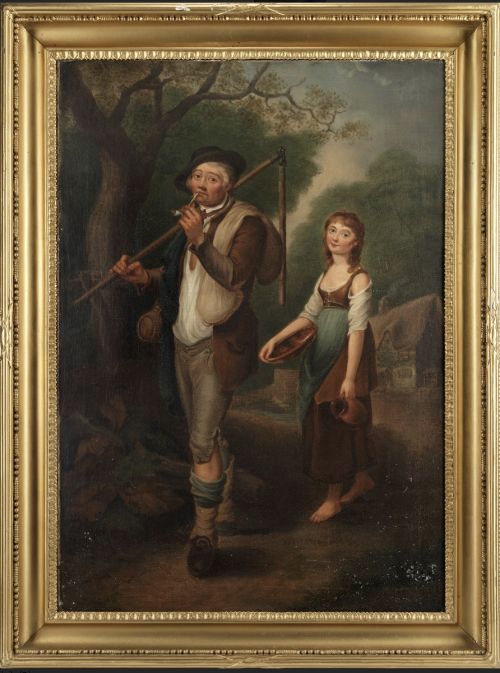
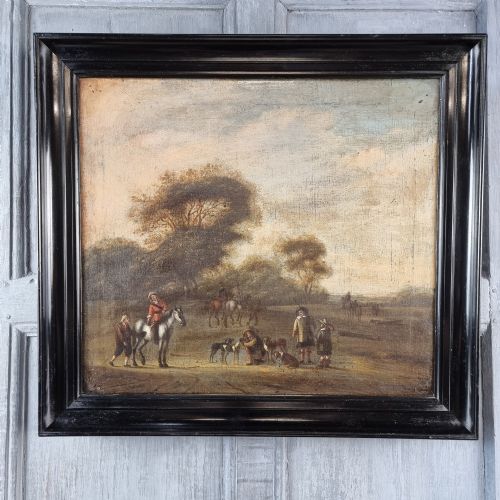
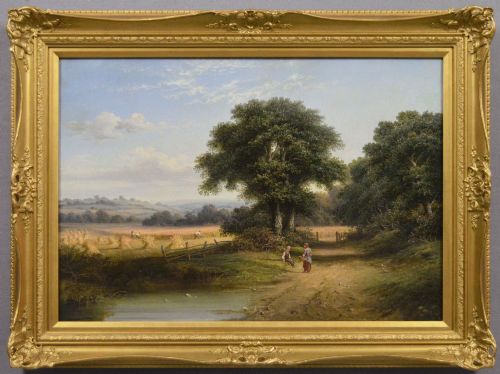
A pastoral oil landscape portrays scenes of country life, frequently featuring cattle, sheep, milkmaids and figures near rivers or harvest fields. The examples on this page span from the seventeenth century through to the early twentieth century, encompassing British, Scottish, French, Dutch and Italian schools.
The most common formats met here are framed canvases and wood panels depicting rural tranquility. Painters such as William Watson Jnr and Thomas Sidney Cooper populate these vistas with livestock, whilst others focus on woodland paths and riverside conversations.
Collectors encounter varying regional interpretations, from the Barbizon School French farmyard views to Scottish Highland cattle scenes. These works reflect changing attitudes to the countryside across Victorian, Edwardian and Georgian periods.
Canvas, wood and pigment
Artists painted primarily in oil on canvas or prepared wood panels, occasionally utilising milk glass or wooden boards as a ground. Pigments were applied to build texture and depth, sometimes leaving visible brushwork or the structural grain of the panel beneath.
Many works retain their period frames constructed from wood and gesso, often embellished with gold leaf or gilding. These frames range from simple carved wooden mouldings to elaborate decorative surrounds that complement the pastoral subject matter.
Listings feature canvases and wood panels from nineteenth-century British, Scottish and Dutch schools.
Execution and atmosphere
The distinction between works lies in the handling of light, anatomical precision of animals and the integration of figures into the landscape. Superior paintings demonstrate confident brushwork and atmospheric depth, whereas provincial or naive examples exhibit simpler perspective and stiffer forms.
Condition and originality also dictate standing, with untouched surfaces retaining their original pigment integrity. The harmony between the painting and its period frame further influences the overall character of the piece.
Eugène Verboeckhoven·William H Myers·Tom Campbell·John Horace Hooper·William Joseph Shayer Senior·Hendrik Willem Schweickhardt·Thomas Barker of Bath·David Bates·Walter Heath Williams·Jacob Philipp Hackert·Thomas Sidney Cooper·Frederick Walker·Richard Redgrave·Ernest Higgins Rigg·Robert Watson·Albert Rieger·William Watson Jnr·Douglas Cameron·Johann Friedrich Voltz·T C Hofland·Miles Birkett Foster·Henry Schouten
The Pastoral Oil Landscape Glossary
- Oil on canvas
- Pigment bound in drying oil applied to a woven fabric support. This was the primary medium for larger landscape works throughout the eighteenth and nineteenth centuries.
- Wood panel
- A rigid wooden support used by painters instead of canvas. These panels are frequently found in earlier or smaller European landscape works.
- Giltwood
- Wood carved and covered with a thin layer of gold leaf or metallic gilt. It forms the decorative surface of many period frames.
- Gesso
- A paint mixture consisting of a chalk binder used to prepare wood or canvas surfaces before painting. It also forms the moulded relief on ornate frames.
- Barbizon School
- A nineteenth-century French art movement focused on realism and pastoral subjects painted directly from nature. These works emphasise atmospheric skies and rural labour.
Pastoral Oil Landscape: Frequently Asked Questions
What subjects appear in pastoral oil landscapes?
These paintings depict rural scenes populated by grazing sheep, cattle, horses and figures engaged in farming or herding. Common motifs include river views, woodland paths, harvest fields and shepherds resting with their flocks.
Artists across Britain and Europe turned to the countryside to record traditional agricultural life and quiet natural vistas. The focus remained on harmonious interactions between humans, animals and the environment.
How do I identify the period of a painting?
Dating relies on stylistic clues, costume details, framing methods and recorded artist active dates. Nineteenth-century works often show romantic or realistic treatments of light, whilst eighteenth-century pieces favour classical compositions.
Signatures, stamps on canvases and inscriptions on the reverse provide further chronological anchors. Comparing handling techniques with known works by specific regional schools narrows down the era.
Where should I hang an oil painting?
These works require stable interior environments away from direct sunlight, excessive heat sources and damp walls. Consistent room temperatures prevent the canvas or wood panel from warping and protect the oil pigment from degradation.
Positioning the painting at eye level in a principal room allows proper appreciation of the brushwork and detail. Pairing the artwork with a suitable wall colour enhances the tonal qualities of the landscape.
Are these paintings signed by the artist?
Many examples feature artist signatures, monograms or contemporary inscriptions on the front or reverse. Some historic works remain unsigned or bear indistinct signatures, reflecting the output of regional or naive European schools.
Attributions for unsigned pieces depend on stylistic comparison, subject matter and framing context. Archival records and past auction data frequently help identify the circle or manner of the creator.