


Rural Landscape Canvas
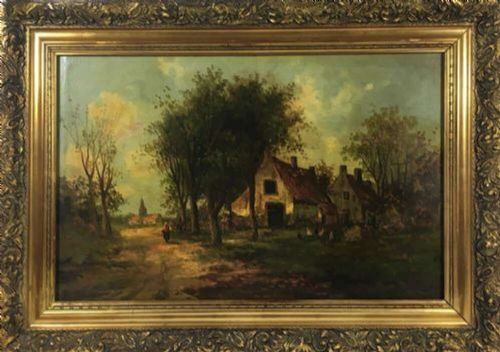
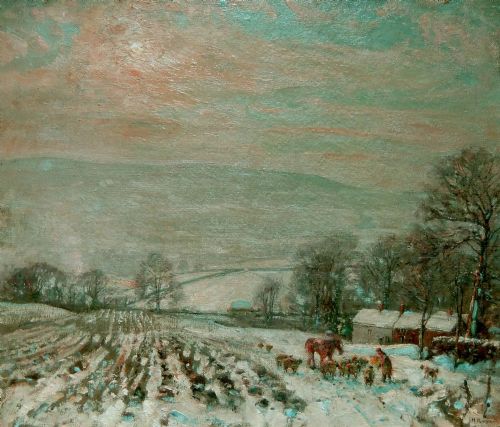
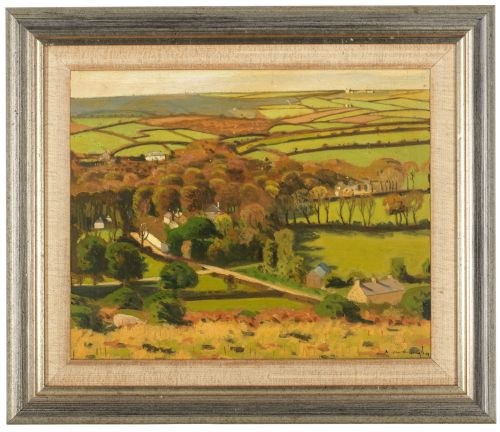
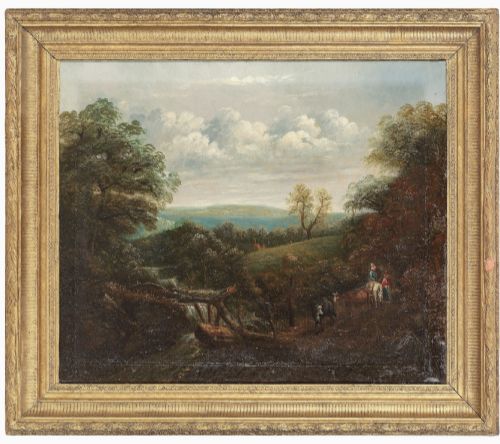
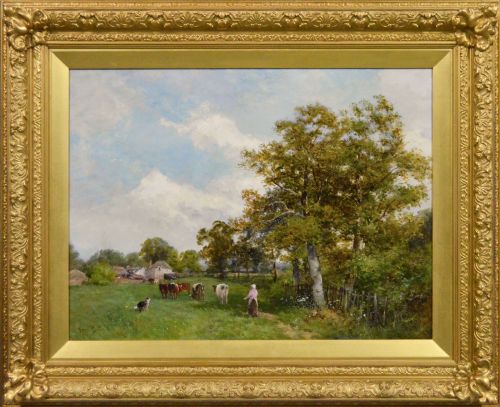
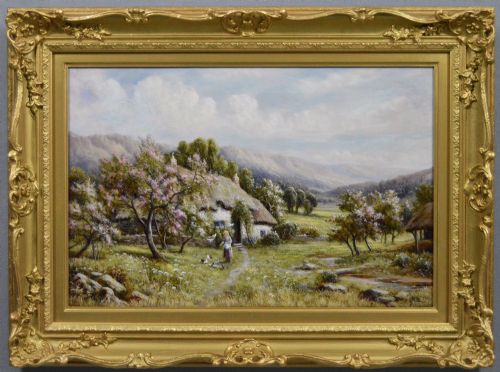
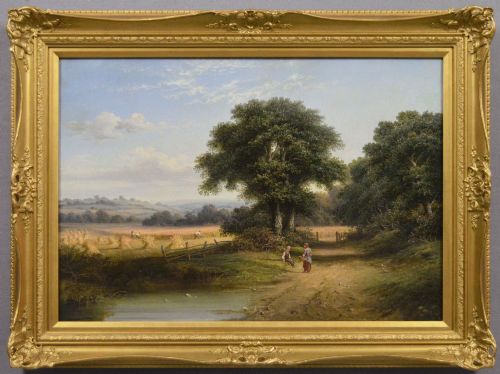
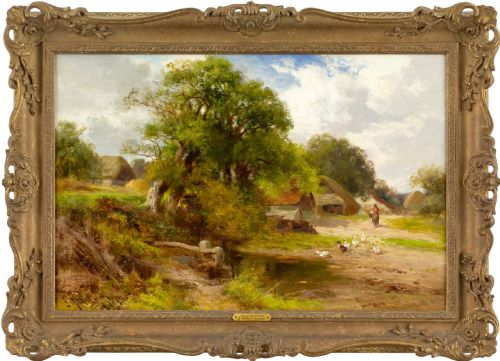
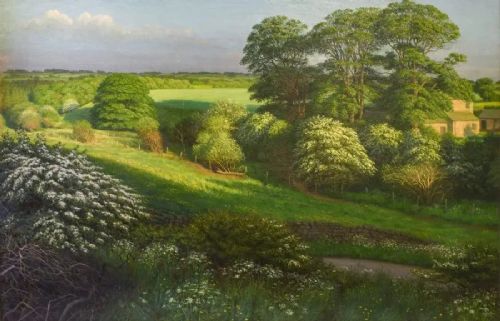
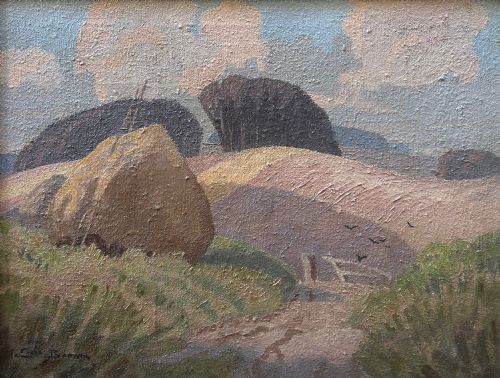
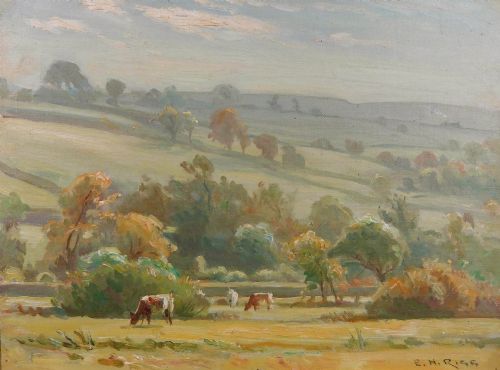
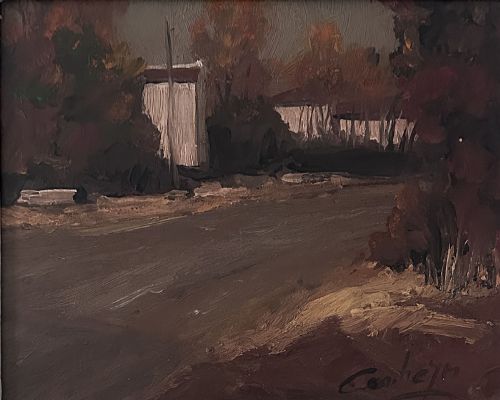
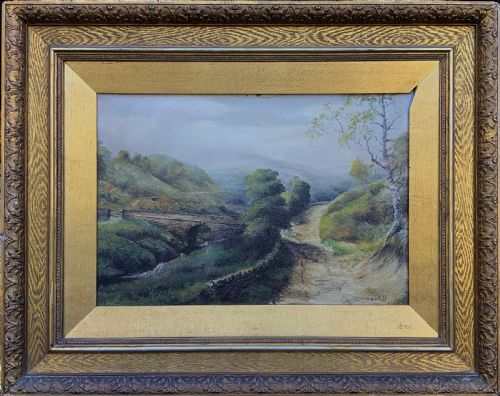
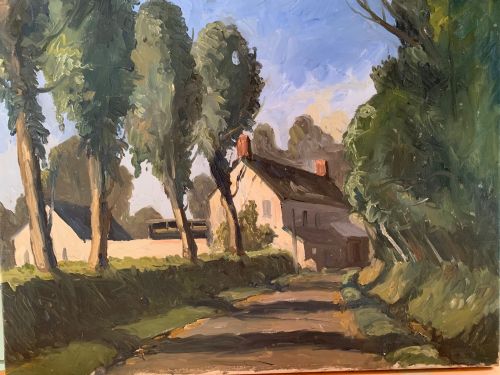
When you search for a rural landscape canvas, you are looking at oil paintings on canvas that capture open fields, cottages, rivers, and farm life.
Rural Landscape Canvas
A rural landscape canvas brings traditional country scenes, agricultural life, and pastoral views into domestic spaces through painted depictions of cottages, farmyards, rivers, and livestock. When searching for a rural landscape canvas, buyers encounter British and continental works ranging from the nineteenth century into the mid-twentieth century.
The pieces on this page span Victorian pastoral compositions, British Impressionism, the Norwich School, and the Barbizon School. Common subjects include working horses, figures near harvest fields, shepherds, and village paths rendered in oil paint on woven supports.
Most examples originate from British and French regional traditions, reflecting local topography, seasonal shifts, and agrarian communities. Works vary from intimate studies of streams to larger framed gallery pieces capturing specific Yorkshire, Sussex, or continental provinces.
Materials and technique
These works are executed in oil paint applied to stretched canvas, often housed within wood and giltwood frames. Artists utilised the slow drying time of oil pigments to build rich textures, layered brushwork, and atmospheric light effects across the canvas surface.
The underlying support consists of woven canvas fixed to wooden stretchers, sometimes retaining original maker stamps or framing labels on the reverse. Gilt wood frames provide structural support and historical context, frequently original to the period of the painting.
Materials recorded across the inventory include oil paint, canvas, wood, and giltwood frames.
Assessing quality in historical canvases
Quality rests in the handling of light, brushwork confidence, and anatomical or spatial proportion within the composition. Masterful pieces capture atmospheric depth, convincing movement in figures and animals, and a coherent tonal balance across the canvas.
The preservation of the paint layer and the integrity of the canvas support dictate the longevity and visual impact of the work. Skilled cleaning, minimal restoration, and an appropriate period frame contribute to the desirability of a piece.
George Graham·Herbert Royle·Robert Morson Hughes·David Bates·Robert John Hammond·Walter Heath Williams·John Horace Hooper·Ernest Higgins Rigg·William Greaves·Sydney Yates Johnson·Owen Bowen·Charles Clair·Harry Freckleton·Raimond Louis Lecourt·William Henry Mander·Thomas Sidney Cooper·Reginald Grange Brundrit·Henry John Yeend King
The Rural Landscape Canvas Glossary
- Barbizon School
- A nineteenth-century French art movement focused on realistic landscape painting en plein air. Practitioners drew inspiration from Fontainebleau and rural provincial life.
- Norwich School
- The first provincial art movement in Britain, established in the early nineteenth century. Artists depicted local Norfolk scenery, rivers, and rural architecture.
- Canvas
- A heavy woven fabric used as a surface for oil painting. It is typically stretched over a wooden frame before application of the ground and pigments.
- Giltwood
- Wood carved and covered with a thin layer of gold leaf or gilt finish. Frames of this material frequently accompany nineteenth-century oil paintings.
- Impressionism
- An art style characterised by relatively small, thin, yet visible brush strokes and an emphasis on accurate depiction of light. British and continental variants emerged in the late nineteenth and early twentieth centuries.
Rural Landscape Canvas: Frequently Asked Questions
What periods do these landscape canvases cover?
The works span from the late eighteenth century through the Victorian era and into the mid-twentieth century. Most examples date from the nineteenth and early twentieth centuries.
Key artistic movements represented include British Impressionism, the Norwich School, and the Barbizon School.
How should I care for an oil painting on canvas?
Keep the canvas away from direct sunlight, high humidity, and rapid temperature fluctuations. Avoid touching the painted surface directly.
Dust the frame gently with a dry, soft cloth and consult a professional conservator if cleaning the canvas becomes necessary.
Are these paintings signed by the artists?
Many pieces feature visible signatures, monograms, or artist inscriptions directly on the canvas surface. Others remain attributed to specific schools or makers based on stylistic evidence.
Documentation such as exhibition labels or historical attribution often accompanies signed works.
What subjects appear most frequently in these scenes?
Common subjects include agricultural workers, harvest fields, farmyards, cottages, and riversides. Animals such as shire horses, sheep, and cattle frequently populate the compositions.
Artists focused on recording traditional rural life and regional topography across Britain and France.