




Pastoral Blue White Ceramics
These pastoral blue white ceramics are traditional earthenwares and porcelains decorated with rural scenes, offering a charming touch of historic country life.
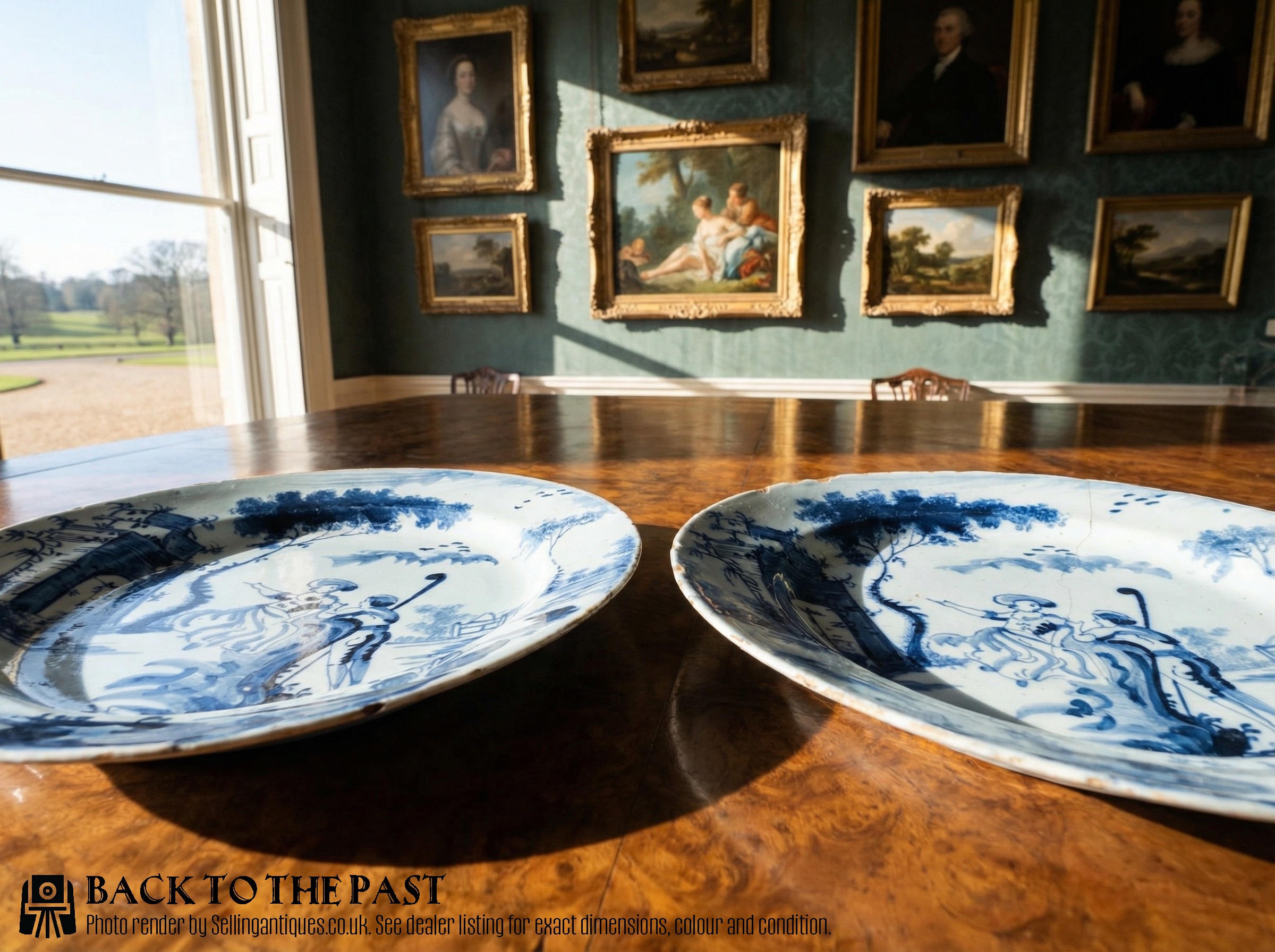
Pastoral Blue White Ceramics
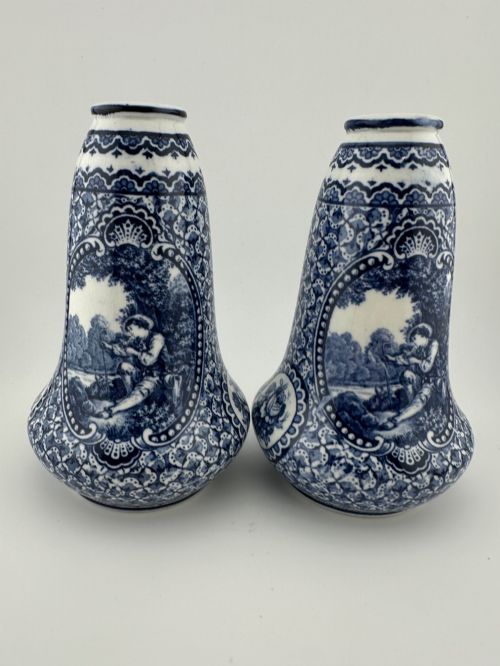
When you search for pastoral blue white ceramics, you encounter a selection of domestic and decorative items spanning the eighteenth, nineteenth, and early twentieth centuries. These wares typically take the form of plates, serving platters, jugs, and vases featuring printed or painted rural motifs.
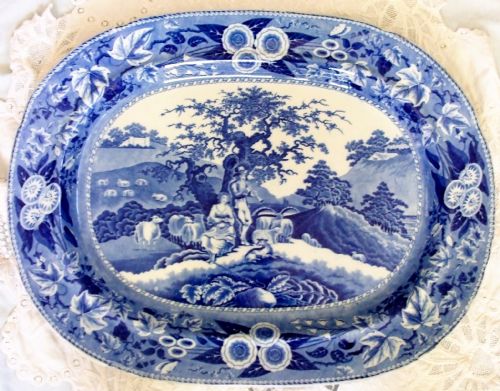
The pieces on this page lean heavily towards English Georgian and Victorian transfer-printed earthenware. You will frequently find pastoral titles depicting shepherds, cowmen, and rustic laborers within traditional landscapes.
How they were made
Potters shaped these ceramics from earthenware, pearlware, and bone china before applying cobalt pigment to create the characteristic blue designs. Tin glaze and clear lead glazes were then applied to seal the surface and impart a glossy finish.
Decoration relied heavily on transfer printing, a technique that allowed intricate pictorial scenes like pastoral landscapes to be transferred from a copper plate onto the ceramic body.
Pastoral Blue White Ceramics Retail Price Guide 2026
Typical asking prices for pastoral blue white ceramics among the pieces listed under this phrase on Sellingantiques today, from the lower quarter to the upper quarter. They describe what is for sale here now, not the wider market.
The listings here span from eighteenth-century delftware through Georgian transfer-printed pearlware up to early twentieth-century bone china.
What varies in quality
The clarity and crispness of the cobalt transfer print define the visual appeal of each item, with finer lines and deeper saturation marking the superior examples. Uneven glaze pooling and blurred outlines generally separate everyday utilitarian pieces from finer works.
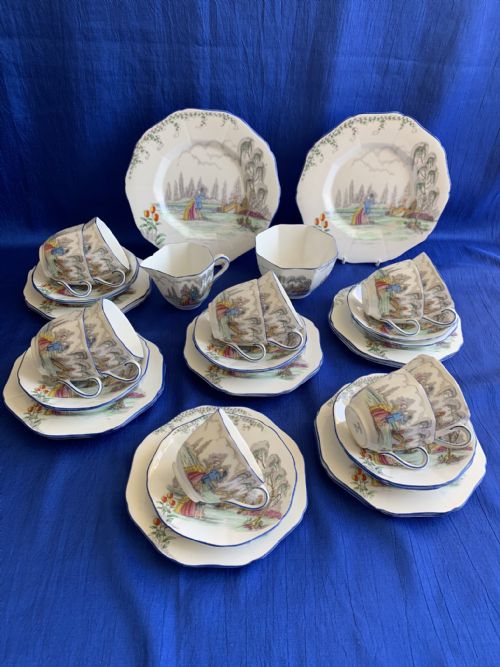
The weight and refinement of the ceramic body also differ, ranging from robust, heavy footbaths and platters to delicate bone china tea sets.
Royal Bonn Franz Anton Mehlem·Don Pottery·Brameld and Co·John Davenport·Sutherland
The Pastoral Blue White Ceramics Glossary
- Transfer printing
- A decoration method where an engraved copper plate is used to transfer a design onto paper and then onto the ceramic body. This technique enabled factories to produce consistent pictorial scenes efficiently.
- Pearlware
- A refined earthenware developed in the late eighteenth century featuring a subtle bluish glaze that pooled in recesses to mimic Chinese porcelain. It forms the base of many nineteenth-century plates and platters.
- Tin glaze
- An opaque white glaze containing tin oxide, used extensively on earlier delftware pieces to provide a smooth canvas for cobalt blue painting. It creates a soft, slightly porous surface.
- Earthenware
- A porous ceramic body fired at lower temperatures, commonly used for heavy domestic wares like jugs, footbaths, and serving platters. It requires a glaze to become watertight.
- Cobalt pigment
- A metallic oxide used under the glaze to produce a durable blue colour that withstands high kiln temperatures. It is the defining colouring agent across these pieces.
Pastoral Blue White Ceramics: Frequently Asked Questions
What subjects appear on these ceramics?
The designs focus on rural and pastoral life, frequently featuring titled scenes such as piping shepherds, cowmen, and returning woodmen.
These pictorial narratives reflect a romanticized view of the English countryside popular during the Georgian and Victorian eras.
How do I distinguish pearlware from standard earthenware?
Pearlware typically displays a faint bluish tint in the glaze, particularly where the liquid pooled around foot rims or handles, designed to imitate Chinese export porcelain.
Standard earthenware exhibits a warmer, creamier tone beneath the transparent glaze without this deliberate bluish coloration.
How can I care for antique ceramic tableware?
These pieces require gentle hand washing in warm water with mild soap, avoiding harsh scouring pads that can damage the historical glaze.
Displaying them away from direct sunlight and extreme temperature fluctuations preserves the integrity of the ceramic body and cobalt pigment.