
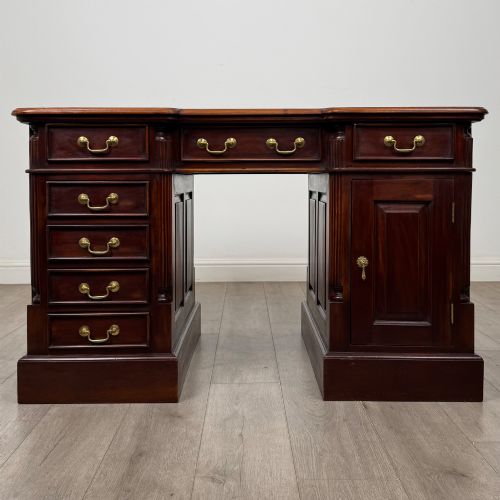
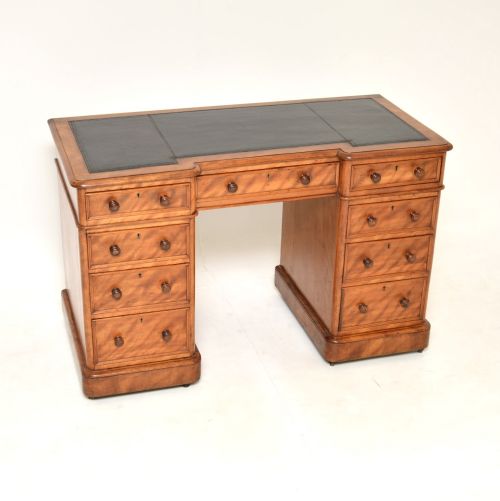
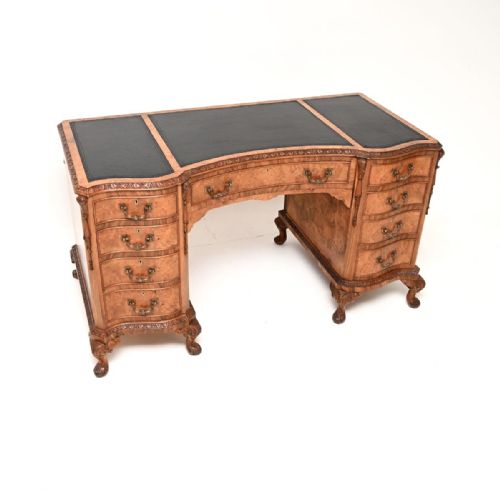
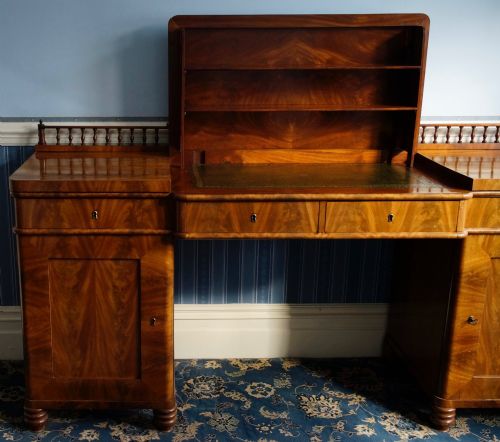


Partners Writing Desk
A partners writing desk is a grand two-sided workspace designed for two people to sit opposite one another.
Partners Writing Desk
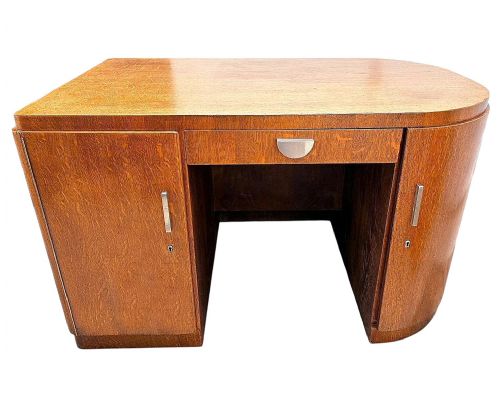
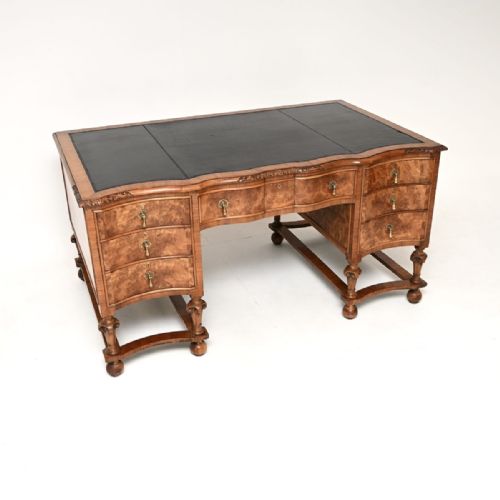
When you search for a partners writing desk, you encounter substantial freestanding tables and pedestal units equipped with drawers or cupboards accessible from both long sides. The form originates in large 19th-century libraries, counting rooms and studies where principals shared a workspace.
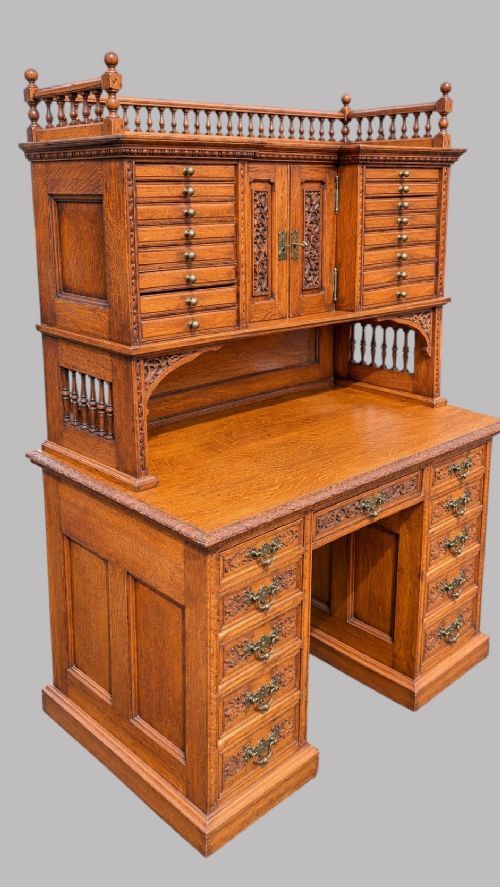
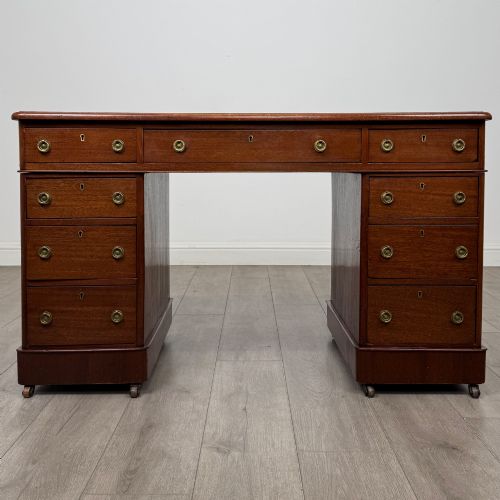
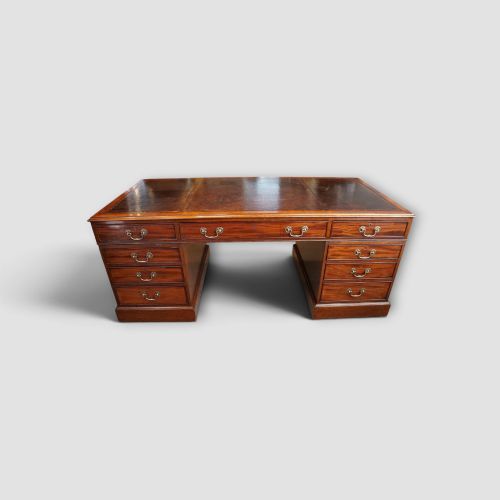
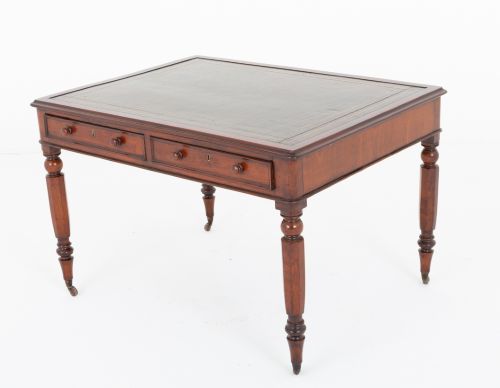
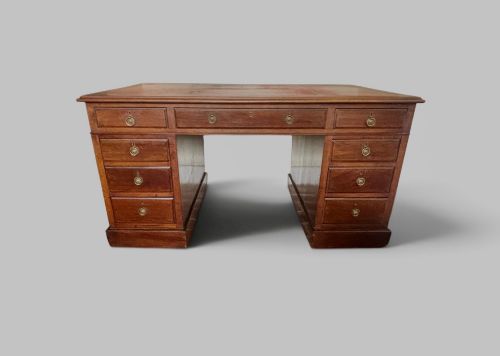
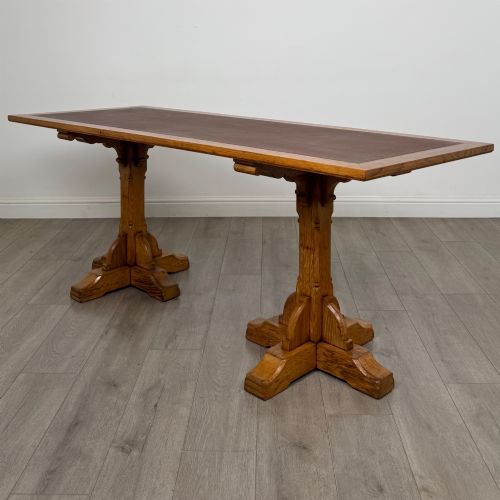
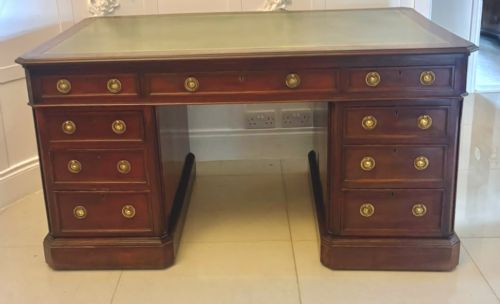
The version you are most likely to meet on this page is a Victorian or Edwardian mahogany or oak double-sided desk, often fitted with a tooled leather writing surface. These pieces range from substantial six-foot pedestal formats down to simpler library writing tables with frieze drawers.
Makers and periods span the Georgian era through to the early 20th century, encompassing revival styles like Chippendale, Queen Anne and Louis XIV alongside straightforward utilitarian designs.
How they were made
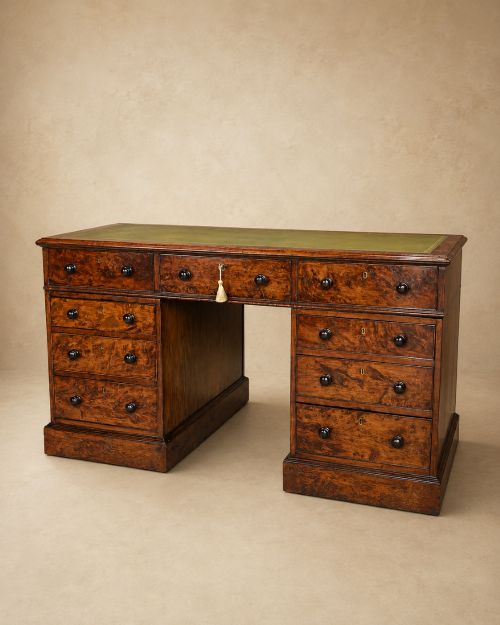
Cabinet makers utilised dense native and imported timbers, predominantly mahogany, walnut and oak, often selecting burr walnut veneers for ornamental surfaces on top panels and drawer fronts. Solid construction methods employed dovetailed drawer boxes and robust timber framing to support heavy daily use on both sides.
Writing surfaces were typically inset with panels of dyed and gilt-tooled leather, surrounded by crossbanded timber borders and moulded edges. Secondary woods like pine were used internally for drawer linings and carcase backs, while brass handles, locks and escutcheons completed the hardware.
Some desks hide secret stationery drawers and Wedgwood plaques.
What varies in quality
The grade of a partners writing desk depends heavily on the selection of timber and the ambition of its cabinet work. Superior examples display mirrored burr veneers, finely carved mouldings, and fully finished panelled backs rather than plain secondary timber.
Proportion and functionality also divide standard utilitarian pieces from exceptional commissions. Top-tier desks feature smoothly operating drawers on both faces, original brass hardware, and well-preserved leather inserts framed by precise joinery.
Trollope and Sons·Maple and Co·Charles Andrea Nosotti·Jackson and Graham·Edwards and Roberts·Bartholemew and Fletcher
The Partners Writing Desk Glossary
- Pedestal desk
- A form comprising two vertical stacks of drawers or cupboards supporting a desktop, often arranged in a twin pedestal layout.
- Kneehole
- The central recessed space beneath a desk top allowing a person to sit comfortably.
- Leather top
- An inset writing surface made from vegetable-tanned leather, frequently decorated with blind or gold-tooled borders.
- Library table
- A large freestanding table used primarily for reading and writing, sharing the two-sided accessibility of a partners desk.
- Frieze drawer
- A drawer positioned immediately beneath the main surface of a table or desk.
Partners Writing Desk: Frequently Asked Questions
What is a partners writing desk?
A partners writing desk is a large, double-sided piece of furniture built with drawers, cupboards, or kneeholes accessible from both the front and the back. This layout allowed two people to work opposite one another in a shared study or office.
Most surviving examples date from the 19th century and were constructed using sturdy timbers like mahogany, oak, and walnut to withstand heavy professional use.
How do I use one today?
These large desks function well as freestanding centrepieces in home studies, boardrooms, or open-plan living spaces where a desk need not back against a wall. The double-sided access makes them practical for shared workspaces or as grand writing tables.
Their substantial footprint requires careful room measurement to ensure comfortable clearance for chairs on both sides.
How can I tell the period?
Stylistic clues and timber choices help identify when a desk was built, moving from Georgian and William IV proportions through ornate Victorian carvings to Edwardian interpretations. Drawer construction methods, such as hand-cut dovetails and the type of secondary wood used inside, also indicate age.
Maker stamps or paper labels found inside drawer linings provide definitive attribution to specific 19th-century cabinet makers.
Are these desks always double-sided?
True partners desks feature working drawers or faux-front cabinets on both opposing long sides, designed specifically for two simultaneous users. Single-sided pedestal desks have drawers on one side only and a plain panel at the rear.
Library tables often blur this distinction by offering open knee spaces and frieze drawers accessible from all directions.