
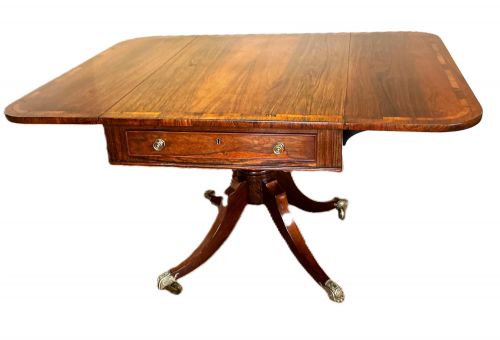


Georgian Style Library Table
A georgian style library table brings substantial mahogany timber and thoughtful workspace design into a room, offering both history and utility.
Georgian Style Library Table
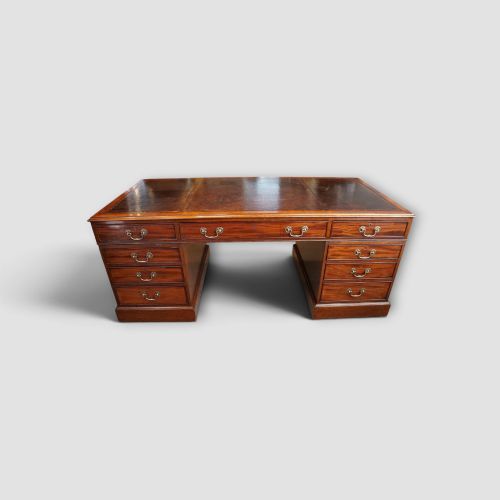
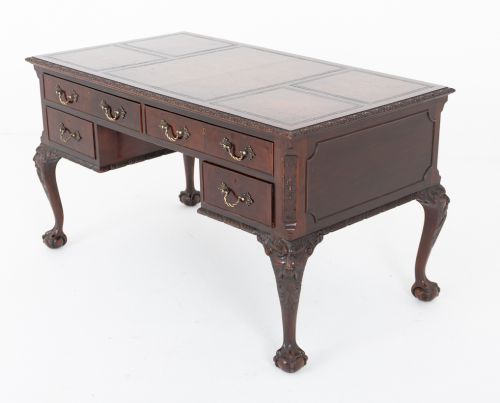
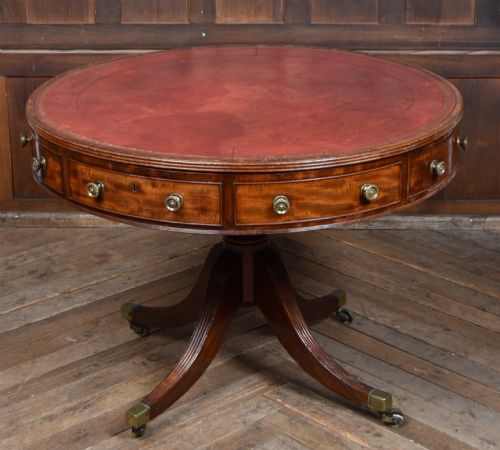
When you search for a georgian style library table, you encounter robust freestanding writing surfaces designed for serious study and correspondence. These pieces include partners desks, pedestal desks, and drum tables originating from periods spanning the Georgian era through later revival decades.
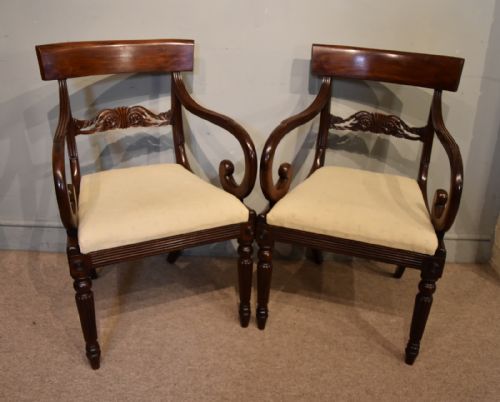
You are most likely to meet mahogany examples featuring leather inset writing surfaces and multiple drawers. Many pieces display revival characteristics from the nineteenth and early twentieth centuries alongside genuine period items.
The assortment extends to related forms such as writing tables and kneehole desks that share the architectural proportion and dignity characteristic of the style.
Materials and Technique
Cabinet makers relied heavily on solid and veneered mahogany, often selecting dense timber for its durability and rich grain. Satinwood and walnut appear as contrasting inlay elements to accentuate borders and drawer fronts.
Working surfaces typically incorporate tooled leather inserts bordered by fine wood joinery. Brass handles, key escutcheons, and occasional caster wheels provide functional hardware that complements the dark wood tones.
Listings feature mahogany predominantly, alongside walnut, satinwood, and rosewood, spanning periods from the eighteenth century to the twentieth.
Standards of Craftsmanship
Quality rests upon the selection of timber figure, the crispness of carved details such as Chippendale style moulding, and the integrity of the internal drawer construction. Superior examples maintain structural rigidity and smooth operation across all drawers and drop leaves.
The refinement of brass fittings and the careful execution of wood inlay separate standard production from exceptional library furniture. Original leather inserts and balanced proportions throughout the pedestals further elevate a piece.
Gillows·Whytock and Reid·McCabe
The Georgian Style Library Table Glossary
- Partners desk
- A large double-sided desk designed for two people to work opposite one another, featuring drawers on both flanks.
- Drum table
- A circular library table containing a rotating or stationary top surrounded by an apron of alternating real and dummy drawers.
- Kneehole desk
- A compact writing desk featuring a central recessed space for the legs flanked by columns of small drawers.
- Satinwood
- A pale, lustrous exotic timber utilised for contrasting stringing and decorative inlay work.
- Chippendale style
- An aesthetic defined by ornate carved woodwork, cabriole legs, and robust classical proportions popularised in the eighteenth century.
Georgian Style Library Table: Frequently Asked Questions
How do I use a library table today?
A library table serves effectively as a central freestanding desk or a large console surface in a study or living area.
Its finished back allows it to sit prominently in the middle of a room rather than pushed against a wall.
What distinguishes a partners desk?
Partners desks feature working drawers and cupboards on both sides so two individuals can sit face to face.
They offer exceptional surface area and storage compared to standard single-sided writing desks.
Are these tables solid mahogany?
Many pieces combine solid mahogany framing with carefully selected mahogany veneers applied to secondary woods to prevent warping.
High-grade timber selection remains a consistent feature across both authentic period items and later revival pieces.
How do I identify a revival piece?
Revival items manufactured in the nineteenth or twentieth century often display machine-cut dovetails and standardised hardware.
Comparing construction methods against eighteenth-century standards helps determine the exact period of manufacture.