

Scottish Desk
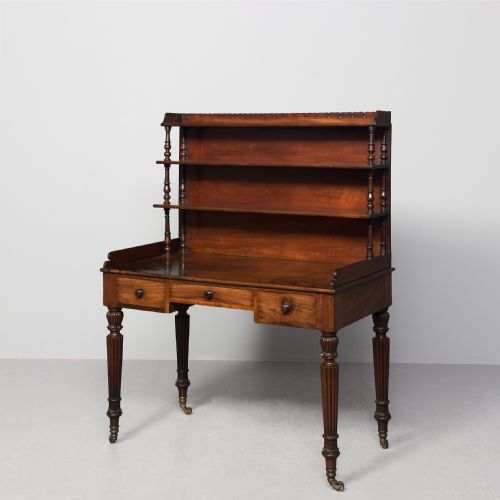
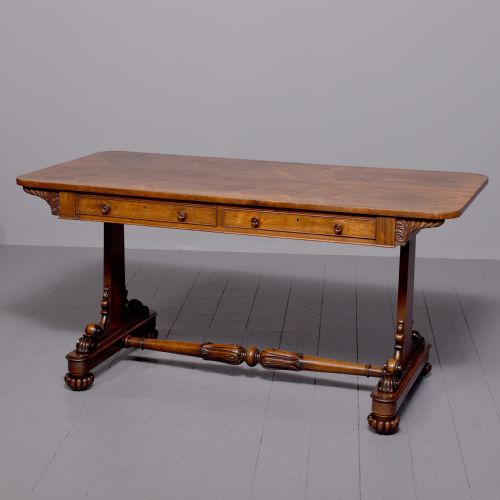
These pieces form a scottish antique desk tradition, bringing substantial craftsmanship and timber into a room.
Scottish Desk
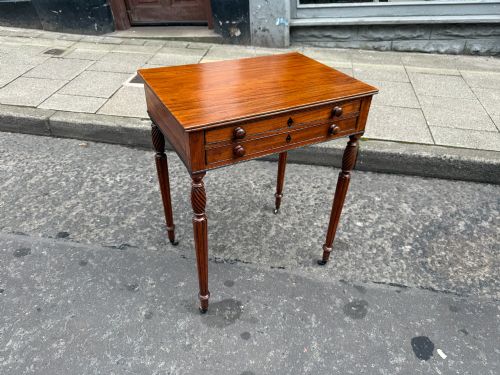
A scottish antique desk encompasses practical writing furniture and partners desks shaped by regional cabinet makers across the Georgian, Victorian and Edwardian eras. These pieces range from compact oak writing tables and kneehole desks to large mahogany breakfronts and pedestal forms.
The selection includes specific regional expressions in oak, mahogany, and walnut, often reflecting Gothic taste, aesthetic period details, or clean Regency lines. Buyers find both provincial country house pieces and sophisticated workshop commissions carrying distinct Edinburgh and Glasgow provenance.
How they were made
Workshops utilised dense hardwoods including mahogany, solid birch, burr walnut, and regional oak, frequently pairing timber structures with inset leather writing surfaces and brass hardware. Cabinet makers constructed pedestals, frames, and drawers with traditional joinery suited to heavy daily use.
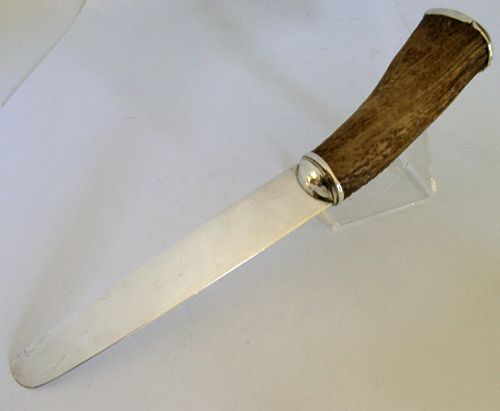
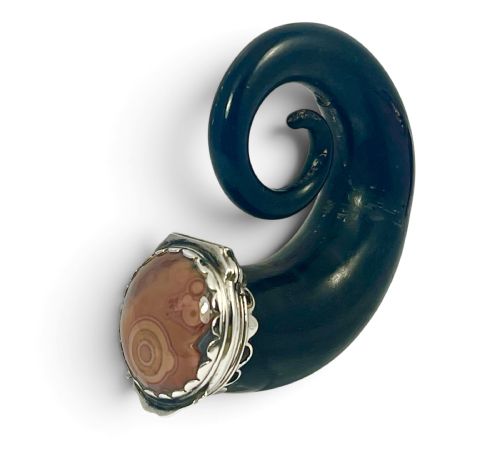
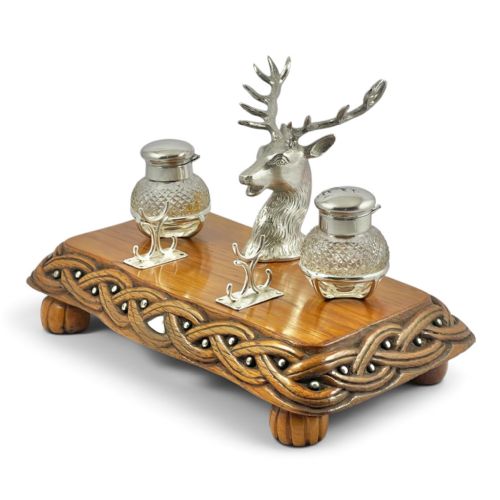
Detailing relied on skilled turning, crossbanding, carving, and occasional marquetry work, with select pieces incorporating silver mounts, horn accents, or marble inlay.
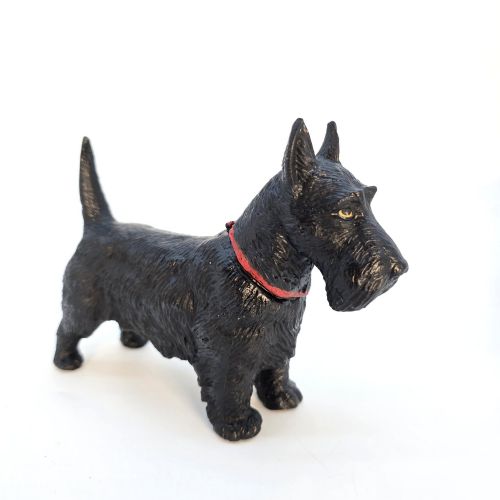
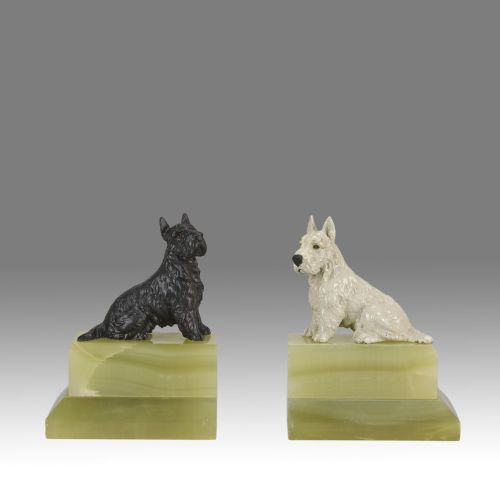
Cast metal Scottie dogs stand guard over paper clips and books as desk accessories.
What varies in quality
The standard of a desk rests on the selection and figure of the timber, such as flamed mahogany or burr walnut, and the crispness of any hand-carved elements. Finer examples display harmonious proportions, substantial secondary woods, and intact original fittings rather than later replacements.
Maker attribution elevates certain pieces, with documented workshop output from Edinburgh and Glasgow demonstrating superior structural integrity and refined design literacy compared to anonymous provincial furniture.
James Mein of Kelso·Whytock and Reid of Edinburgh·J and T Scott Edinburgh·F.H. Marshall and Co Glasgow
The Scottish Desk Glossary
- Partners desk
- A large double-sided desk designed for two people to work opposite one another, featuring drawers and cupboards on both faces.
- Kneehole desk
- A compact pedestal desk with a central recess for the sitter's legs, flanked by banks of smaller drawers.
- Writing slope
- A portable or table-standing box with a hinged sloping lid that opens to reveal a velvet or leather writing surface and internal compartments.
- Crossbanding
- A decorative border technique where thin strips of veneer are laid across the grain of the main timber to frame a drawer front or tabletop.
Scottish Desk: Frequently Asked Questions
Where should I place a large partners desk?
Partners desks require central placement within a spacious room rather than sitting flush against a wall, because drawers and cupboards are accessible from both sides.
Allow sufficient clearance around the entire footprint so chairs can move freely and the full proportions remain visible.
How do I care for leather desk inserts?
Leather writing surfaces benefit from minimal moisture and occasional light conditioning with appropriate paste wax or leather balm to prevent cracking.
Avoid placing hot cups or sharp metal objects directly onto the hide to preserve the original texture and colour.
Are these desks suitable for daily computer work?
Period desks accommodate laptops and writing equipment comfortably, though internal drawer depths reflect nineteenth-century storage needs rather than modern cable management.
Protect interior timber and leather surfaces with felt pads or blotters if heavy equipment rests on the top for extended periods.
How can I tell a Victorian oak desk from a Georgian one?
Georgian desks typically exhibit restrained classical proportions, simpler bracket feet, and lighter construction, whereas Victorian examples often lean towards heavier Gothic Revival forms, carved panels, or larger pedestal arrangements.
Examining the secondary woods inside the drawer linings and the type of brass fixings helps confirm the period of manufacture.