


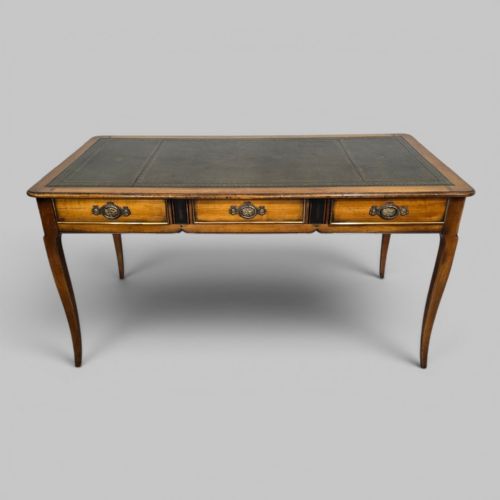

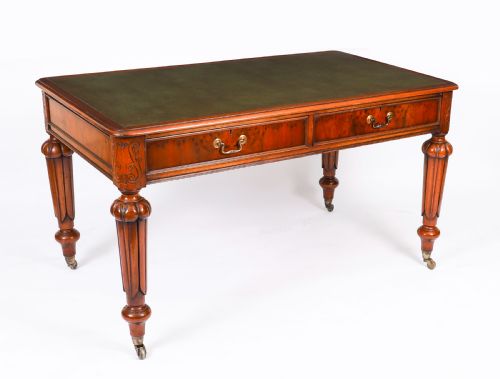


Double Sided Writing Table
A double sided writing table offers generous workspace accessible from both sides, making it a practical centrepiece for shared studies and grand libraries.
Double Sided Writing Table
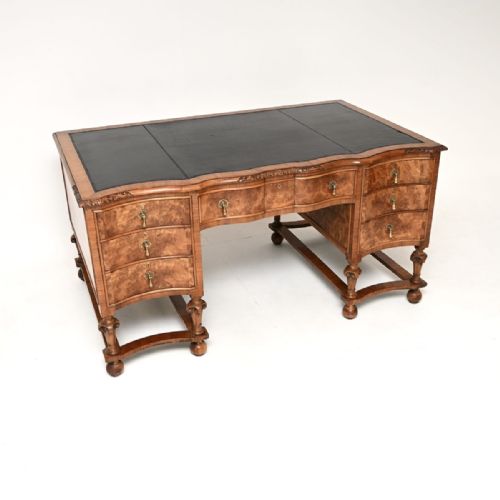
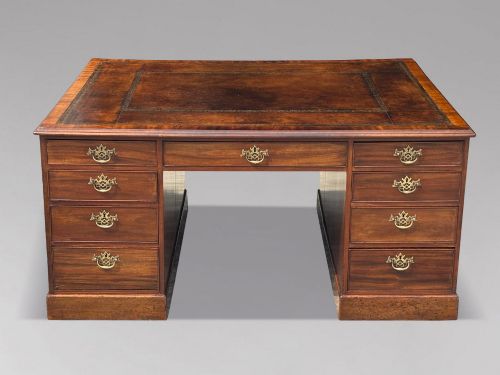
A double sided writing table provides storage and writing space on opposing faces, allowing two people to work opposite one another. When you search for this phrase, you encounter substantial freestanding desks designed to sit in the middle of a room rather than against a wall.
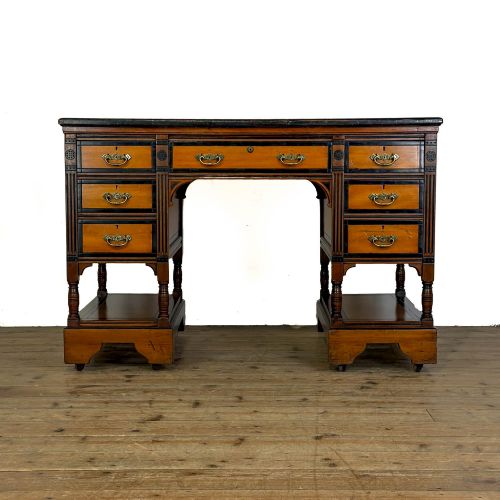
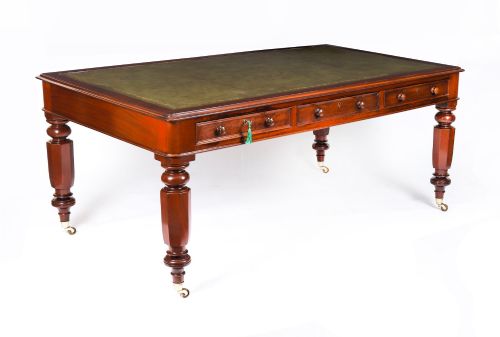
The pieces spanning this page originate primarily from the Georgian and Victorian eras, alongside Edwardian examples. Mahogany remains the dominant timber, accompanied by burr walnut, oak, and flame mahogany.
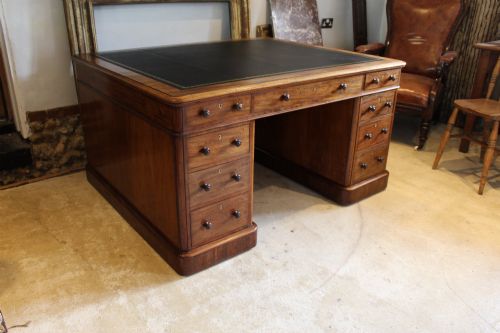
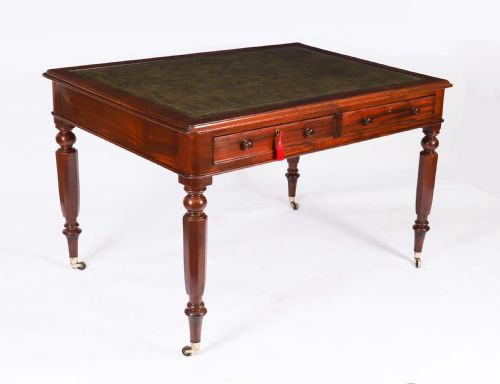
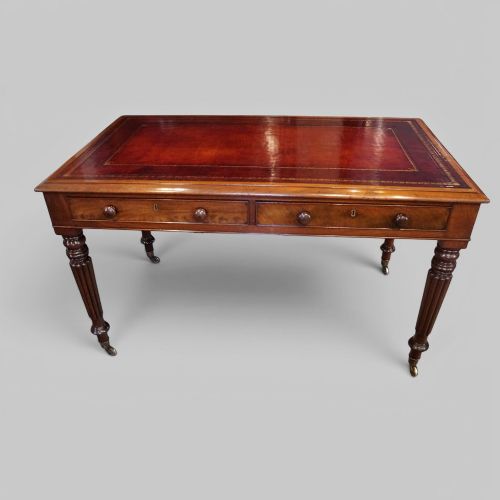
Pedestal formats with banks of drawers dominate the selection, though library tables and sofa tables also appear. Most pieces date from the nineteenth century, built for domestic libraries, studies, and professional offices.
Materials and construction
Cabinet makers utilised dense hardwoods like mahogany, oak, and walnut to build these large frames, often selecting figured veneers such as burr walnut and flame mahogany for primary display surfaces. Solid timbers provided structural integrity for heavy pedestals and writing surfaces.
Writing surfaces typically incorporate inset leather panels, frequently tooled with gilt decoration, bordered by polished timber margins. Brass hardware, including drop handles, locks, and casters, appears across Georgian and Victorian iterations.
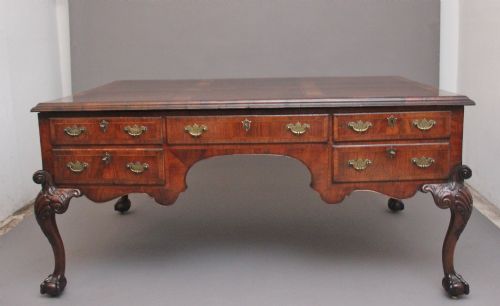
Drawer construction relies on hand-cut dovetails, while internal carcases utilise secondary softwoods like pine. Carved details, such as serpentine outlines and moulded edges, show hand-shaping by period artisans.
Some partners desks feature hidden kneehole cupboards, keeping secret ledgers permanently out of sight from the person sitting opposite.
Distinctions in quality
The grade of timber selection distinguishes standard utility furniture from exceptional examples, particularly when makers utilised highly figured flame mahogany or burr walnut across large uninterrupted surfaces. Timber choice extends to secondary woods, where clean oak or mahogany linings indicate superior cabinet work.
Proportion and scale dictate visual success, as larger desks require careful balance between pedestal width and kneehole clearance. Finer execution shows in crisp, deep mouldings, well-executed drawer dovetails, and retained original brass hardware.
The integrity of the leather writing surface and the depth of the timber polish contribute to overall coherence. Pieces retaining patinated original surfaces and functioning original locks command greater regard than those with heavily restored or replaced elements.
Maple and Co·Charles Andrea Nosotti·T Wilson
The Double Sided Writing Table Glossary
- Partners desk
- A large double-sided pedestal desk designed for two people to work opposite one another, featuring drawers and cupboards on both faces.
- Pedestal desk
- A desk comprising two independent drawer units that support a heavy top board, creating a central kneehole space.
- Flame mahogany
- A veneer cut from the fork of a mahogany tree that produces a distinctive flame-like ripple pattern across the grain.
- Burr walnut
- Timber harvested from walnut tree growths, yielding intricate, swirling grain patterns prized for decorative veneering.
- Kneehole
- The recessed space beneath a desk top where a person sits.
- Serpentine
- A furniture front or edge shaped in a gentle wave with a convex centre flanked by concave curves.
Double Sided Writing Table: Frequently Asked Questions
What is a double sided writing table?
A double sided writing table is a freestanding desk finished on all sides, allowing users to sit and work opposite each other. These tables typically include drawers accessible from both fronts.
They function as central room dividers rather than wall-mounted furniture, providing balanced proportions from any viewing angle.
Where were these desks placed?
Owners placed these desks in the middle of grand libraries, private studies, and administrative offices. Their finished backs allowed them to occupy prominent positions where they could be seen from all directions.
They suited partners, colleagues, or spouses who shared a workspace in period homes and institutions.
How do I care for the leather top?
Leather writing surfaces require gentle cleaning with a slightly damp cloth followed by a neutral leather cream to prevent drying and cracking. Avoid harsh chemical cleaners and excessive moisture.
Protecting the hide from direct sunlight prevents fading of the gilt tooling and preserves the supple texture of the leather.
How do I distinguish Georgian from Victorian desks?
Georgian desks generally exhibit cleaner, restrained architectural lines, often in solid or figured mahogany with subtle bracket feet or plinth bases. Their construction prioritises understated proportion and classic joinery.
Victorian examples tend to be heavier and more heavily carved, occasionally featuring serpentine shapes, burr walnut veneers, and elaborate brass hardware reflecting later revival styles.