

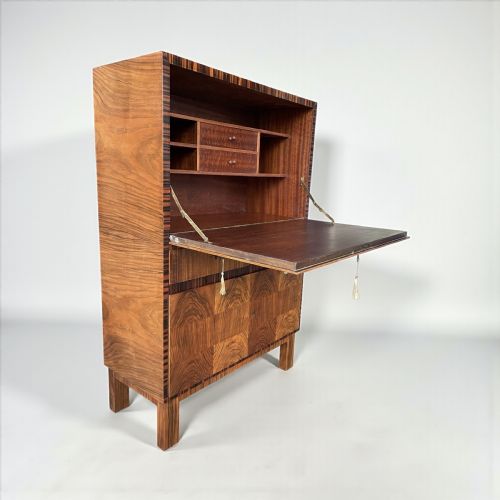
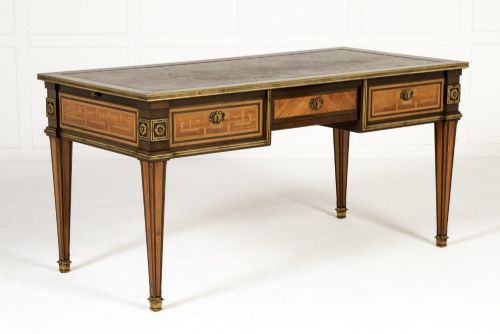


Parquetry Walnut Bureau
A parquetry walnut bureau brings geometric wood veneers and fall-front writing surfaces together, offering a practical writing place wrapped in decorative marquetry.
Parquetry Walnut Bureau
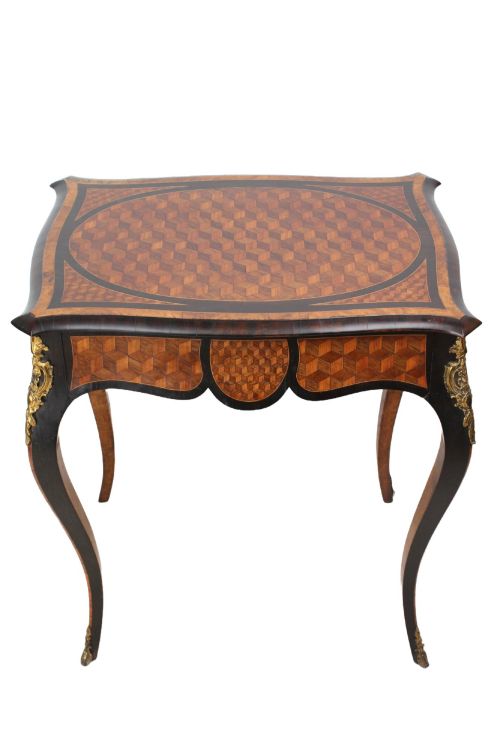
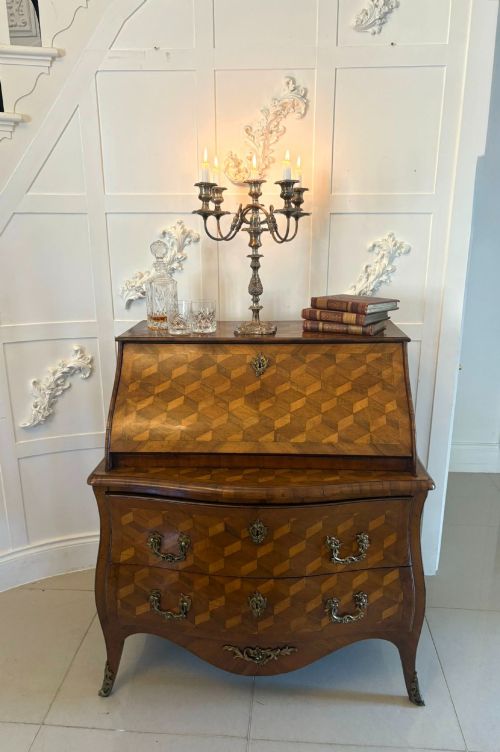
A parquetry walnut bureau combines fitted writing compartments with geometric wood patterns, appearing most frequently in 19th-century French and Victorian forms on this page. These pieces range from bombe-shaped writing desks to Bureau Plat tables and Secrétaire Abattant designs featuring marble tops.
The materials span walnut bases enriched with kingwood, rosewood, and fruitwood veneers, complemented by brass, ormolu, and gilt bronze mounts. Leather writing surfaces frequently line the desk interiors alongside fitted drawers.
Makers such as JAS Shoolbred appear among the English and continental works. Pieces stretch chronologically from 18th-century Italian and French examples through to Art Deco creations.
Materials and construction
Craftsmen built these pieces using solid walnut and secondary woods as a foundation, applying intricate parquetry geometric veneers across the exterior surfaces. Kingwood, rosewood, and fruitwood provided contrasting tones within the geometric patterns.
Metal elements including brass, ormolu, and gilt bronze formed mounts, handles, and sabots that framed the woodwork. Leather inserts were tooled to create the writing surfaces on desks and bureaux.
Listings feature walnut combined with kingwood, rosewood, fruitwood, and coromandel, alongside marble tops and gilt bronze mounts.
Assessing quality and execution
The precision of the geometric veneer work dictates the visual success of the parquetry, where tight joints and balanced grain patterns distinguish finer examples. The integration of bronze or ormolu mounts shows careful fitting rather than routine attachment.
Proportion and form govern the structure, particularly in bombe shapes and Secrétaire Abattant models where curve and line must balance. The choice of secondary timbers and the complexity of internal writing fittings reveal the maker's hand.
JAS Shoolbred
The Parquetry Walnut Bureau Glossary
- Parquetry
- A geometric mosaic of wood veneers used to decorate furniture surfaces. It creates patterns like cubes, chevrons, and lozenges across the top and front panels.
- Bureau Plat
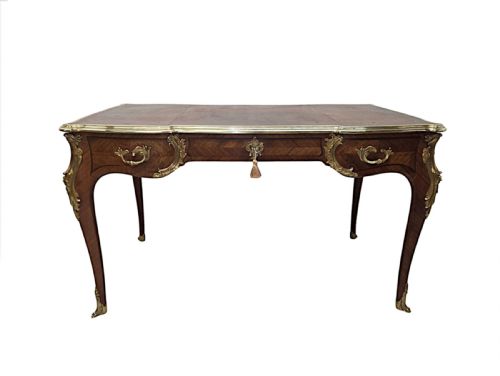
- A flat-topped writing table with drawers, typically freestanding. It lacks the sloping fall-front of a traditional bureau.
- Secrétaire Abattant
- A tall upright cabinet featuring a drop-front writing flap that conceals small drawers and pigeonholes. It often incorporates a marble top and gilt bronze mounts.
- Bombe
- A swelling, outward-curved contour found on the sides and fronts of 18th-century case furniture. This shape demands high skill from the veneer cutter.
- Ormolu
- Gilded bronze used for decorative mounts and feet on French furniture. It accents the corners and aprons of desks and tables.
Parquetry Walnut Bureau: Frequently Asked Questions
How do I use a bureau plat?
A bureau plat serves as a freestanding writing table designed to sit away from the wall in the centre of a room. Its flat top and drawers provide an open workspace.
Keep the leather writing surface conditioned with appropriate leather balm and avoid placing damp objects directly on the wood veneer.
Where should I place a parquetry desk?
Position these desks away from direct sunlight and heat sources to protect the walnut and fruitwood veneers from fading or drying out. Stable room humidity prevents the wooden panels from warping.
Allow enough clearance around the piece to open drawers and drop-fronts fully without bumping surrounding furniture.
How do I identify Louis XV revival pieces?
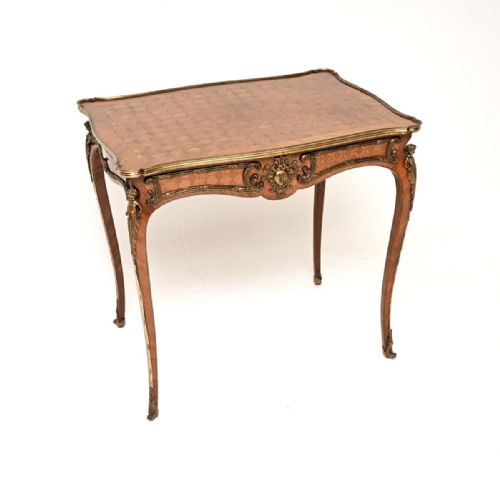
Look for characteristic serpentine curves, cabriole legs, and asymmetrical floral or rococo mounts in gilt bronze and ormolu. These 19th-century revivals copied the lighter, flowing lines of 18th-century French design.
Examine the construction methods and interior secondary woods, which typically distinguish 19th-century workshop practices from earlier periods.