

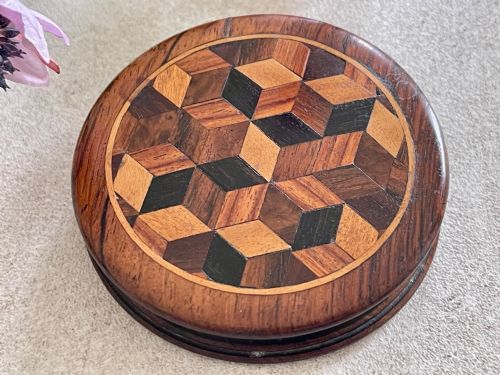


Parquetry Inlaid Box
A parquetry inlaid box brings together geometric precision and rich timbers, offering a tactile piece of history for holding letters, tea or keepsakes.
Parquetry Inlaid Box
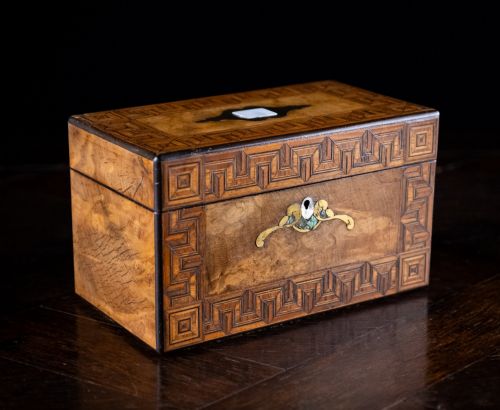
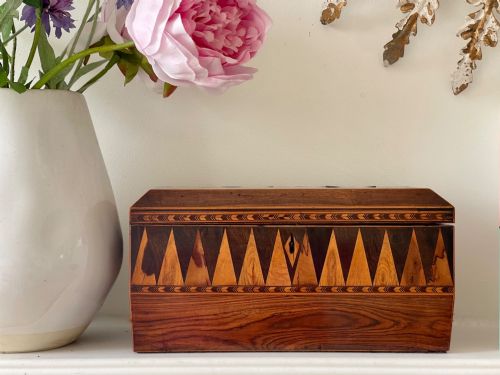
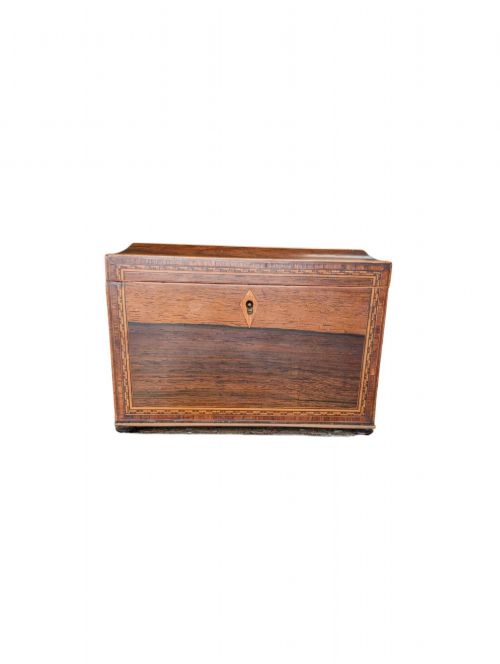
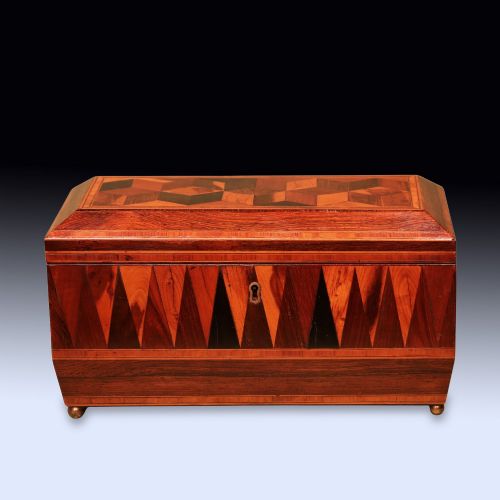
A parquetry inlaid box encompasses a variety of functional containers designed for personal treasures, correspondence, or dry goods, appearing frequently across Georgian, Regency, and Victorian periods. The most common manifestations on this page are tea caddies, writing slopes, sewing boxes, and general keepsake chests constructed from diverse timbers.
These pieces reflect the domestic habits of past centuries, where small valuables required secure, decorative storage on side tables or desks. Makers applied geometric wood patterns to create visually striking surfaces that suited the formal parlours and private studies of the nineteenth century.
Examples range from compact snuff boxes to larger stationery chests and games boxes, often featuring fitted interiors with compartments for specific domestic duties. The persistence of walnut, rosewood, and specialised mosaic work defines the physical character of these containers across successive decades.
Materials and Technique
Construction relies upon a foundational carcase of solid wood or sturdy secondary timber, which receives finely sliced veneers of walnut, rosewood, mahogany, or boxwood. Artisans arrange tiny geometric wooden tesserae by hand to form intricate patterns, particularly seen in the detailed mosaic work associated with Tunbridge traditions.
Inlaid elements frequently incorporate contrasting timbers such as satinwood, alongside occasional highlights of brass or mother-of-pearl to accentuate the geometric divisions. Surfaces undergo careful smoothing and polishing to protect the timber grain while emphasising the mathematical precision of the parquetry panels.
Some nineteenth-century boxes feature secret compartments requiring hidden spring mechanisms to reveal concealed drawers for private correspondence.
Craftsmanship and Proportion
The degree of refinement depends heavily on the tightness of the geometric joins and the selection of figured timbers like burr walnut or rosewood. Superior examples maintain absolute flushness across the veneer surface without visible gaps between individual wood blocks.
Internal arrangements also dictate standing, with fitted compartments, original velvet linings, and working locks with key escutcheons marking out more ambitious commissions. The handling of edge banding and the subtlety of contrasting wood tones distinguish standard production pieces from masterwork outputs.
Henry Hollamby·Edmund Nye
The Parquetry Inlaid Box Glossary
- Parquetry
- A geometric mosaic of wood pieces applied to a carcase to form decorative patterns, frequently utilising contrasting timbers. This technique provides the primary decorative surface for the boxes.
- Tunbridge Ware
- A specialised form of woodworking originating from Kent, characterised by tiny wooden tiles assembled into pictorial or geometric mosaics. It appears frequently on nineteenth-century boxes.
- Tea Caddy
- A container designed originally to store loose tea leaves, often featuring internal lidded compartments and mixing bowls. They represent a significant portion of surviving parquetry boxes.
- Writing Slope
- A portable desk that opens to reveal a sloping writing surface, inkwell recesses, and hidden compartments for stationery. These functional pieces often display sophisticated veneer work.
- Sarcophagus Form
- A box shape featuring a domed or sloping lid reminiscent of an ancient stone coffin, popular during the Regency period. This profile adds architectural presence to smaller containers.
Parquetry Inlaid Box: Frequently Asked Questions
What were parquetry boxes used for?
These containers served specific domestic functions in period homes, functioning as secure vessels for precious tea leaves, writing materials, sewing equipment, or personal trinkets. Their fitted interiors were tailored to keep small implements organised and protected.
Over time, many transitioned from active utility to decorative display pieces on mantelpieces or occasional tables, housing letters, cards, and keepsakes in private sitting rooms.
How do I date an antique box?
Dating relies on observing structural clues such as construction methods, hinge types, secondary woods, and stylistic motifs characteristic of Georgian, Regency, or Victorian eras. Regency examples often favour rosewood with sarcophagus proportions, while Victorian iterations frequently showcase burr walnut.
Secondary indicators include the presence of original paper linings, maker labels, or handwritten notes left inside by former owners, which help narrow down the decade of manufacture.
What is Tunbridge Ware inlay?
Tunbridge Ware is a distinctive form of mosaic woodworking where thousands of tiny, differently coloured wood squares are glued together to form geometric patterns or pictorial scenes. Craftsmen sliced these multi-wood blocks thinly to veneer box lids and panels.
This meticulous technique created detailed motifs, including floral sprays and architectural views, making such pieces highly recognizable among nineteenth-century English decorative arts.
How should I care for wooden boxes?
Maintenance requires keeping wooden containers away from direct sunlight and extreme fluctuations in temperature or humidity, which can cause delicate veneers to lift or crack. A light application of appropriate wax polish preserves the sheen of the timber without building up heavy residues.
Handling the boxes with clean hands helps protect the polished surface, while occasional checks of the interior environment prevent moisture accumulation in closed compartments.