
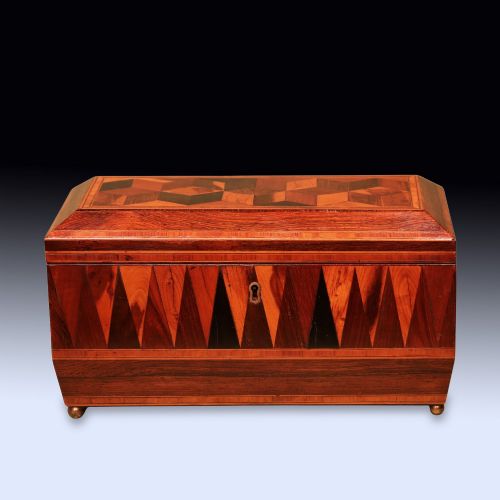


Regency Rosewood Tea Box
A regency rosewood tea box is a refined container for storing precious tea leaves, prized for its rich timber and elegant domestic presence.
Regency Rosewood Tea Box
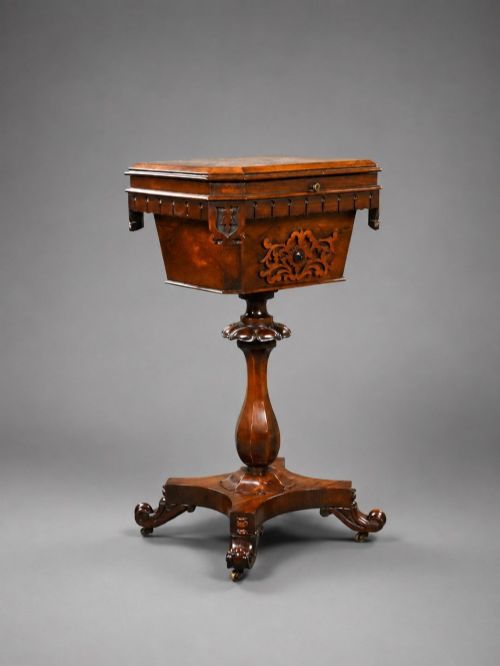
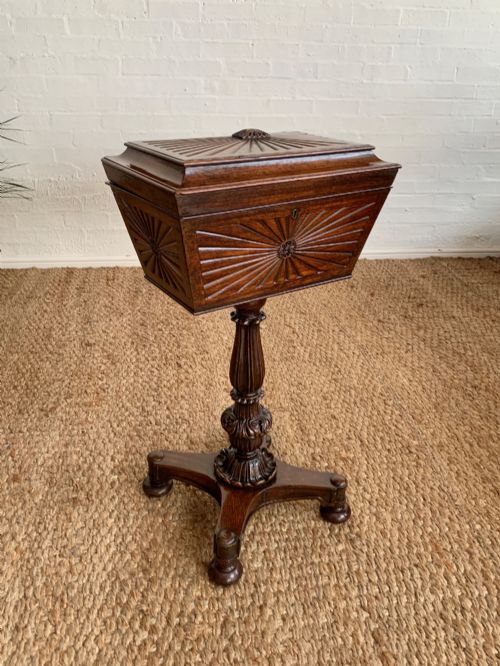
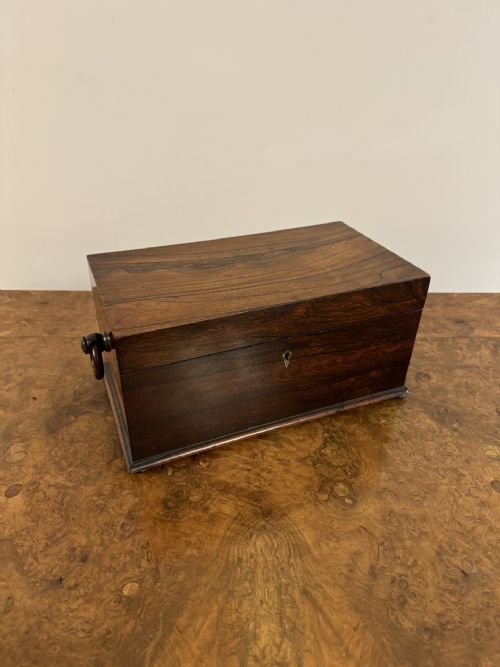
A regency rosewood tea box brings together the dense, dark grain of exotic timber with the formal proportions characteristic of the early nineteenth century. These objects served a domestic function in drawing rooms where hosting required the secure containment of valuable leaf tea. The inventory shows pieces spanning the Regency, Georgian, and William IV periods, alongside later nineteenth-century examples.
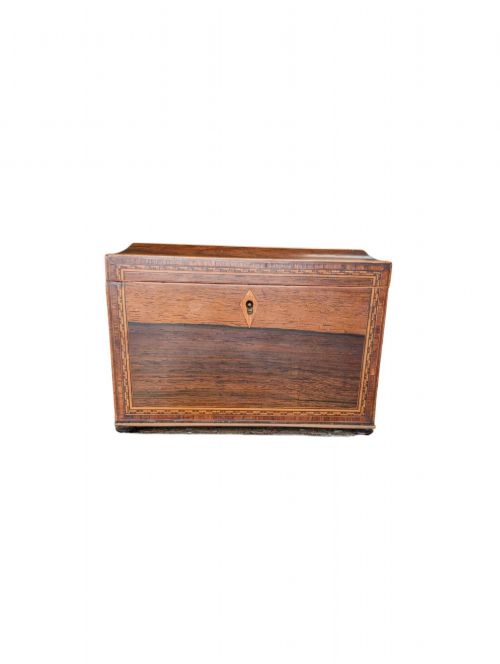
The most common form met here is the tea caddy, frequently fashioned into a sarcophagus shape with fitted interior compartments for loose leaves and a central mixing bowl. Variations include teapoys mounted on stands, work tables with caddy tops, and related boxes featuring intricate inlay. Origins span English workshops of the Georgian and Regency eras, reflecting the high status of tea in historical households.
How they were made
Cabinet makers utilised rosewood as the primary carcass timber, often selecting stock with strong figuring and warm natural tones. This dense wood provided a stable foundation that responded well to precision sawing, shaping into sarcophagus curves and oblong tapered forms.
Surface enrichment relied on contrasting materials applied by hand. Brass inlay, boxwood stringing, shell motifs, and mother of pearl elements create bright geometric or floral patterns against the dark rosewood background.
Listings feature rosewood combined with brass, boxwood, and mother of pearl across Regency, Georgian, and Victorian periods.
What varies in quality
The standard of a regency rosewood tea box rests on the precision of its cabinet work and the ambition of its decorative scheme. Finer examples display meticulous brass inlay flush with the timber surface and sophisticated parquetry using satinwood or fruitwood elements.
Proportion and integrity of the interior fittings separate standard containers from exceptional pieces. Retaining original loose leaf cases, mixing bowls, and working locks with matching escutcheons elevates the historical completeness of the box.
The Regency Rosewood Tea Box Glossary
- Tea caddy
- A small box or chest designed for storing dry tea leaves securely under lock and key. These containers typically feature internal lidded compartments to keep different tea varieties separated.
- Teapoy
- A pedestal table or stand fitted with a lidded box on top, functioning as a tea caddy and occasional table combined. They often incorporate internal compartments for mixing leaves.
- Sarcophagus form
- A distinctive box shape featuring a domed or sloping lid and an inverted trapezoid profile resembling a miniature stone coffin. This architectural style gained immense popularity during the Regency period.
- Parquetry
- A mosaic of geometric wood veneers assembled to create decorative patterns across the surface of a box. Makers used contrasting timbers like boxwood and satinwood to achieve sharp visual effects.
- Escutcheon
- A protective metal plate surrounding a keyhole, usually fashioned from brass. On these boxes, they often double as decorative focal points matching the inlaid stringing.
Regency Rosewood Tea Box: Frequently Asked Questions
What did people store inside a regency rosewood tea box?
Households kept imported black and green teas inside, which were expensive commodities requiring safekeeping under lock and key.
Internal canisters or lidded compartments separated the different leaf varieties from one another.
How do I date a rosewood tea caddy?
Dating relies on observing structural forms like the sarcophagus silhouette alongside decorative motifs such as brass inlay and Tunbridge ware.
Stylistic markers align closely with Regency, Georgian, and William IV periods spanning the early nineteenth century.
Were these boxes always used for tea?
While manufactured primarily for tea storage, many surviving pieces underwent conversion into sewing boxes, jewellery chests, or work boxes.
Fitted interiors sometimes accommodated loose leaf cases, drawing items, or trinkets instead of original mixing bowls.
How should I care for antique rosewood furniture?
Keep wooden boxes away from direct sunlight and sudden temperature shifts to prevent the rosewood from drying out or splitting.
Applying a traditional beeswax polish helps maintain the natural lustre of the timber grain over time.