

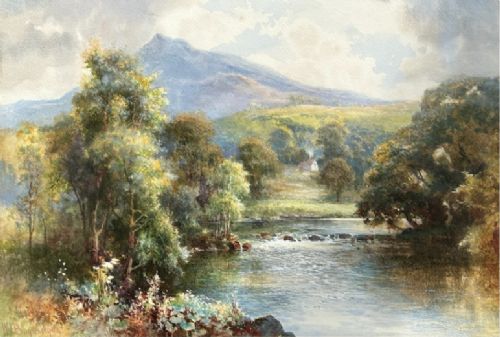


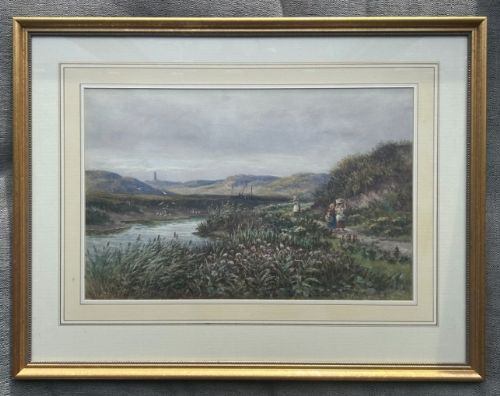


Paper Watercolour River Scene
These paper watercolour river scene works capture the changing light on British and European waterways from the Victorian era onward.
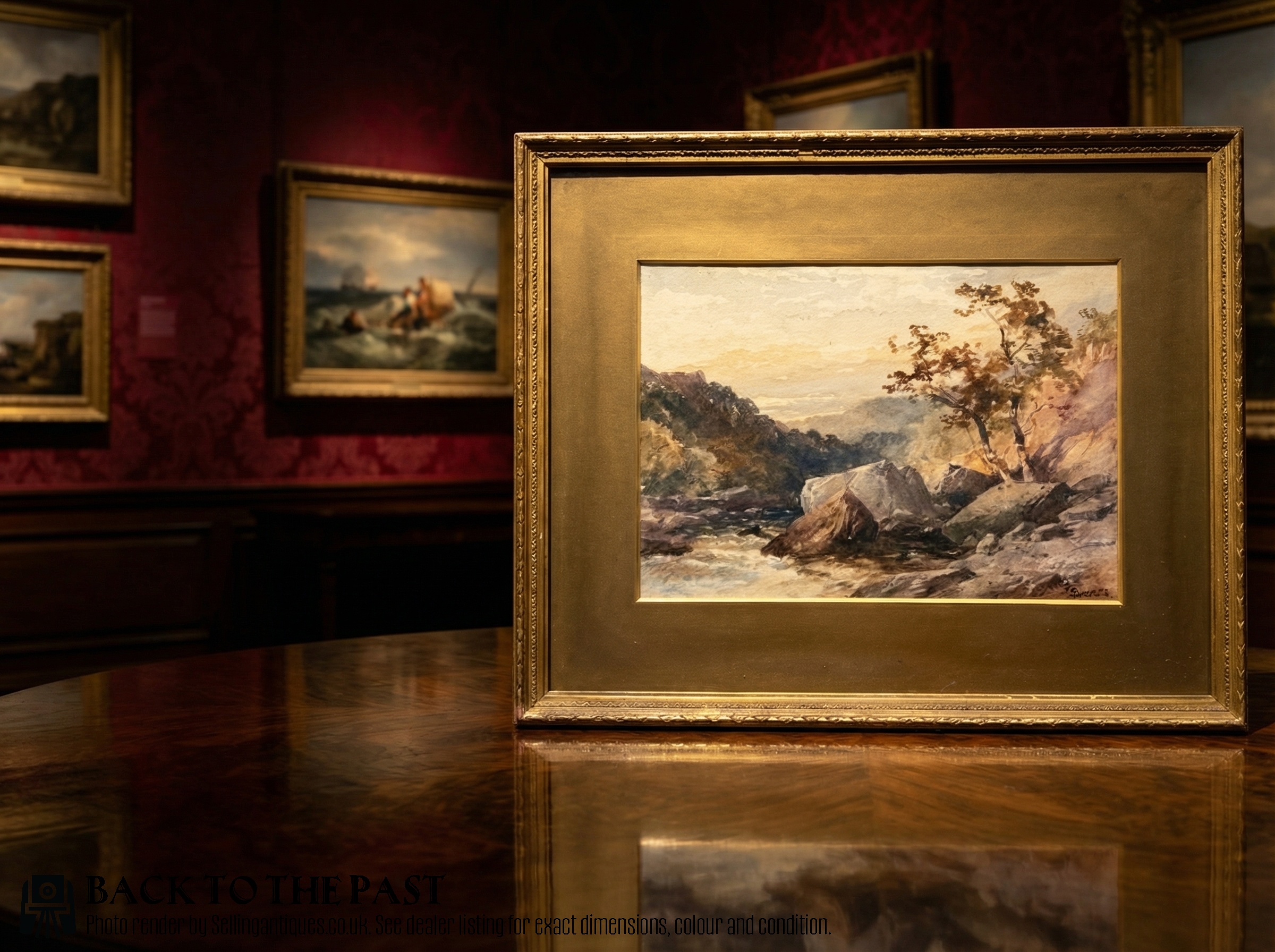
Paper Watercolour River Scene
A paper watercolour river scene presents painted views of rivers, broads, and coastal waterways rendered in pigment upon paper sheets. These works emerge predominantly from the nineteenth and early twentieth centuries, spanning the Victorian and Edwardian periods into the mid-twentieth century.
The subjects range from tranquil rural backwaters and Welsh landscapes to busy city reaches along the Thames and Dutch harbours. Common formats include framed paintings under glass, maintaining the delicate paper supports within traditional wooden mouldings.
Materials and Method
Artists applied water-soluble pigments using fine brushes directly onto various weights of paper, often utilising the natural white of the sheet to create highlights in water and sky. Washes of colour build transparent layers that suggest the movement and reflection of river currents.
Framing typically incorporates wooden surrounds and protective glass shields, which serve to preserve the fragile paper and pigment layers from atmospheric moisture and surface damage.
Several Victorian anglers and boaters have spent over a century patiently casting lines into frozen river stillness.
Distinctions in Execution
Quality rests upon the artist's control of translucent washes and the precision of compositional layout, where accomplished brushwork captures atmospheric depth and the natural motion of water. Works by established painters exhibit a confident handling of light and shadow that elevates a topographical record into fine art.
The condition of the paper and the vibrancy of the watercolour pigments also govern desirability, with well-preserved sheets retaining their original tonal contrast without excessive fading from exposure to light.
Thomas Bush Hardy·Robert Winchester Fraser·Henry John Kinnaird·Charles Harmony Harrison·Frank W. Scarborough
The Paper Watercolour River Scene Glossary
- Watercolour
- A painting method in which the paints are made of pigments suspended in a water-based solution. The technique relies on transparency and the reflective quality of the paper underneath.
- Norwich School
- A regional group of artists inspired by the Norfolk landscape, notably including painters of local rivers and broads. Their work forms an important pillar of British landscape art.
- Wash
- A thin, semi-transparent layer of diluted watercolour pigment applied across paper. Painters utilise broad washes to establish expansive skies and smooth river surfaces.
- Topography
- The detailed mapping or pictorial representation of specific real-world locations. Many river scenes double as historical records of bridges, locks, and towns along waterways.
Paper Watercolour River Scene: Frequently Asked Questions
How should I frame and display a paper watercolour river scene?
These works require framing under glass with acid-free mounts to prevent the paper from touching the protective covering. Direct sunlight causes watercolour pigments to fade over time, so position them away from bright windows.
Maintaining stable indoor humidity protects both the paper support and the wooden frame from warping. Professional framing ensures the piece remains sealed against dust and atmospheric pollutants.
How can I distinguish a Victorian watercolour from a later twentieth-century piece?
Victorian works often display heavier paper stocks with distinct watermark signatures typical of nineteenth-century paper mills. The subject matter frequently reflects nineteenth-century dress, boat designs, and industrial or rural development along the Thames and other waterways.
Twentieth-century pieces tend to show looser modern brushwork or different handling of urban and rural subjects. Examining the framing materials and any inscribed dates on the reverse provides further clues to the period.
What subjects are most common in these river paintings?
Traditional views feature rural English riverbanks, locks, marshes, and pastoral settings with figures fishing or boating. Urban river scenes focusing on London landmarks like St Paul's Cathedral and Windsor Castle also appear frequently.
Other works capture Welsh valleys, Dutch harbours, and Norfolk broads, reflecting the diverse locations explored by British watercolourists. Each subject offers a snapshot of nineteenth and twentieth-century life along active waterways.
Are these watercolours original paintings or prints?
The listings comprise original hand-painted works executed directly onto paper by individual artists. Close examination reveals the physical texture of brushstrokes and the pooling of pigment within the paper fibres.
Unlike printed reproductions, each watercolour is a unique creation bearing the distinct hand of its maker. Signatures and artist inscriptions are frequently found within the composition.