




Traditional English Countryside Art
Traditional English countryside art captures rural life, rolling pastures, and quiet rivers through historic paintings and watercolours.
Traditional English Countryside Art
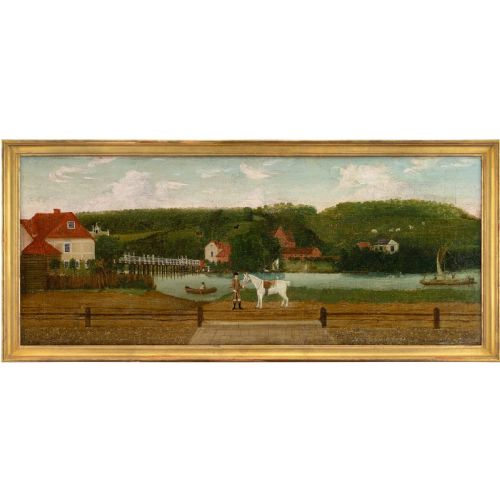
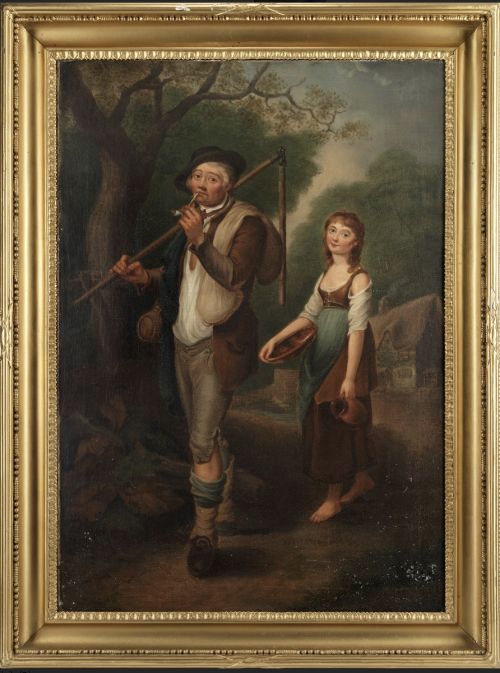
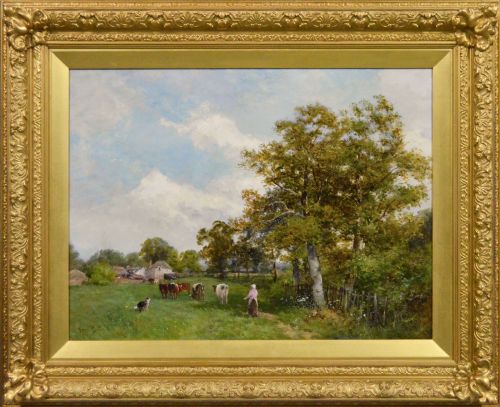
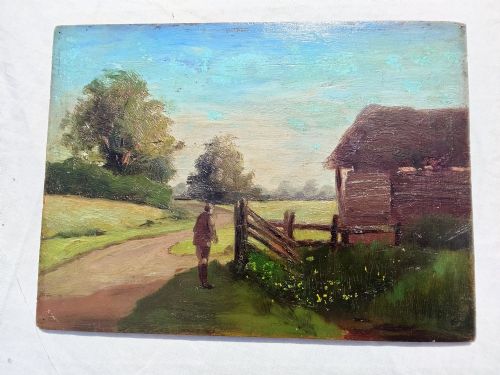
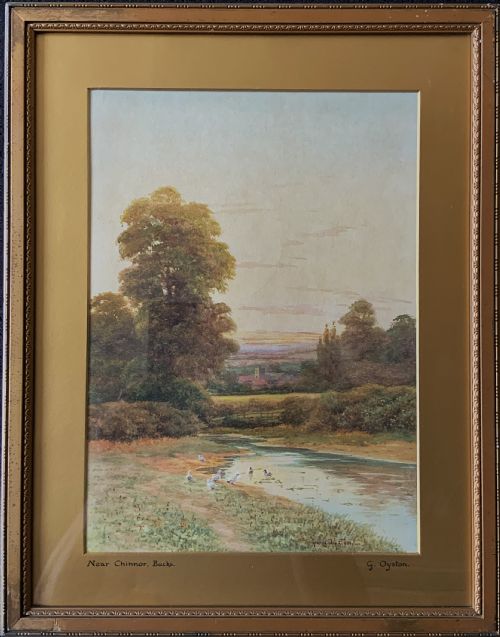
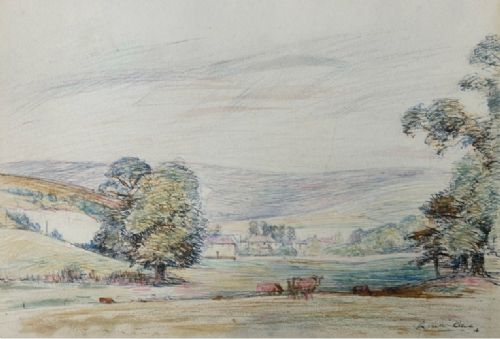
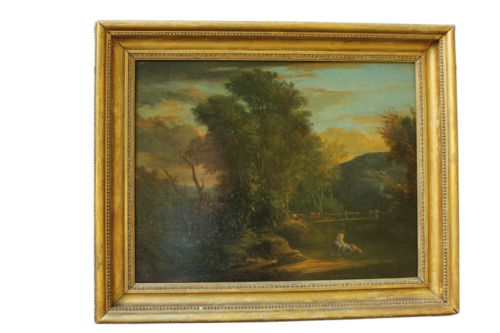
Traditional English countryside art centres on oil paintings and watercolours depicting rural scenes, rivers, farmland, and pastoral life. These works record the British landscape and its inhabitants from the nineteenth century into the twentieth century. A buyer seeking traditional English countryside art will frequently encounter framed canvases, wooden panels, and paper watercolours produced by regional artists and members of the English School. These pieces portray familiar rural subjects such as thatched cottages, grazing sheep, and figures by riversides.
The inventory on this page consists primarily of Victorian and early twentieth-century works spanning from the 1800s to the mid-twentieth century. Landscapes featuring horses, cattle, and local villages predominate across the selection. Works range from small framed watercolours to large oil paintings on canvas framed in giltwood. Buyers looking for specific regional views will find pieces depicting locations across England, from Gloucestershire and Yorkshire to Devon and Kent.
Materials and techniques
Artists painted these rural scenes using oil paint on canvas, wooden boards, or wood panels, alongside watercolours on paper. Oil paintings often utilise thick pigment layers and varnishes to build depth in wooded river landscapes and pastoral views. Watercolours rely on washes of pigment applied to paper to capture atmospheric light in open countryside settings.
Several canvases record local sheep quietly grazing through nineteenth-century rainstorms and wartime English pastures.
Distinctions in quality
Quality in these rural paintings rests upon the artist's command of light, proportion, and naturalism within the landscape. Works by established painters demonstrate more confident brushwork and precise anatomical rendering of figures and livestock compared to anonymous or follower pieces. The handling of atmosphere, particularly in depictions of morning light or river reflections, separates standard topographical records from accomplished artistic compositions.
The condition of the canvas or paper and the preservation of the original pigment influence the visual impact of each piece. Superior examples maintain vibrant colour harmony and secure paint layers without excessive craquelure or heavy restoration. Furthermore, period frames that match the age and scale of the artwork enhance the integrity of the piece.
George Graham·Thomas Barker of Bath·David Bates·George Oyston·Russell Sidney Reeves·Hubert Wellington·Charles Walter Simpson·Henry Charles Fox·Herbert Royle·John Sanderson Wells·Reginald Grange Brundrit·Fred Lawson·William Sydney Cooper·Sidney Richard Percy·Robert John Hammond·Charles Vickers·William Mellor·Robert Finley McIntyre·Charles Faulkner·Robert Winchester Fraser·Benjamin Williams Leader·Frederick Waters Watts·George Arthur Fripp·Lorenzo Headley
The Traditional English Countryside Art Glossary
- Oil on Canvas
- A painting technique where oil-based pigments are applied to a woven fabric stretched across a wooden support. This medium allows for rich colour blending and textured brushwork.
- Watercolour
- A painting method where water-soluble pigments are suspended in a solution and applied to paper. It produces translucent washes of colour well suited to capturing changing weather and light.
- English School
- A classification for artists working in England who shared stylistic approaches influenced by national traditions of landscape and portrait painting. It encompasses various generations from the Georgian period onward.
- Giltwood
- Wood that has been coated with a thin layer of gold leaf or gilt finish. Frames made from this material are commonly found surrounding nineteenth-century paintings.
- Pastoral Landscape
- An artistic genre depicting rural life, shepherds, farmland, and domestic animals in an idealized or realistic countryside setting.
Traditional English Countryside Art: Frequently Asked Questions
What subjects appear in traditional English countryside art?
These artworks depict rural life, including riversides, farmyards, cottages, and livestock grazing in fields. Scenes often feature figures working the land, horses, and identifiable regional views across English counties.
Artists focused on recording the changing seasons and everyday agricultural activities of the nineteenth and early twentieth centuries. The resulting pieces offer a visual record of rural England before modern industrial development.
How do I distinguish oil paintings from watercolours?
Oil paintings utilise thick pigments applied to canvas, wooden panels, or boards, creating a textured surface with deep colour saturation. They are generally heavier and do not require glass for protection.
Watercolours use translucent washes on paper and must be displayed behind glass to prevent environmental damage. The surface appears flat compared to the raised brushstrokes typical of oil paint.
How should I care for historic countryside paintings?
Keep paintings away from direct sunlight and sources of extreme heat or humidity to prevent the canvas from warping or the paint from fading. Stable indoor environments protect both the wooden stretchers and the pigment layers.
Dust framed works gently with a dry, soft cloth and avoid using liquid cleaners on the canvas or the giltwood frame. Paper watercolours require archival framing and UV-resistant glass to maintain their condition over time.
Are these works signed by the artists?
Many pieces in this selection bear signatures, monograms, or inscriptions left by the original painter. Some works are identified through historical attribution to specific artists or the English School.
Signatures are typically found in the lower corners of the canvas or paper. Where a work is unsigned, stylistic evidence and subject matter help determine its period and regional origin.