





Framed Architectural Oil Painting
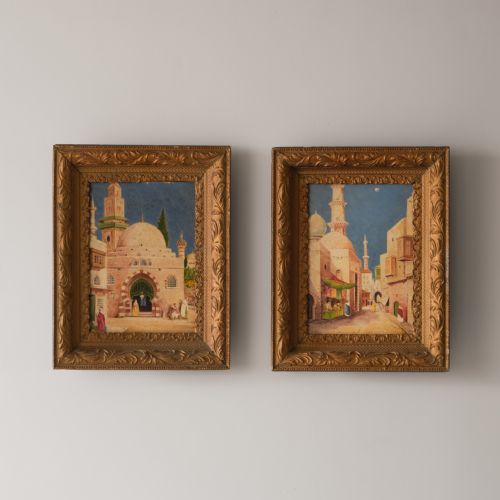
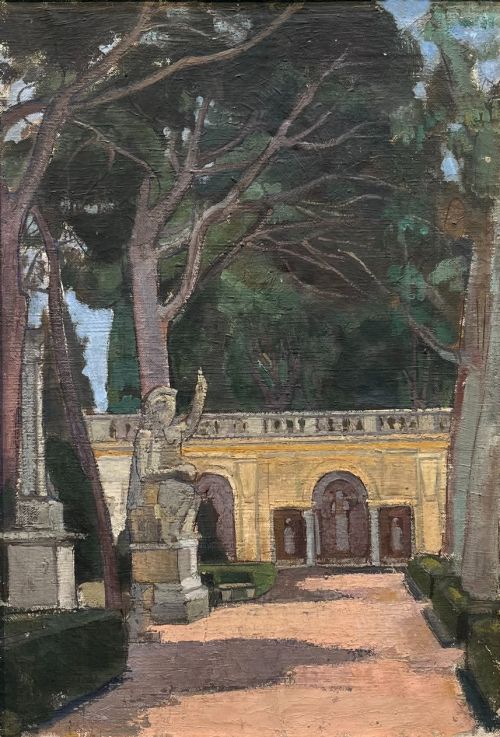
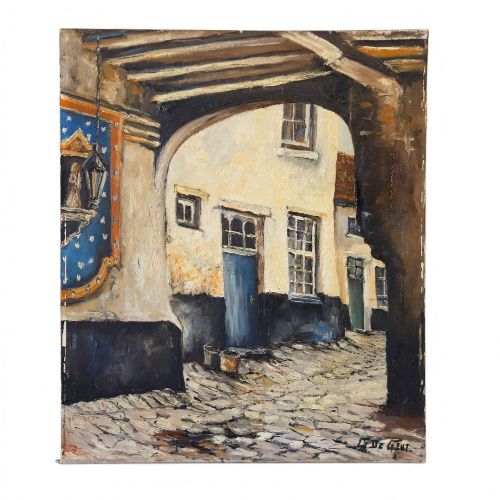
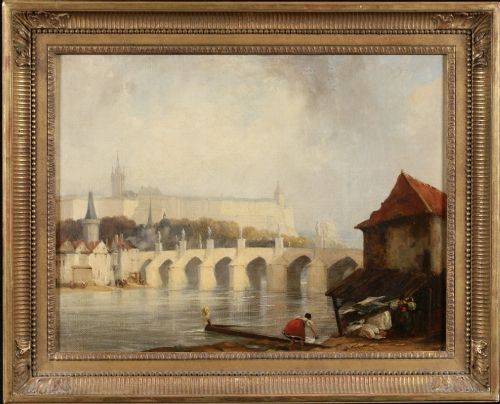
When you search for a framed architectural oil painting, you are looking at canvases and panels capturing cities, ruins, and buildings set within period frames.
Framed Architectural Oil Painting
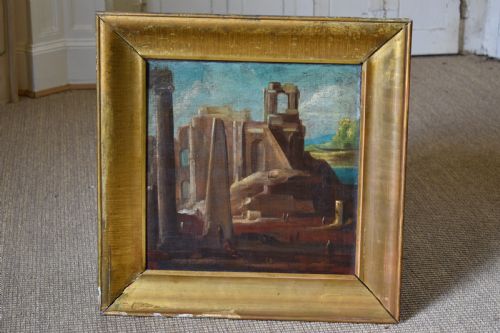
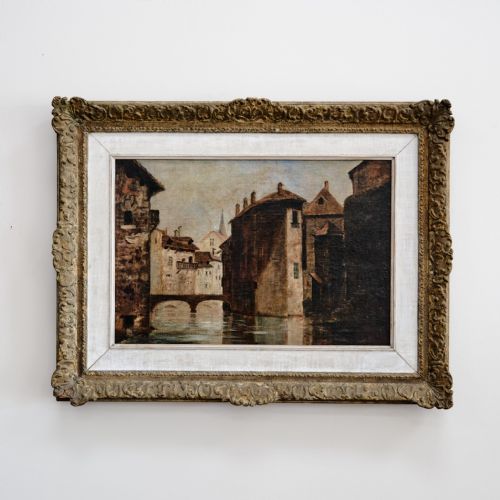
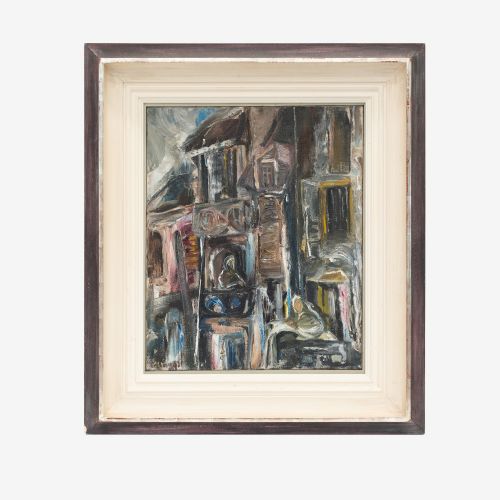
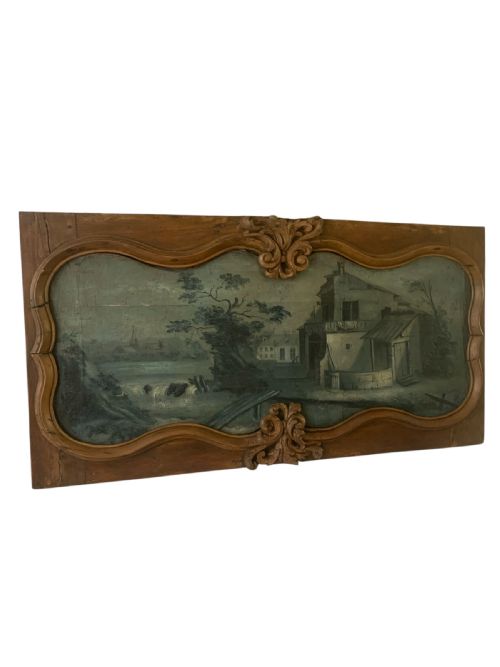
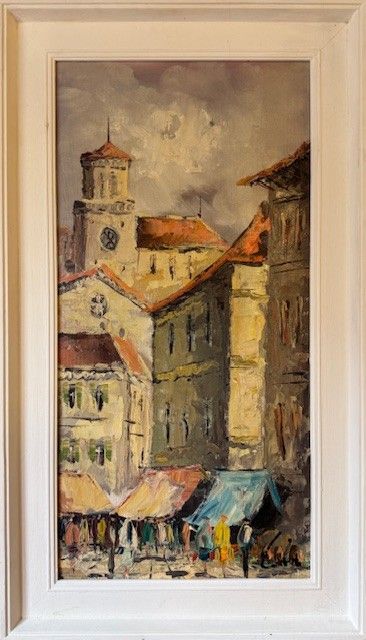
A framed architectural oil painting captures urban streetscapes, classical ruins, bridges, and grand monuments. The works span from 18th-century overdoor panels and Italianate landscapes with classical architecture to 19th-century Grand Tour canvases and mid-century expressionist cityscapes.
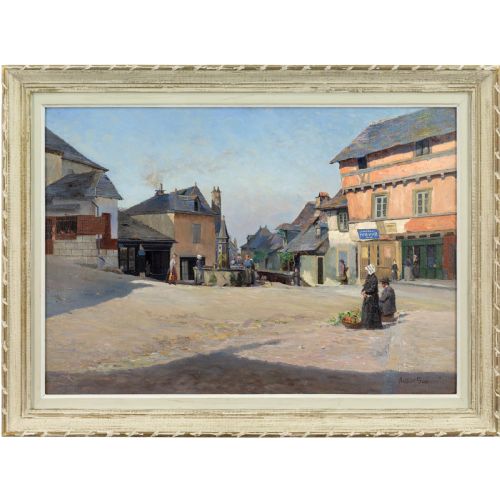
You will encounter pieces ranging from naive portrayals of distant cities and detailed views of European squares to large-scale depictions of Venetian canals and Bavarian Gothic castles. These works frequently arrive in wood, giltwood, or gesso frames that complement the period of the painting.
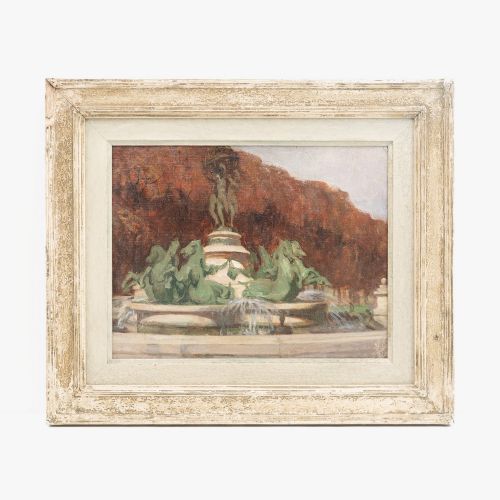
The selection includes British, French, Flemish, and German schools, showing how different artists recorded civic spaces, industrial constructivist factories, and historic structures. Many pieces document specific locations such as Paris, Rome, Venice, and Prague through varying stylistic lenses from impressionism to surrealism.
Materials and Techniques
Artists painted these architectural scenes primarily in oil paint upon canvas, board, panel, or occasionally paper. The support material frequently dictates the texture, with wood panels and heavy canvases bearing layered brushwork or impasto.
Frames are constructed from wood, often finished with gesso and giltwood to provide an ornate border that defines the perspective of the urban landscape or interior cathedral study.
Several canvases capture bustling market squares and quiet bridges where distant pigeons surely left their mark.
Evaluating Quality
Quality rests in the precision of perspective, the handling of light across stone and masonry, and the integration of figures within the built environment. Masterful works demonstrate a clear understanding of proportion and spatial depth when rendering complex facades and bridges.
The relationship between the painting and its frame matters considerably, as original giltwood or gesso surrounds that match the period enhance the integrity of the piece.
Arthur Gué·Victor Gabriel Gilbert·Cornelis Christian Dommersen·William George Meadows·Karl Herrle
The Framed Architectural Oil Painting Glossary
- Impasto
- Paint applied thickly to a canvas or panel so that it stands out from the surface, often adding tactile depth to architectural stonework.
- Giltwood
- Wood carved and covered with a thin layer of gold leaf, commonly utilised for period picture frames.
- Gesso
- A plaster-like mixture applied to wood or canvas as a base for painting or moulded to create decorative relief on frames.
- Grand Tour
- A traditional trip through Europe undertaken by upper-class European young men of means in the 18th and 19th centuries, frequently documented through purchased architectural art.
Framed Architectural Oil Painting: Frequently Asked Questions
What periods do these paintings cover?
The listings span from the 18th century through the Georgian era and the 19th century into the mid-20th century, including works from the 1900s to the 1960s.
Different decades bring distinct artistic movements, ranging from classical ruins and romantic views to impressionist and expressionist cityscapes.
Where were these architectural scenes painted?
Artists painted locations across Europe and beyond, including Venice, Paris, Rome, Prague, Bruges, and old Bagdad.
Many works record specific urban landmarks, civic squares, cathedrals, and ancient ruins observed during travels or local study.
What materials support the oil paint?
Paintings are executed on traditional oil on canvas, oil on board, wood panels, and overdoor painted panels.
These surfaces are commonly housed within wooden frames, frequently finished with gesso or giltwood.
How do I identify the style of a painting?
Styles include Victorian academic precision, impressionism, post-impressionism, German expressionism, and mid-century modern abstraction.
Brushwork technique, treatment of light, and the presence of impasto or naive forms help distinguish one movement from another.