

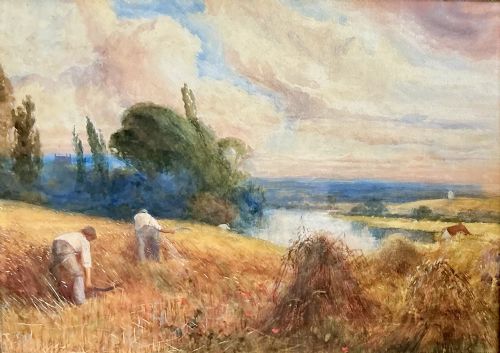


Blue River Watercolour Painting
A blue river watercolour painting captures flowing water and open skies through translucent pigment on paper, offering a direct window into nineteenth and twentieth-century landscapes.
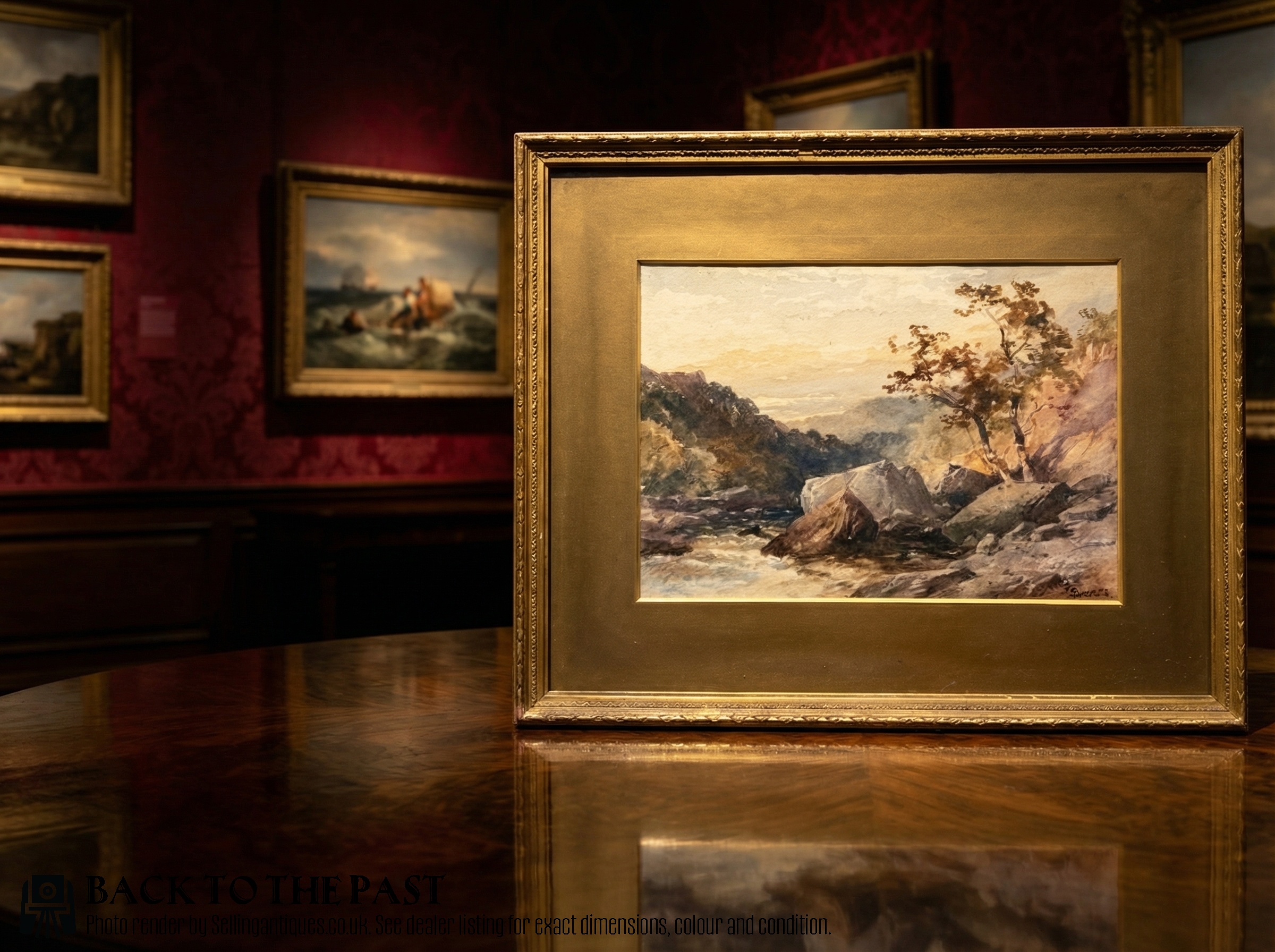
Blue River Watercolour Painting
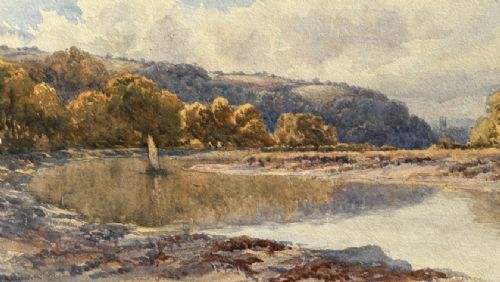
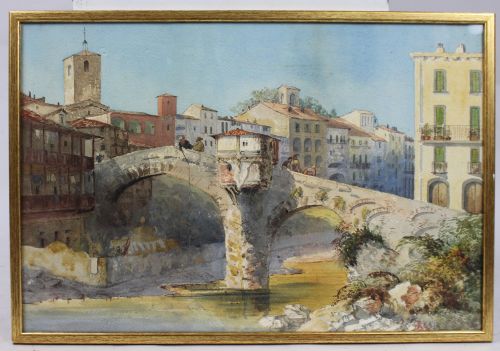
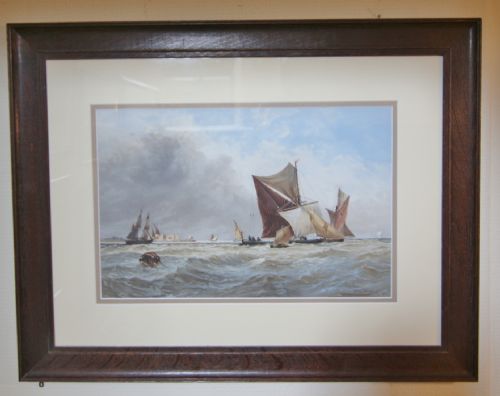
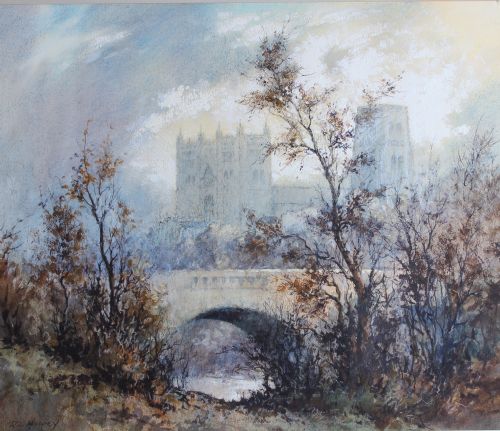
A blue river watercolour painting depicts waterways, estuaries, and maritime scenes created by artists working across Britain, Europe, and beyond. These works range from intimate rural stream studies to large architectural river views set along the Thames, the Seine, and the Medway.
Most examples encountered on this page originate in the nineteenth and early twentieth centuries, spanning Victorian, Edwardian, and later British art movements. They appear in varied formats, from signed topographical watercolours to framed gallery paintings.
The subjects focus heavily on bridges, locks, harbours, and coastal reaches, rendered with an emphasis on atmospheric light and moving water.
How they were made
Artists built these images using water-soluble pigment applied to heavy paper surfaces, often combining watercolour paint with ink to define architectural details and rigging on shipping. Washed pigments allowed luminosity to shine through from the white paper beneath.
Protection came from framing behind glass, which shielded the delicate paper and water-based colours from atmospheric moisture and surface damage over generations.
Listings feature works executed on paper using watercolour pigment, ink, and wash across the nineteenth and twentieth centuries.
What varies in quality
Quality rests in the handling of light, atmosphere, and water movement by the artist. Stronger works demonstrate confident brushwork and precise control over translucent washes to evoke depth in sky and river.
The reputation of the painter and the specificity of the topographical subject matter also elevate individual pieces, distinguishing hasty sketches from finished exhibition watercolours.
David Law·Alfred Young Nutt·Thomas Bush Hardy·Cornelius Pearson·Arthur Reginald Smith·Henry John Kinnaird·Charles Harmony Harrison·Noel Harry Leaver·Robert Winchester Fraser·Frank Wasley
The Blue River Watercolour Painting Glossary
- Watercolour pigment
- The finely ground colour substance mixed with a water-soluble binder used by artists on paper.
- Topographical watercolour
- An artwork focused on recording specific real-world locations, towns, and river views with accuracy.
- Estuary
- The tidal mouth of a large river, where the tide meets the stream, frequently captured in maritime art.
- Framed painting
- An artwork presented within a protective wooden structure and glass cover to preserve the paper.
Blue River Watercolour Painting: Frequently Asked Questions
How should I hang a watercolour painting?
Watercolours are sensitive to light and should be positioned away from direct sunlight to prevent the pigments from fading over time.
Ensure the room maintains stable humidity levels to protect both the antique paper and the wooden frame.
Are these paintings signed by the artists?
Many of the works feature signatures, initials, or inscriptions left by the original painter, often located in the lower corners of the sheet.
Some pieces also retain historical gallery labels or artist notes on the reverse of the frame.
What periods do these watercolours date from?
The selection spans the nineteenth and twentieth centuries, with a strong representation of Victorian and Edwardian works.
Dates are often established through artist lifespan records, dated signatures, or period framing styles.
What framing is typically found on these pieces?
Most works arrive in period wooden frames protected by glass to safeguard the delicate paper surface.
Original framing helps preserve the historic context of the artwork.