


Paper Oriental Artwork
Paper oriental artwork brings together delicate pith paper paintings, vibrant gouache miniatures and intricate woodblock prints spanning multiple centuries.
Paper Oriental Artwork
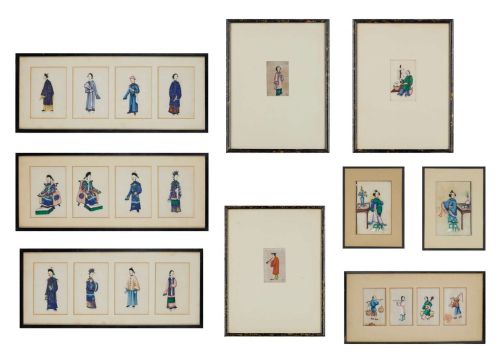
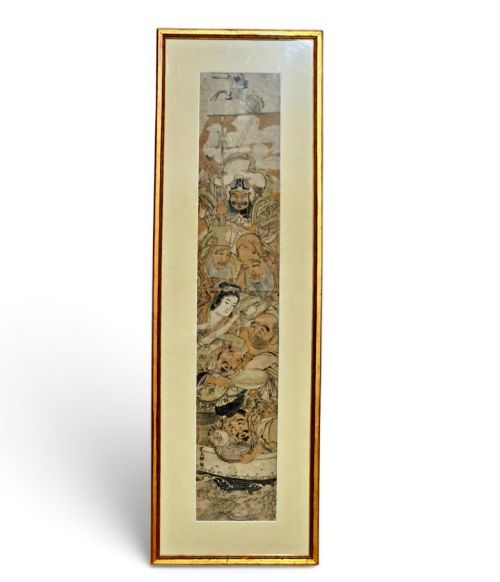
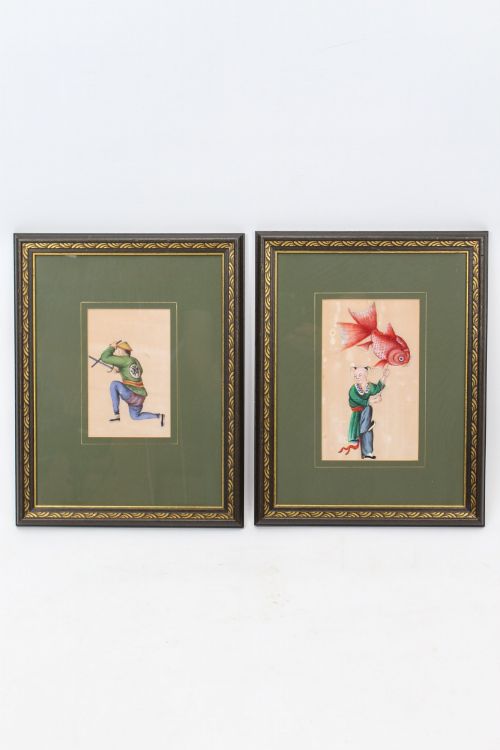
When searching for paper oriental artwork, collectors encounter a diverse selection of traditional pieces originating from China, Japan and India. These creations encompass nineteenth-century pith paper paintings, delicate watercolours, ink sketches and Edo period woodblock prints.
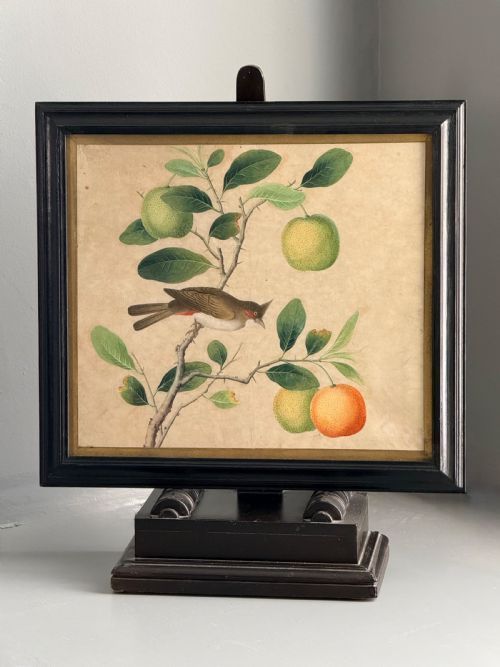
The most common examples on this page are nineteenth-century Chinese pith paper paintings depicting figural scenes, butterflies and floral subjects. Japanese woodblock prints and illustrated tales also feature prominently alongside Indian gouache miniatures.
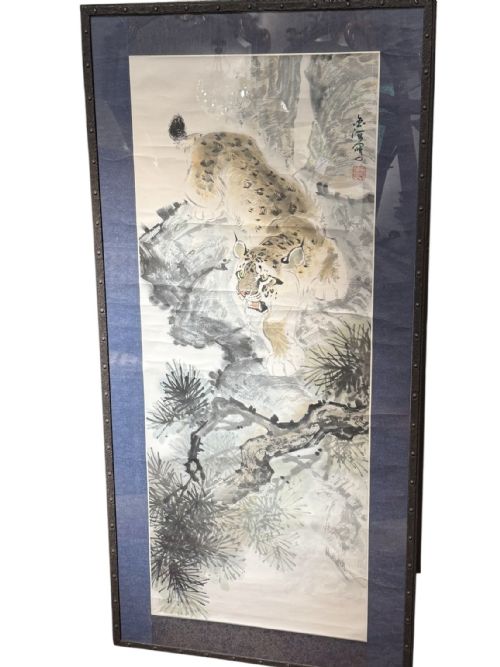
Forms range from framed paintings and wall art to mounted scroll paintings and bound albums. Buyers find works spanning the eighteenth century through to the mid-twentieth century, offering a broad spectrum of Asian artistic traditions.
Materials and techniques
Makers utilised delicate pith paper, also known as rice paper, alongside traditional silk and standard paper supports. Artists applied watercolours, gouache and black or coloured inks to achieve rich pigments and fine linear detail.
Japanese woodblock printing involved carving designs into wood matrices to produce multi-coloured impressions on paper. Scroll paintings and framed artworks often incorporated original wooden mountings and protective glass frames.
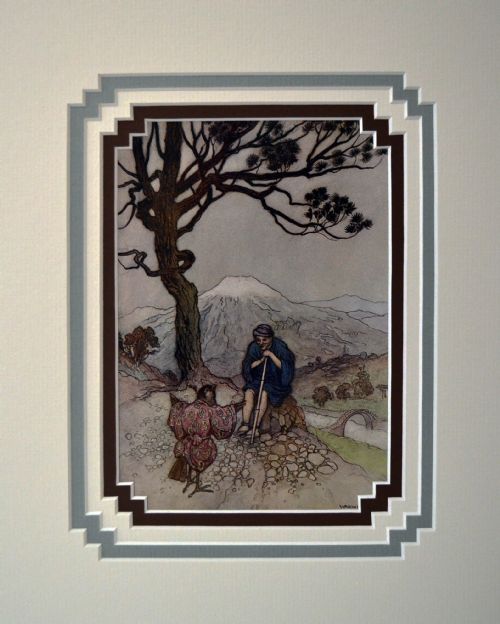
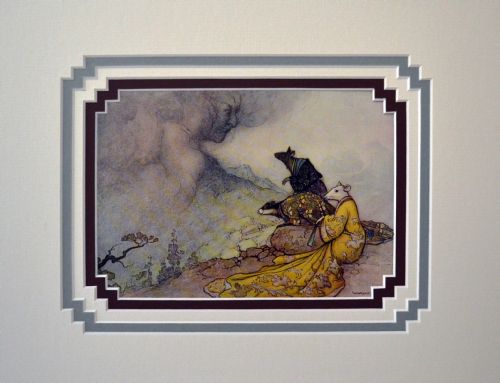
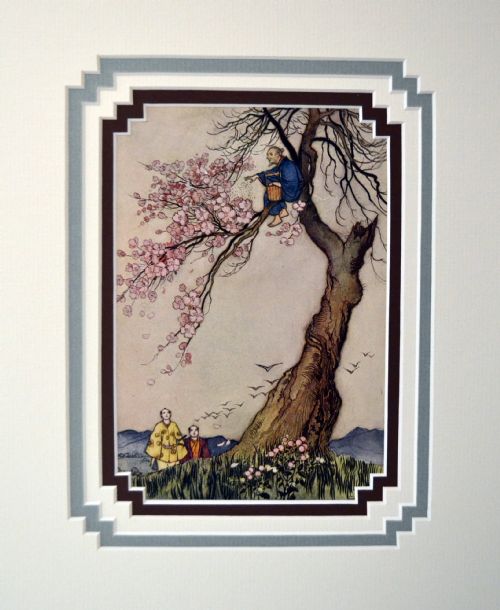
The selection includes Japanese fairy tale prints by Warwick Goble, Chinese export pith paintings and Indian miniature paintings.
Factors of quality
Quality in these works rests upon the crispness of the ink lines, the vibrancy of the gouache or watercolour pigments and the preservation of the fragile paper support. Pith paper requires exceptional care to avoid cracking or surface abrasion over time.
The precision of the carving in woodblock prints and the finesse of the brushwork in miniature paintings distinguish standard output from superior examples. Original framing and the presence of artist seals or signatures add considerable distinction.
Katsukawa Shunshō·Warwick Goble·Kunisada·Ya Ming·Takashi Nakayama
The Paper Oriental Artwork Glossary
- Pith paper
- A delicate material formed from the spongy cellular pith of the Tetrapanax papyrifer plant, frequently used in nineteenth-century Chinese export paintings. It has a velvety texture that absorbs watercolours and gouache with high luminosity.
- Ukiyo-e
- A genre of Japanese woodblock prints and paintings depicting scenes of everyday life, landscapes and popular culture. The term translates to pictures of the floating world.
- Gouache
- An opaque water-based medium composed of ground pigments suspended in water with a binding agent. It provides dense, flat areas of strong colour in Chinese, Japanese and Indian works.
- Scroll painting
- A traditional Asian format designed for vertical or horizontal display, typically executed on paper or silk and mounted with fabric borders. These pieces roll up for storage.
- Woodblock print
- An artistic technique where images are carved into wooden blocks, inked and pressed onto paper. Multiple blocks are used to achieve multi-colour compositions.
Paper Oriental Artwork: Frequently Asked Questions
How do I care for pith paper paintings?
Pith paper is extremely delicate and sensitive to humidity, pressure and light. Keep these works behind protective glass and away from direct sunlight to preserve the pigments.
Avoid pressing against the surface or exposing the paper to damp environments, as the material can easily fracture or develop mould.
What is the difference between woodblock prints and paintings?
Woodblock prints are mechanically printed from carved wooden matrices, allowing artists to produce multiple impressions of the same design. Paintings are individually hand-drawn and painted directly onto paper or silk using brushwork.
Close inspection under magnification reveals the printed ink dots or carved lines of a woodblock versus the direct brush strokes of an original painting.
How are Japanese and Chinese scrolls displayed?
Scroll paintings are traditionally hung on interior walls for specific seasons or occasions rather than left on permanent display. They are designed to be rolled up carefully and stored in protective boxes when not in view.
Modern collectors often frame these pieces behind glass to protect the fragile paper from atmospheric wear while maintaining their visual appeal.
How can I tell an Edo period print from a later copy?
Edo period woodblock prints exhibit authentic paper ageing, traditional publisher marks and specific carving characteristics associated with eighteenth and nineteenth-century production. The quality of the pigments and the wear on the paper surface provide clues to age.
Later reproductions often display uniform modern paper texture and lack the subtle colour variations found in genuine period impressions.