





Orientalist Landscape Painting
These orientalist landscape painting works capture distant vistas and desert scenes, offering collectors a window into historical travels across the Middle East and beyond.
Orientalist Landscape Painting
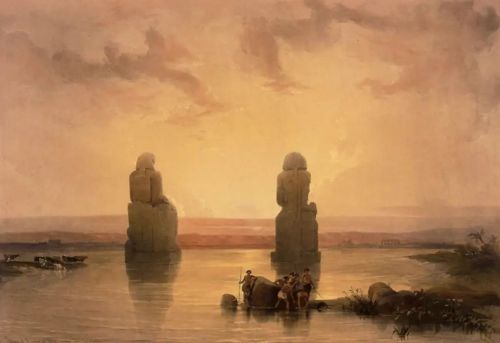
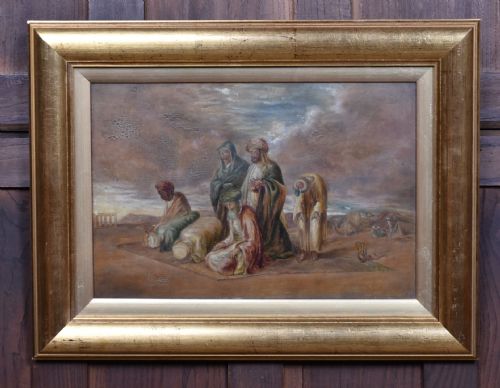
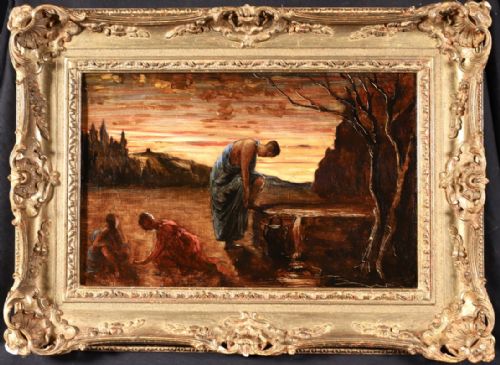
An orientalist landscape painting transports viewers to historic scenes across Egypt, the Middle East, and beyond, recording ancient monuments, riverbanks, and desert expanses. These works range from grand oil paintings on canvas to intimate watercolour paintings executed on paper or board.
The selections span the nineteenth century and the twentieth century, encompassing Victorian interpretations and modern Iraqi art alongside Regency examples. Subjects frequently feature Bedouin tribesmen, camels, riverside settlements, and monumental architecture.
Buyers encounter framed pieces housed in gilded wood, gilt wood, or ebonised frames, preserving the original aesthetic of the period. Smaller watercolour and gouache works sit alongside large-scale oil canvases suitable for prominent wall art displays.
Materials and Techniques
Artists utilised oil on canvas and oil on board for substantial compositions, building rich textures and atmospheric light effects. Watercolour and gouache on paper permitted rapid on-the-spot sketching during travels abroad, capturing fleeting light at sundown or along river tributaries.
Framing materials reflect the period of creation, incorporating gilded wood, gilt wood, and ebonised wood to complement the visual weight of the paintings. Protective glass often shields delicate paper works, preserving pigments against environmental damage.
Recorded periods span from the eighteenth century through the 1960s.
Assessing Quality and Execution
Execution separates standard decorative pieces from works by documented artists who travelled extensively and recorded topography with precision. Brushwork fluidity, particularly in wash techniques for foliage or water, demonstrates the artist's foundational skill.
Provenance and original framing contribute significantly to the standing of a piece, with period frames matching the exact era of the canvas or paper. The clarity of signature and documented biographical details elevate specific works within the broader field.
David Roberts·Edwin Lord Weeks·Anne Dorrien Smith·William James Muller·Hugo Vogel·Abdul Kadir Al Rassam·Alexandre Decamps·Richard Wilson·Earl Haig
The Orientalist Landscape Painting Glossary
- Orientalist
- Pertaining to artistic representations of Eastern subjects, particularly the Middle East and North Africa, created by Western or regional artists. This category defines the overarching thematic focus of these works.
- Gouache
- An opaque water-based medium that allows for rich, solid areas of colour alongside transparent watercolour washes. It was frequently utilised for detailed landscape studies.
- Ebonised
- Wood treated to imitate the dark, dense appearance of ebony. Many period frames receive this finish to provide a stark, elegant border.
- Gilt wood
- Wood coated with a thin layer of gold leaf or metallic paint. This treatment enhances the decorative presentation of traditional frames.
- Wash technique
- A method of applying diluted watercolour pigment to paper to create smooth gradients of tone. It is commonly employed for skies and water.
Orientalist Landscape Painting: Frequently Asked Questions
What subjects appear in these paintings?
The compositions depict Egyptian monuments, Nile river views, desert scenes with Bedouin tribesmen, and ancient temples.
Subjects also include specific locales such as the Pyramids at Gizeh, the Suez Canal, and the Vale of Cashmere.
How do I care for watercolour paintings?
Watercolour works require protection from direct sunlight to prevent fading of the delicate pigments on paper.
Keeping them behind glass in stable indoor humidity preserves the paper support and prevents foxing over time.
How do I distinguish oil from watercolour?
Oil paintings feature a heavy, textured surface on canvas or board with a visible sheen from the binder.
Watercolour works present a flat, matte appearance on paper, often showing the fine grain of the sheet beneath translucent washes.
Where were these artists active?
Creators travelled extensively throughout Egypt, the Middle East, and Asia, recording local topography and daily life.
Many based their finished studio canvases on field sketches executed during nineteenth-century and early twentieth-century expeditions.