



Palace Landscape Painting
Palace landscape painting captures grand architectural landmarks and royal residences across Europe, offering buyers a timeless view of historic urban scenery.
Palace Landscape Painting
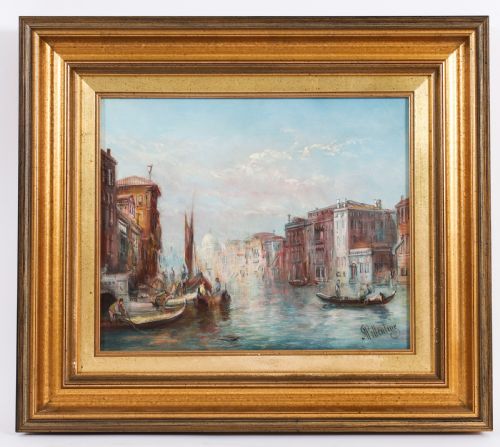
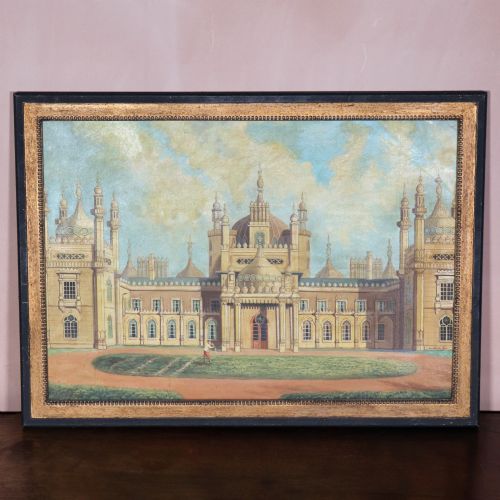
Palace landscape painting captures historic architectural views and royal residences, spanning periods from the seventeenth century to the twentieth century. These works frequently depict famous Venetian landmarks such as the Doge's Palace and the Grand Canal, alongside English subjects like Hampton Court and the Royal Pavilion Brighton.
Buyers encounter oil paintings on canvas and delicate watercolours on paper, often framed in giltwood. The selection ranges from Victorian and Edwardian townscapes to Georgian and Grand Tour compositions.
Works on this page include oil paintings and watercolour paintings that record European townscapes and architectural studies. Each piece documents celebrated buildings through the eyes of period artists.
How these artworks were produced
Artists worked primarily with oil paint on canvas or watercolour on paper, utilising wood and timber supports or stretching fabrics over wooden frames. Gold leaf and giltwood frames frequently complement the painted surface, adding structural weight and decorative contrast.
Techniques range from fluid watercolour washes applied to paper for architectural clarity to rich oil paint layers built up on canvas to capture light reflecting off Venetian canals and stone facades.
Venetian pigeons must have posed tirelessly for Alfred Pollentine, given how many canal palaces he immortalised in oil paint.
What separates the finest examples
The distinction between standard works and exceptional examples lies in the precision of the architectural draughtsmanship and the artist's command of light and atmospheric perspective. Masterful handling of water, stone texture and atmospheric haze elevates a townscape from a mere record to a compelling artistic achievement.
Condition of both the painted surface and the original giltwood frame plays a significant role in overall quality. Intact brushwork, stable canvas or paper supports, and well-preserved framing materials retain the visual integrity intended by the creator.
Alfred Pollentine·Percy Robertson·Joseph Farrington·Jane Vivian·Benedetto Salviati·Edwin T Dolby
The Palace Landscape Painting Glossary
- Giltwood
- Wood carved and coated with a thin layer of gold leaf or gilt powder. This material is frequently used for framing fine paintings.
- Watercolour
- A painting method where the paints are made of pigments suspended in a water-based solution. Works in this medium are typically executed on paper.
- Townscape
- An artistic representation of the physical aspects of an urban area or city. These scenes often feature prominent palaces, canals and historic architecture.
- Grand Tour
- A traditional trip of Europe undertaken by upper-class European young men of sufficient status. Artists often created paintings of architectural sights to commemorate these journeys.
- Canvas
- Closely woven fabric used as a surface for oil painting. It is typically stretched across a wooden frame before work begins.
Palace Landscape Painting: Frequently Asked Questions
What subjects appear in palace landscape painting?
These works primarily depict grand architectural landmarks, royal residences and famous urban views across Europe. Prominent examples feature Venetian sites like the Doge's Palace alongside English subjects such as Hampton Court and Brighton.
Artists focused heavily on townscapes, combining detailed studies of historic buildings with depictions of waterways, canals and civic squares.
Are these artworks painted in oil or watercolour?
The selection includes both oil paintings on canvas and delicate watercolours on paper. Artists chose their medium to suit the specific requirements of the scene, employing oil paint for rich textures and watercolours for lighter atmospheric effects.
Many of these pieces retain their period frames constructed from wood and giltwood, which complement the painted imagery.
How do I date a palace landscape painting?
Dating relies on stylistic clues, artist signatures, and the materials used in the construction of the artwork and its frame. The pieces on this page span from the seventeenth century through to the twentieth century, encompassing Georgian, Victorian and Edwardian aesthetics.
Examining the canvas backing, paper quality and framing techniques provides further contextual evidence for the period of creation.
How should I display and care for these paintings?
Display these works away from direct sunlight and excessive moisture to protect both the paint pigments and the paper or canvas supports. Stable indoor environments prevent the wood and giltwood frames from warping over time.
Regular dusting with a soft, dry cloth keeps the surface clean without risking damage to delicate brushwork or historic frames.