



Original Paper Painting
An original paper painting brings direct, hand-painted artistry into a room, offering intimate encounters with pigment, ink and brushwork.
Understanding Original Paper Painting
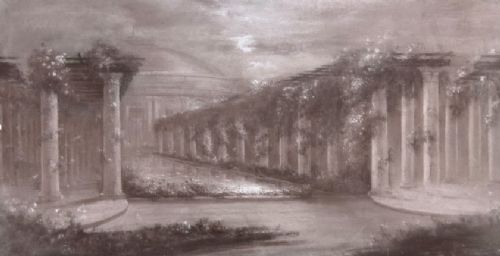
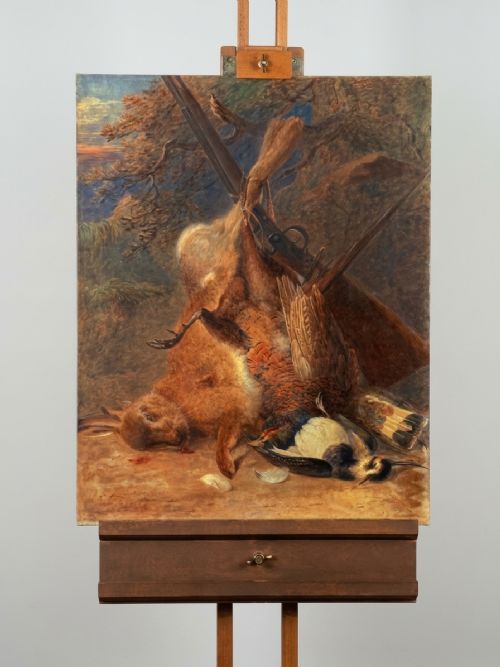
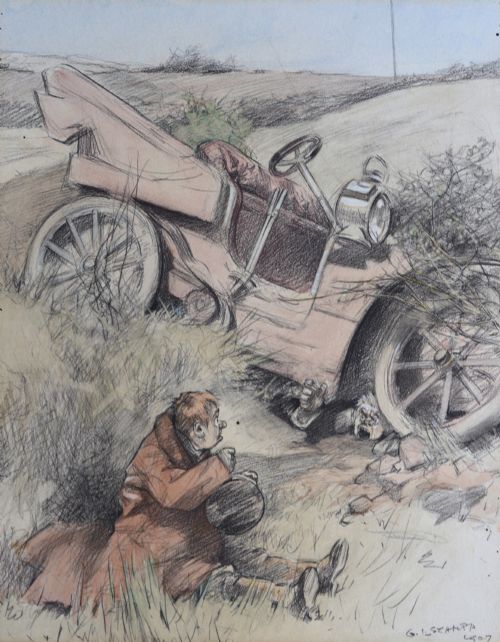
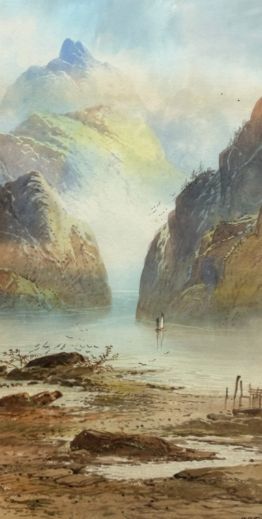
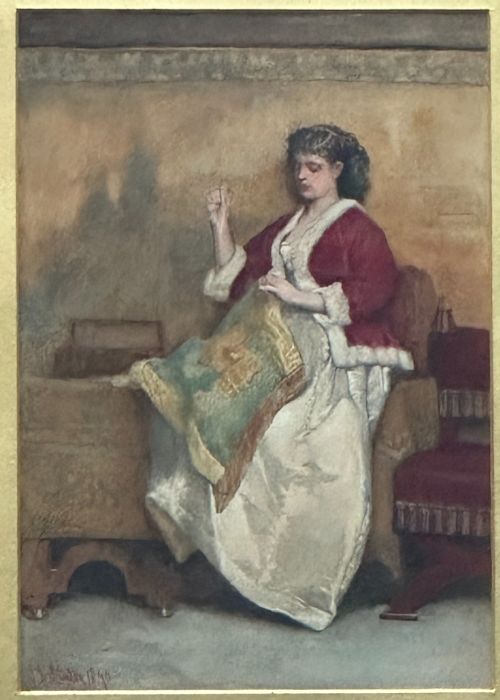
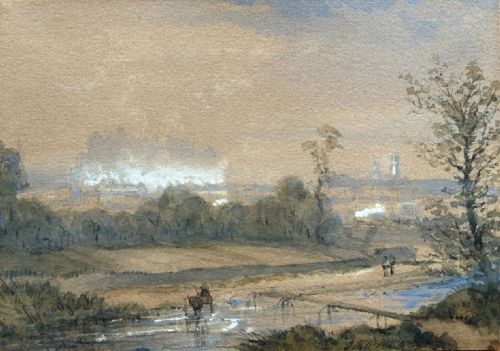
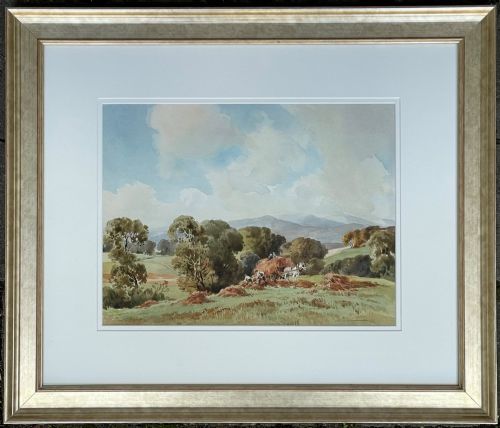
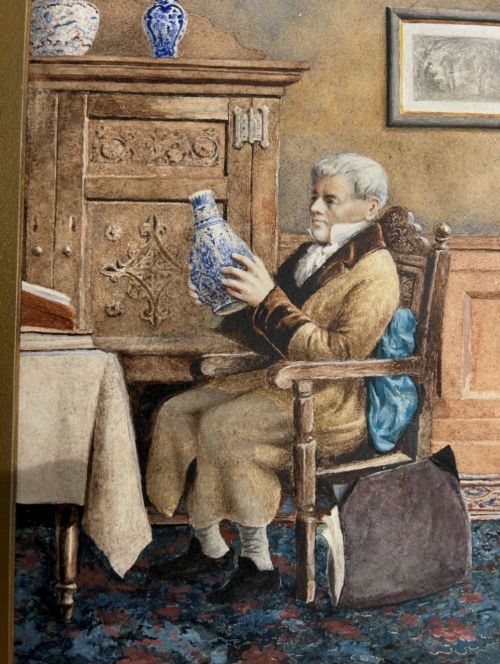
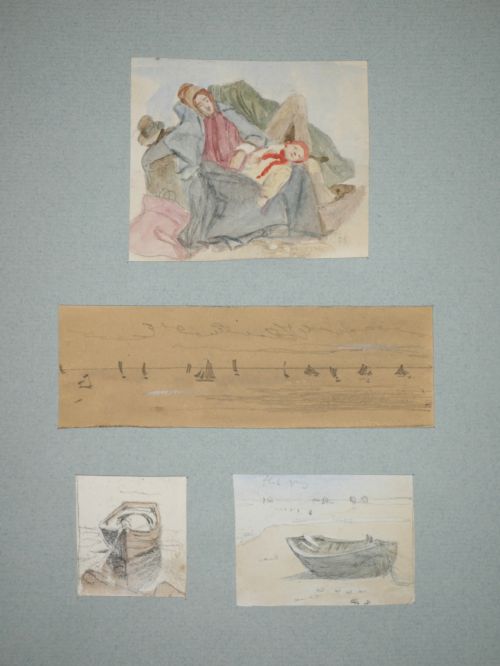
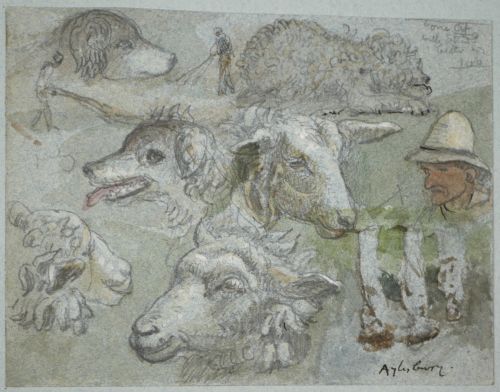
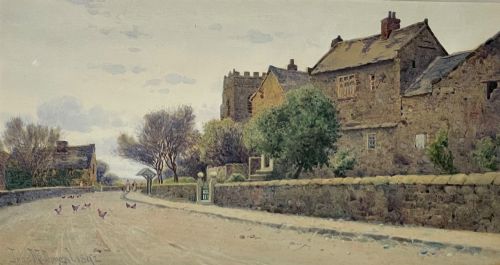
An original paper painting comprises works executed directly on paper supports, spanning landscape scenes, architectural studies and portraits. These pieces range from nineteenth-century topographical watercolours to mid-century abstract compositions and intricate Orientalist depictions.
Buyers encounter both finished works intended for display and commercial designs such as twentieth-century wallpaper patterns. The selection covers British school watercolours alongside Chinese pith paper studies and European miniatures.
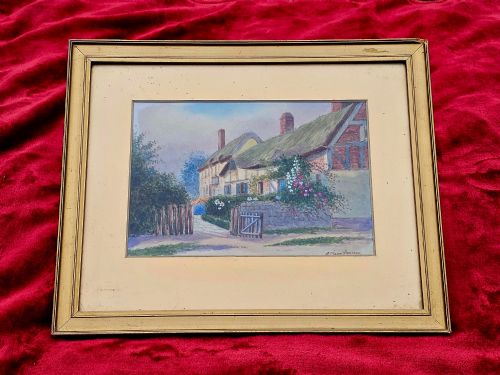
Dating ranges from the early nineteenth century through the 1930s, 1950s and 1960s. Forms vary from framed landscape watercolours to delicate paintings housed in paper mache frames.
Materials and Technique
Artists utilised watercolour, gouache and ink applied to various paper substrates. Surviving works record the use of specialised supports including rice paper, pith paper, buff paper and laid paper bearing watermarks.
Many items incorporate protective glass alongside wood or metal frames, while smaller portrait miniatures utilise paper mache housings. Commercial wallpaper designs were produced in studios using pigment and bodycolour on paper sheets.
Retail Price Guide 2026
Typical UK retail prices for original paper painting, calculated from the Sellingantiques database of over a million retail prices indexed since 2003. This retail price guide relies exclusively on Sellingantiques data; no external sources or auction records are used, so the figures do not describe the wider market.
Listings feature works from the nineteenth century, 1930, 1950 and 1960, utilising paper, rice paper, pith paper, gouache, ink and watercolour.
Judging Quality
Quality rests upon the sureness of the brushwork and the clarity of the pigment. Stronger examples display confident handling of wash and line, whereas weaker pieces rely on formulaic repetition.
The preservation of the paper support dictates overall merit. Works retaining vibrant colour without excessive foxing or acidic burn command greater attention from collectors.
Joseph RR McCulloch RBA·Derek Latimer Sayer·Angus Rands·Fred Lawson·Stanley Orchart·Lt Col Thomas Ditmas·Kent and Dawes London·Julius Schnorr von Carolsfeld·Alfred George Webster·David Cox·William Page·Jean Betourne
The Original Paper Painting Glossary
- Watercolour
- A painting method where fine pigment is suspended in a water-soluble binder. It relies on the white of the paper to provide luminosity through translucent washes.
- Gouache
- An opaque water-based medium containing pigment mixed with a binding agent and white filler. It produces solid passages of colour distinct from transparent watercolour.
- Pith Paper
- A fragile material formed from the pith of the Tetrapanax papyrifer plant. It possesses a velvety texture that absorbs ink and watercolour with intense brilliance.
- Laid Paper
- Paper featuring a grid of parallel chain lines and wire lines formed during manual sheet formation. It often displays maker watermarks visible when held to light.
- Capriccio
- An architectural fantasy placing together buildings, ruins and other architectural elements in a fictional compositional arrangement. Artists frequently employed this genre in topographical watercolours.
Frequently Asked Questions
What is pith paper?
Pith paper is a delicate material derived from plant stems, historically used in nineteenth-century Chinese export painting.
It absorbs water-based pigments deeply, creating rich colour saturation that differs from standard European papers.
How should I frame these works?
Framing requires conservation mounting using acid-free materials to prevent the paper from touching the glass directly.
Keeping works away from direct sunlight protects fugitive watercolours and inks from fading over time.
Are wallpaper design paintings unique?
Wallpaper design paintings are individual gouache or watercolour studies produced by studios for textile and interior production.
They represent original commercial art rather than mass-produced printed wallpaper rolls.
How do I date a paper painting?
Dating relies on stylistic evidence, artist signatures, framing methods and the type of paper support used.
Watermarks and embossed maker stamps on the paper sheet often provide specific manufacturing periods.