
Panelled Oak Hall Seat
A panelled oak hall seat grounds an entrance with timber grain and solid weight, offering seating built to last generations.
Panelled Oak Hall Seat
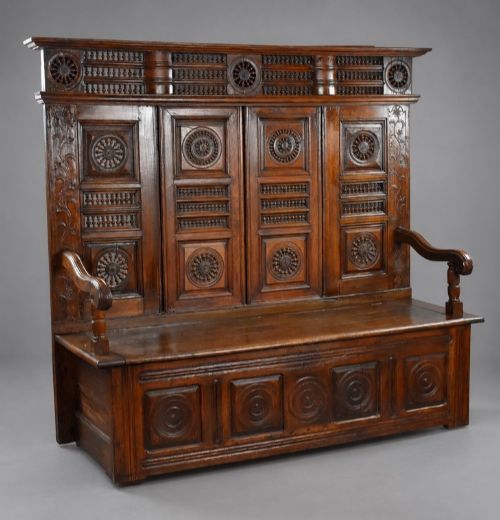
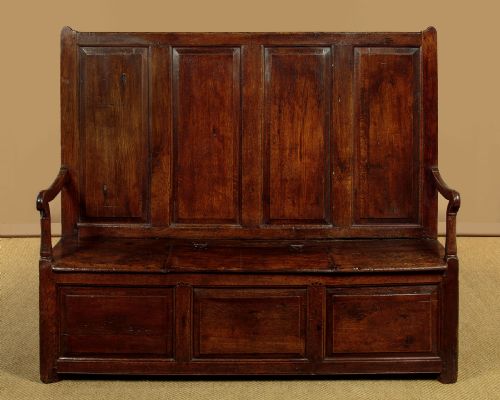
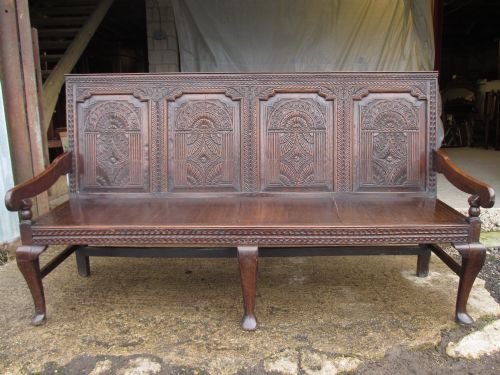
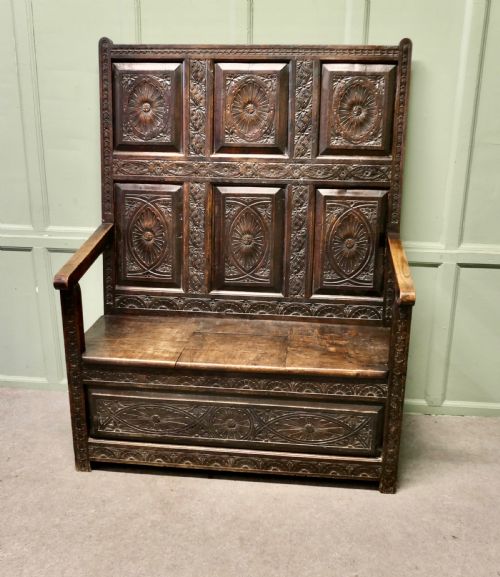
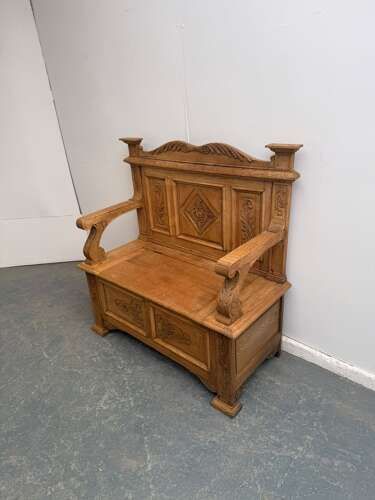
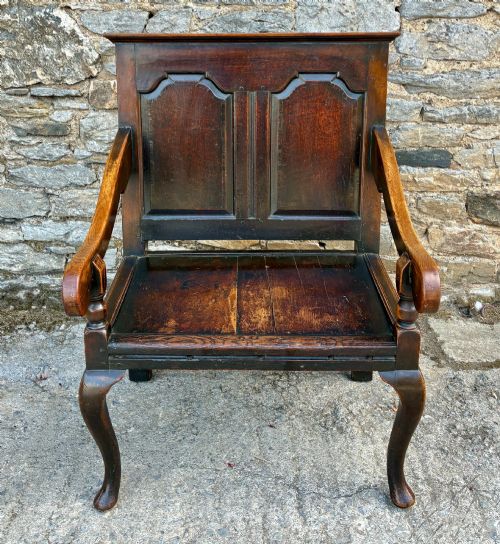
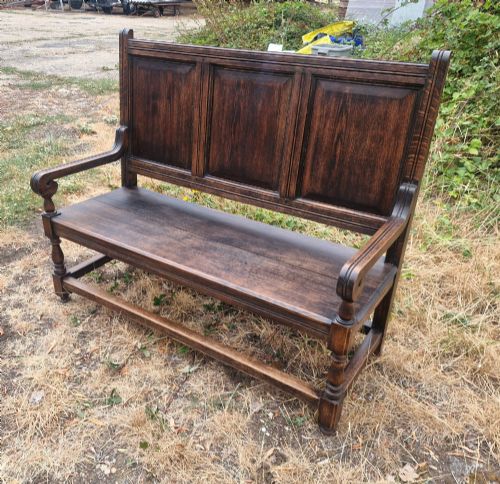
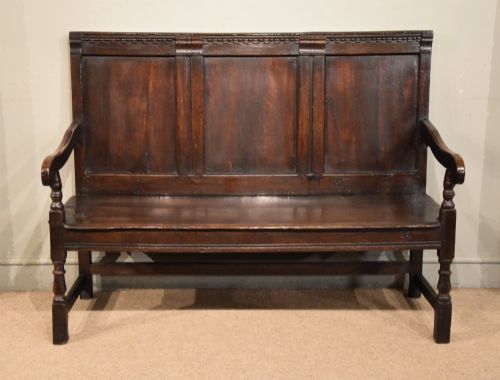
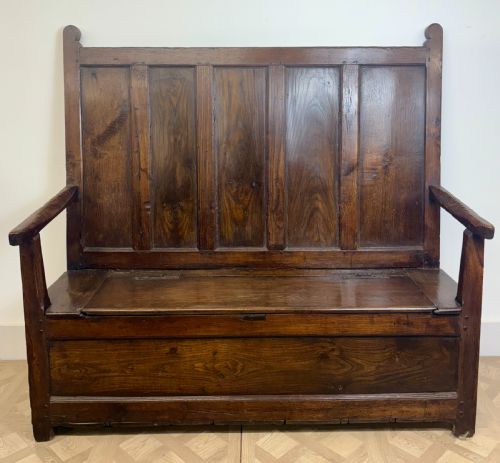
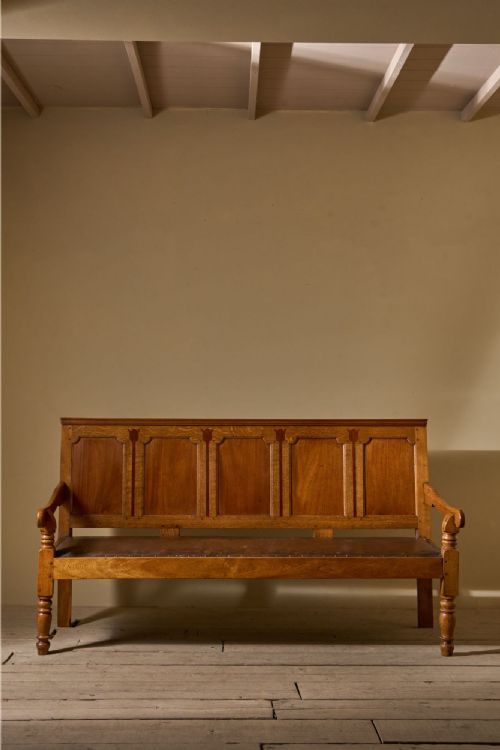
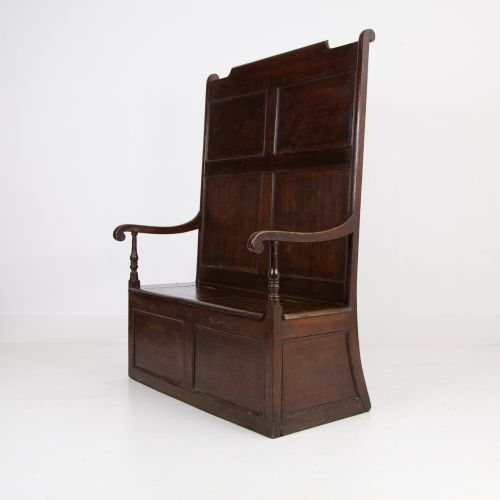
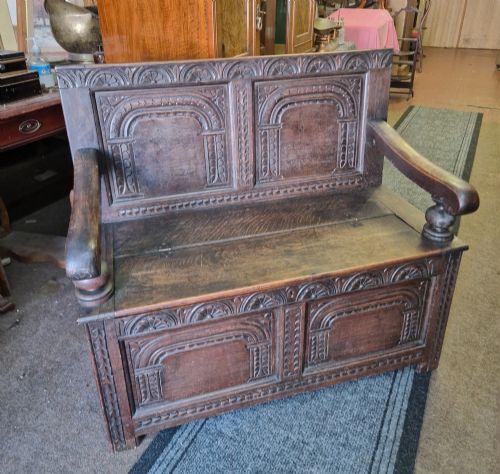
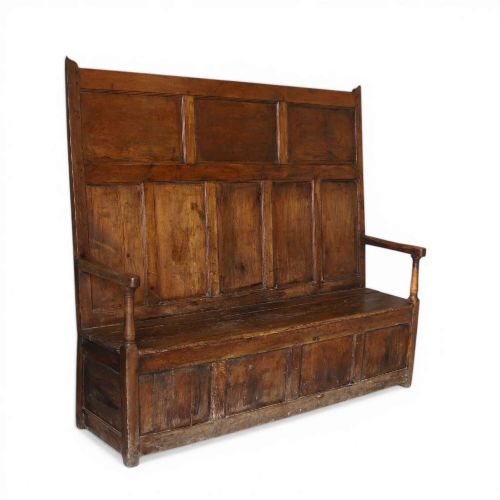
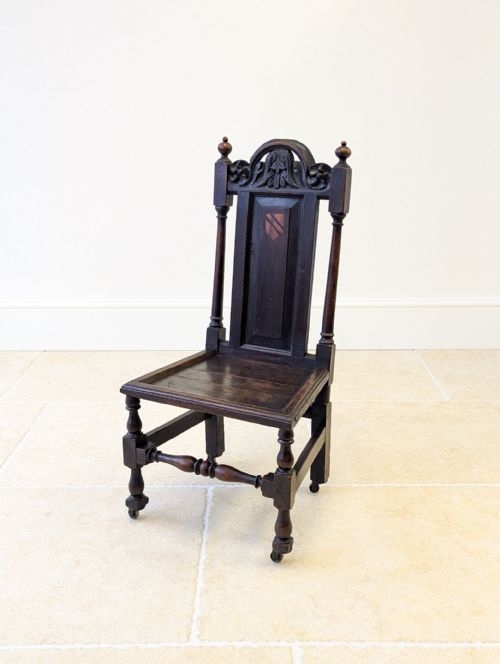
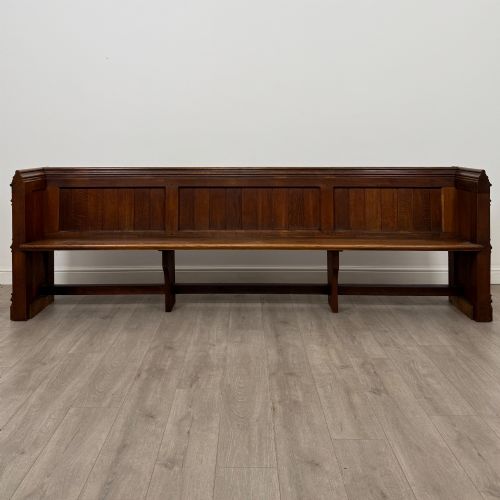
A panelled oak hall seat brings substantial timber construction into an entrance, functioning as a sturdy bench often fitted with high backs or storage compartments. You encounter these in forms ranging from substantial box settles to narrower benches and hall chairs produced across the seventeenth, eighteenth, and nineteenth centuries.
The pieces appearing on this page span vernacular country workshops and revivalist periods, showing construction in oak supplemented by secondary woods like ash. Many incorporate storage beneath hinged lids or panelled backrests designed to block cold draughts in historical hallways.
How they were made
Cabinet makers utilised solid oak planks, joining panels using traditional frame-and-panel construction to accommodate the natural expansion and contraction of timber. Secondary materials like ash appear in structural elements, while iron hinges and brass fittings secure moving parts such as lift-up lids.
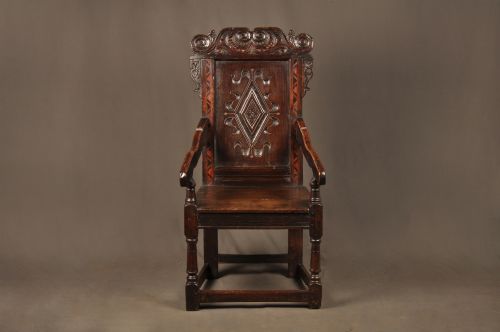
Surfaces receive hand-carved detailing, linenfold or geometric panelling, and occasional wax finishes to protect the wood. Joinery relies on pegged mortise and tenon joints rather than metal screws, ensuring structural integrity over centuries of domestic use.
Some seventeenth-century box settles doubled as grain bins, keeping the household bread supply safely beneath the family's seating.
What varies in quality
The standard of carving and the crispness of panel mouldings dictate the visual distinction of a piece, separating utilitarian workshop output from ambitious vernacular commissions. Timber selection also matters, as dense quarter-sawn oak displays superior figuring and durability compared to plain-sawn boards.
Proportion and originality determine long-term desirability, with unaltered box compartments and intact historical hinges holding greater integrity. Later alterations or marriages of mismatched components diminish the cohesive character established by the original maker.
The Panelled Oak Hall Seat Glossary
- Box settle
- A high-backed wooden bench featuring a storage compartment enclosed beneath the seat. This form kept draughts away from inhabitants while providing domestic storage in communal rooms.
- Frame and panel
- A method of construction where a central floating panel sits within a grooved outer frame. This technique allows wood to move with humidity changes without splitting.
- Wainscot chair
- An early wooden armchair characterised by panelled construction and sturdy upright proportions. These chairs were prestige items in seventeenth-century interiors before migrating to hallway use.
- Monks bench
- A convertible piece of furniture functioning as a bench with a backrest that tilts forward to form a table top. This dual-purpose form appears in later revival periods alongside traditional seating.
Panelled Oak Hall Seat: Frequently Asked Questions
How do I use a panelled oak hall seat today?
These seats fit well in entrance halls, providing a practical spot to put on shoes while establishing a strong visual anchor for visitors.
Versions with lift-up lids offer concealed storage for scarves, boots, and everyday clutter, keeping hallways tidy.
How can I tell an eighteenth-century settle from a Victorian revival piece?
Examination of tool marks, timber shrinkage, and joinery reveals the age of the woodwork. Eighteenth-century examples show hand-riven surfaces and pegged joints, while Victorian pieces often display machine-sawn consistency.
Stylistic cues also help, as nineteenth-century makers frequently employed heavier Gothic or Jacobean Revival carving.
Did these seats originate in hallways?
Historically, high-backed wooden settles stood near hearths in the main rooms of houses to block cold draughts rather than sitting in dedicated entrance halls. Over time, their robust construction and narrow profiles made them natural candidates for hallways and passages.
By the Victorian era, makers specifically designed forms intended for entrance spaces.