


Vintage Oak Box Bench
These vintage oak box bench pieces combine everyday storage with robust seating, offering a practical anchor for a hallway or boot room.
Vintage Oak Box Bench
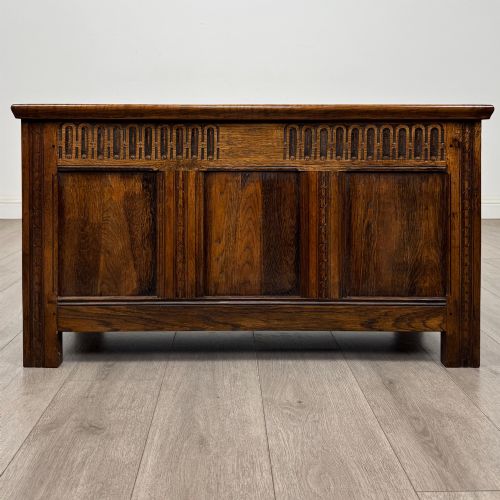
When you search for a vintage oak box bench, you encounter forms that serve multiple functions within a home, functioning as seating while concealing internal storage beneath a lift-up lid or hinged seat. The listings on this page span several decades, originating from the nineteenth century up through the Edwardian period and the nineteen-twenties.
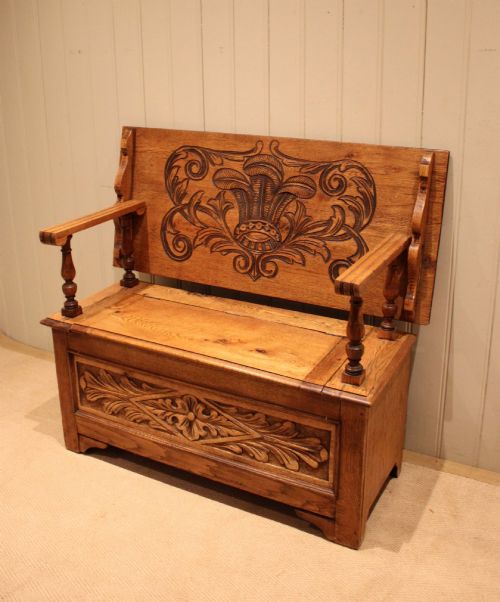
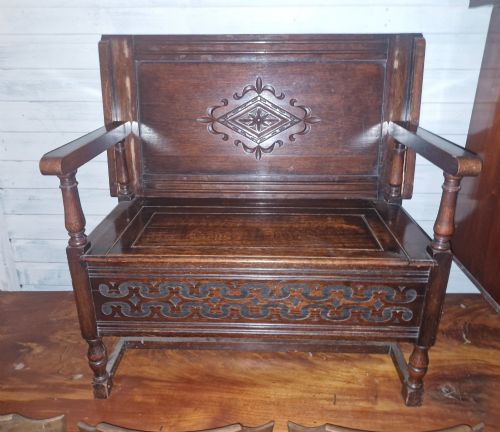
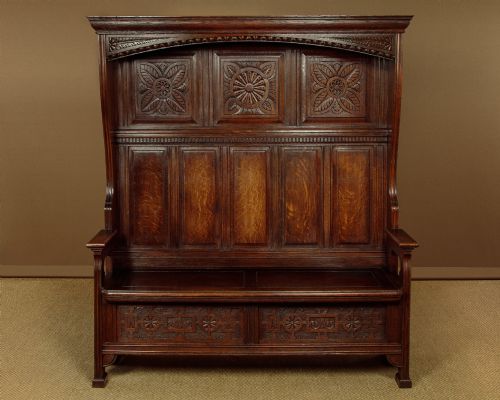
The objects take various specific shapes, including monks benches with fold-over tops, panelled settles, blanket chests, hall seats, and canopy top box settles. These items frequently appear in styles such as Jacobean Revival, Art Nouveau, and traditional or rustic country designs.
Among these variations, you are most likely to meet solid oak pieces from the early twentieth century or nineteen-twenties, often featuring carved details or simple panelled construction intended for hallway use.
How they were made
The construction relies heavily on solid oak, utilising timber planks assembled with traditional joinery methods to create durable box seats, chests, and settles. Iron hardware such as hinges and brackets appears on lids and compartments to support daily opening and closing.
Surface decoration on these items often involves carved ornamentation, particularly within the Jacobean Revival and Victorian styles, alongside smooth panelled surfaces that highlight the natural grain of the golden oak.
Current listings feature solid oak material across periods spanning the nineteenth century, the Edwardian era, and the nineteen-twenties.
What varies in quality
The distinction between standard examples and finer pieces often rests on the depth and execution of the carving, as well as the choice of timber selection such as golden solid oak. Elaborate forms like canopy top box settles or pieces with integrated stick, hat, and glove stands demonstrate greater complexity in design.
Proportion and scale also separate simpler storage stools and slipper boxes from substantial hall settles and monks benches, which require more intricate carpentry to incorporate fold-over tops and hinged seating mechanisms.
The Vintage Oak Box Bench Glossary
- Monks bench
- A convertible seat featuring a hinged top that folds down to form a table or backrest over a box base. This dual-purpose form became particularly popular during revival periods.
- Settle
- A wooden bench with a high back and solid armrests, designed to block draughts in traditional hallways. The lower section frequently incorporates a box or chest for storage.
- Jacobean Revival
- A nineteenth and twentieth century decorative style imitating seventeenth century English woodwork. It typically incorporates dark finishes, geometric mouldings, and deep relief carving.
- Canopy top
- An architectural overhead structure incorporated into the upper frame of a settle or hall seat. This feature adds height and a formal presence to the piece.
- Blanket chest
- A large rectangular wooden box with a hinged lid used originally for linen and blankets. In hallway settings, it serves primarily as a storage bench.
Vintage Oak Box Bench: Frequently Asked Questions
What is a monks bench?
A monks bench is a dual-purpose piece of furniture that combines a seat with a table surface. The upper backrest folds down over the arms to create a flat table top.
The base houses a concealed storage box beneath the hinged seat. This form appears frequently in early twentieth century golden oak.
How were these benches used historically?
These pieces served practical functions in hallways, boot rooms, and living spaces across traditional homes. They provided a place to sit while removing footwear, alongside enclosed space for hats, gloves, and blankets.
Variations with integrated stick and hat stands offered a centralized station for outdoor garments near the entrance.
How do I date an oak box bench?
Dating relies on examining the construction methods, materials, and stylistic revival markers present in the woodwork. Pieces range from mid nineteenth century Victorian examples to Edwardian and nineteen-twenties productions.
Stylistic cues such as Art Nouveau motifs or heavy Jacobean Revival carving help place the object within a specific era.
Are these benches suitable for small hallways?
Compact forms such as small hall seats, slipper boxes, and narrow blanket chests fit easily into restricted entrance spaces. Their primary advantage is the combination of seating and hidden storage.
Monks benches require additional clearance if you intend to utilise the fold-over top feature.