

Pair Wood Bedside Tables
When furnishing a bedroom with symmetry, finding a matching pair wood bedside tables brings practical surface space and period character to either side of the bed.
Pair Wood Bedside Tables
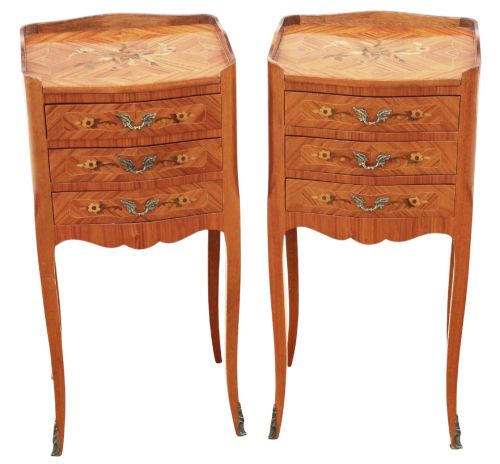
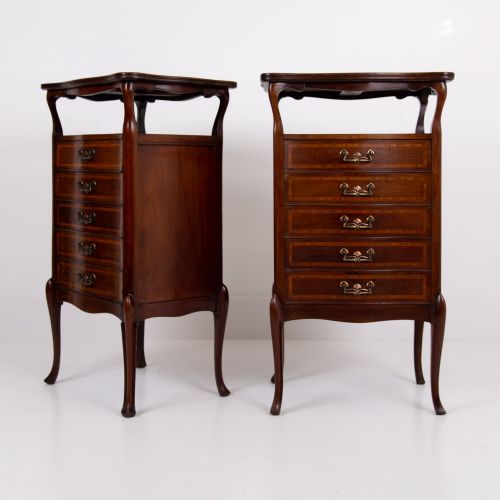
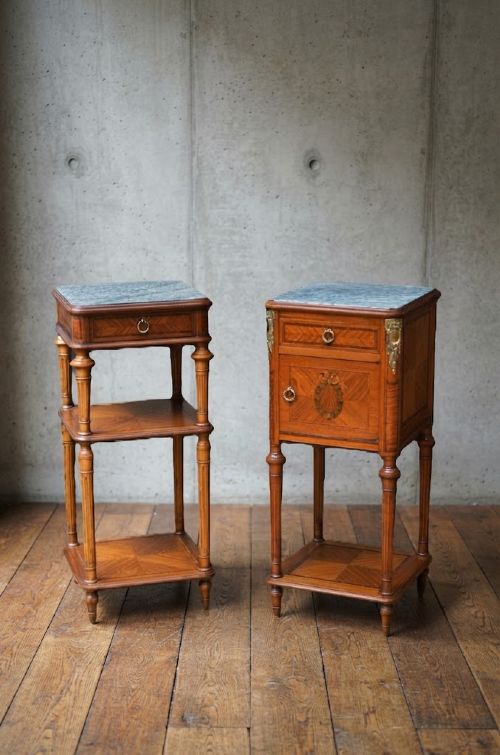
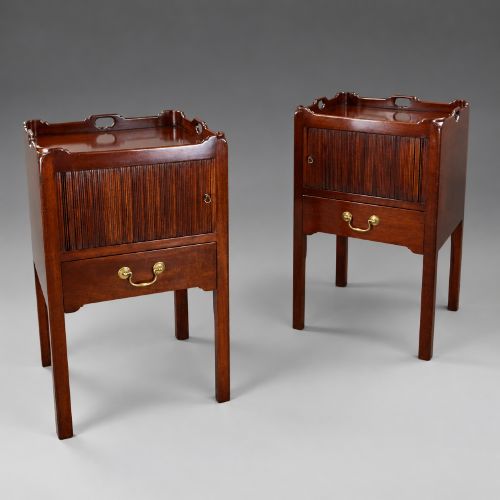
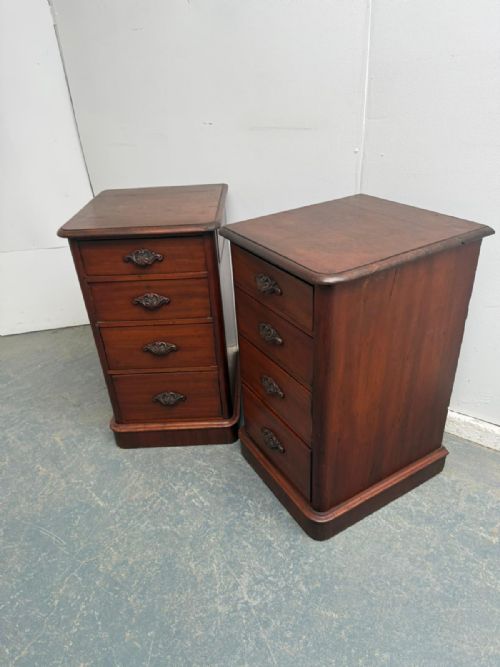
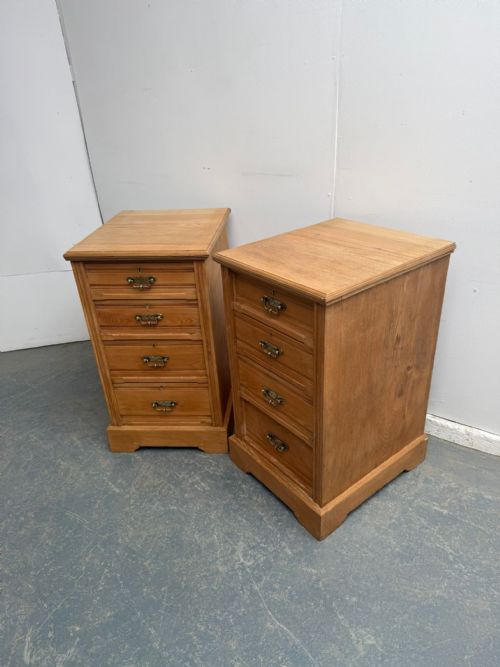
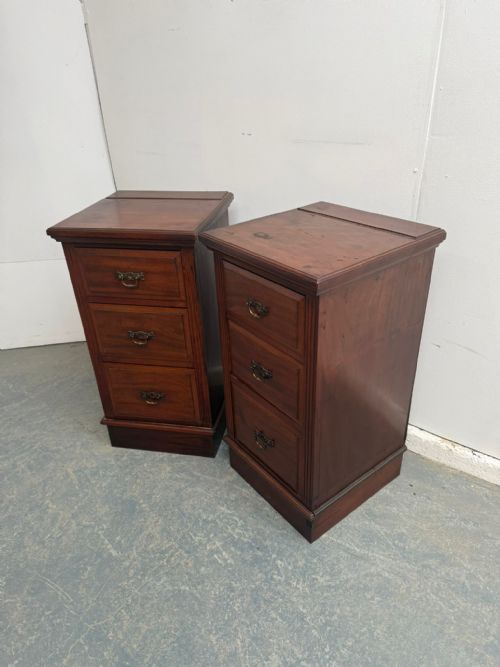
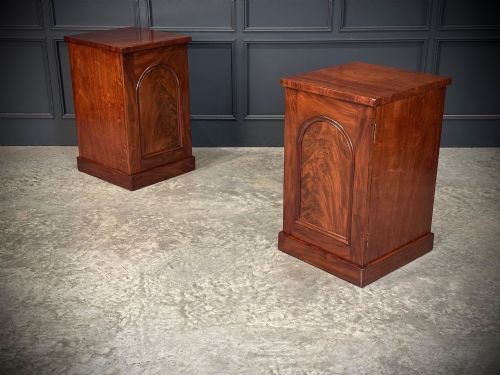
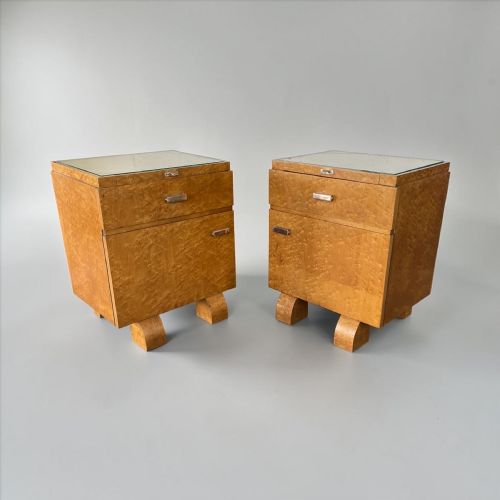
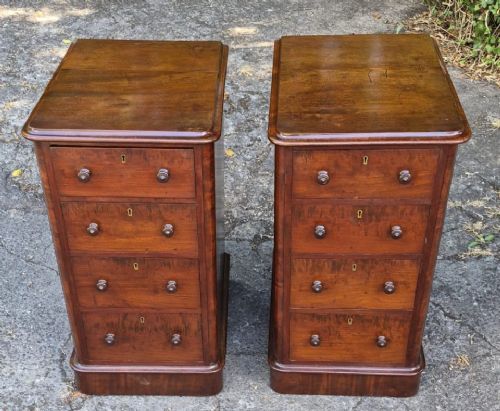
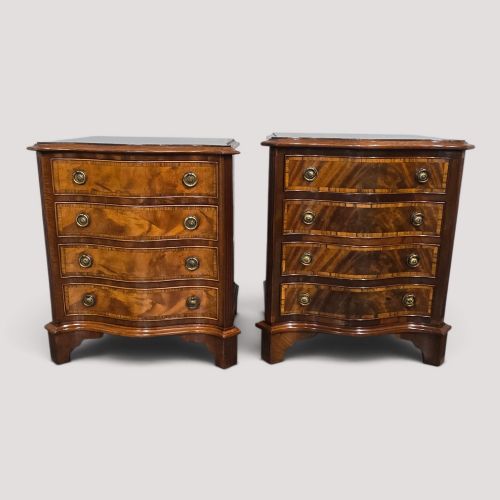
A pair wood bedside tables search reveals matching cabinets, chests of drawers, and small cupboards designed to sit beside a bed. The selection includes compact pieces intended for nighttime storage, often taking the form of enclosed cupboards with doors or stacks of small drawers.
Most examples originate from the Victorian and Edwardian eras, alongside pieces from the 1920s and 1930s reflecting French provincial or Art Deco tastes. Mahogany, satinwood, oak, and walnut dominate the offerings, occasionally topped with marble or decorated with marquetry.
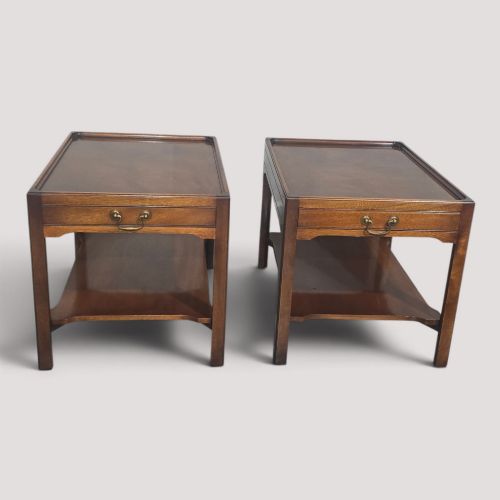
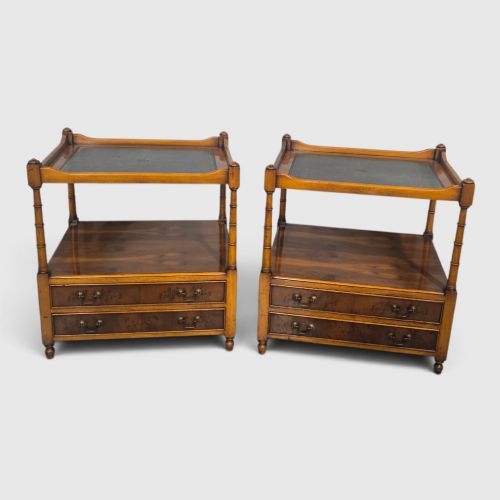
Makers such as Warings Liverpool and Waring & Gillows appear alongside unlabelled vernacular pieces. Buyers frequently encounter variations in height and footprint, from low lamp tables to tall multi-drawer chests.
How they were made
Cabinetmakers constructed these pieces using solid timbers like mahogany, oak, and walnut, frequently applying fine veneers such as kingwood, tulipwood, and satinwood to drawer fronts and tabletops. Traditional joinery methods secured the frames, while decorative finishes relied on wax polishing or marquetry inlay.
Marble tops offered a durable, heat-resistant surface for bedside water jugs and lamps, fitted neatly into rebated wooden surrounds. Brass handles and mounts provided functional hardware and decorative contrast to the darker woods.
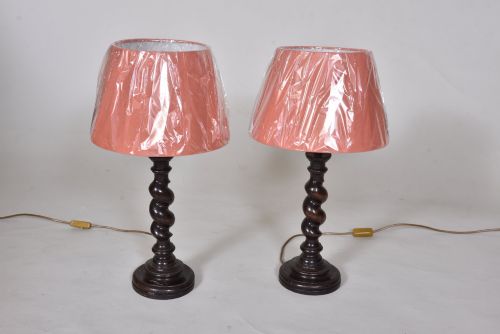
Some nineteenth-century sphinx lamp conversions started life as decorative figures before finding a second career holding bedside illumination.
What varies in quality
The standard of timber selection marks the primary distinction between ordinary and superior pieces, with figured veneers like flame mahogany or burr walnut indicating higher ambition. Finely cut dovetail joints in the drawers and the crispness of inlaid parquetry or marquetry reflect the skill of the original workshop.
Proportion and matching also dictate the grade of a pair, as pieces genuinely made together exhibit consistent grain patterns and uniform fading over time. Original hardware and undamaged marble slabs add considerably to the integrity of the ensemble.
Warings Liverpool·Waring & Gillows
The Pair Wood Bedside Tables Glossary
- Marquetry
- Decorative patterns formed by fitting together thin slices of wood veneer on a ground surface. This technique creates elaborate floral or geometric designs across cabinet doors and tabletops.
- Parquetry
- Geometric mosaic woodwork used for repeating patterns on furniture surfaces. It differs from marquetry by relying strictly on angular shapes like squares, triangles, and diamonds.
- Satinwood
- A pale, lustrous hardwood native to India and Ceylon, prized for its golden sheen and smooth texture. Cabinetmakers used it extensively during the Georgian and Edwardian periods for fine veneers.
- Kingwood
- A dense, heavy timber featuring dark brown and violet stripes, popular in French furniture. It serves primarily as a decorative veneer on high-end bedside tables and commodes.
- Serpentine
- A curved line of furniture shaping that undulates inward and outward in a gentle wave. This profile requires expert woodworking skill to execute cleanly on drawer fronts.
Pair Wood Bedside Tables: Frequently Asked Questions
How do I style them?
Pair these cabinets flanking a bed to establish visual balance in the room. Their surfaces hold reading lamps while enclosed cupboards or drawers keep nighttime essentials out of sight.
Combine wood tones with contrasting fabrics or pair marble-topped variants with metallic lighting fixtures. Ensure the height aligns comfortably with the top of the mattress for daily convenience.
Were they made as pairs?
Many examples were constructed simultaneously in workshops as matching suites or bedroom furniture sets. Cabinetmakers ensured uniform dimensions, matching wood grains, and identical hardware across both pieces.
Some listings comprise matched pairs assembled later by dealers based on similar height, timber, and period style. Checking internal construction helps confirm whether two individual pieces share an original origin.
How do I clean the wood?
Maintain waxed surfaces by applying a traditional beeswax polish sparingly and buffing gently with a soft cloth. Avoid commercial liquid cleaners that strip historical finishes or damage sensitive veneers.
Keep wooden items away from direct heat sources and strong sunlight to prevent the timber from drying out or fading unevenly. Marble tops require simple wiping with a damp cloth and mild soap.
How do I date these tables?
Examine the secondary woods inside the drawers, the style of the handles, and the method of drawer construction to estimate age. Machine-cut dovetails generally point toward the late nineteenth century or later, while hand-cut versions appear on earlier pieces.
Stylistic cues such as Edwardian inlay or Art Deco geometry help narrow the decade of production. Comparative details across the listings clarify regional design shifts.