


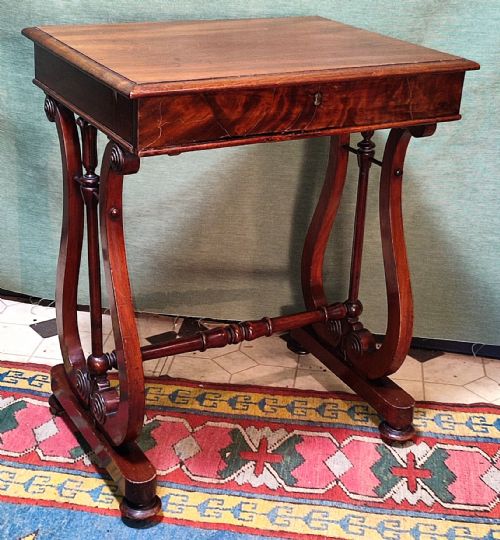

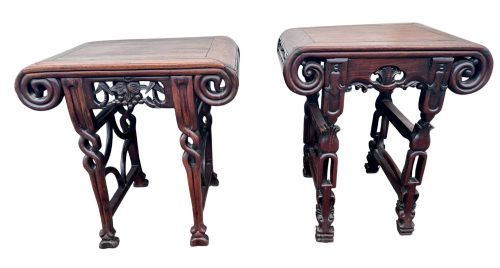


Carved Pedestal End Tables
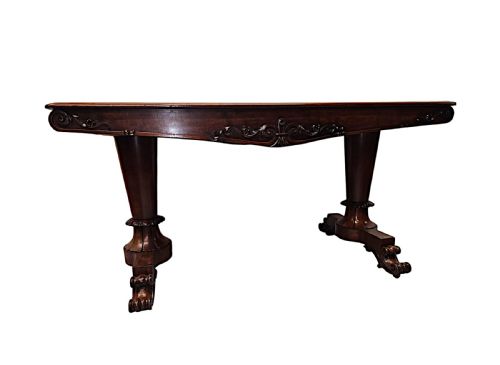
Carved pedestal end tables bring heavy timbers and intricate relief work into sitting rooms, offering a sturdy central column to support occasional lamps or books.
Carved Pedestal End Tables
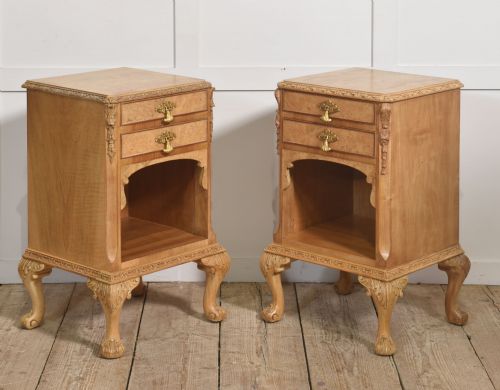
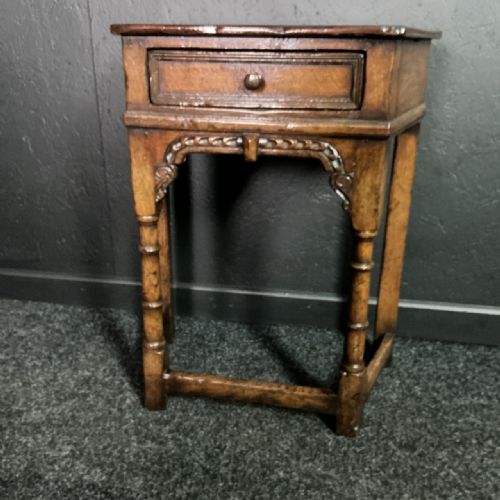
Carved pedestal end tables encompass a wide variety of occasional, side, library, and lamp tables supported by a central pillar or column rather than four standard corner legs. These pieces range from compact bedside cabinets and wine tables to broader centre tables and library pieces.
The selections span multiple eras, most frequently appearing from the nineteenth century alongside Regency, William IV, and Victorian iterations. Alongside British and European output, regional variants from Chinese Qing Dynasty workshops to Anglo-Indian studios appear.
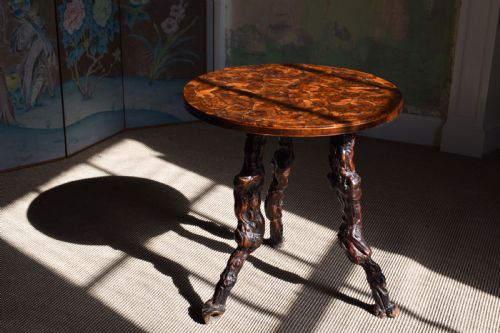
Forms adapt to domestic needs over time, shifting from formal rosewood and mahogany library pieces to walnut, oak, ash, and exotic hardwoods configured as tilt-top lamp tables or marble-topped stands.
Materials and Construction
Makers utilised dense timbers such as mahogany, rosewood, walnut, and teak, frequently selecting burr veneers for figuring on top surfaces. Hardwoods like oak, ash, lime wood, and huali support structural pedestals and detailed hand-carved elements.
Carving techniques define the decorative vocabulary, rendering grape vines, dolphin supports, and intricate oriental motifs directly into the solid wood. Inset marble slabs, leather tabletops, and brass fittings integrate with the wooden frames.
Joinery techniques secure central pillars to heavy plinths or tripod feet, ensuring stability despite the single-column design. Turned stems and fluted pedestals demonstrate lathe work combined with chisel-cut details.
Listings feature regional variations ranging from British Regency mahogany and Victorian walnut to Chinese Qing Dynasty huali hardwood and Anglo-Indian teak.
Judging Quality and Execution
Depth and sharpness of the hand-carving distinguish finer examples from mass-produced or later revival pieces, where relief work remains shallow or soft. Crisp detailing on pedestal mounts and column capitals reflects the skill of the original workshop.
Timber selection dictates overall merit, with well-figured burr walnut, rich rosewood, and dense mahogany outperforming plain secondary woods. Matching grains across table tops and panelled doors show deliberate material planning.
Structural integrity of the central column attachment governs longevity, as inferior joinery leads to wobble at the base. Solid marble inserts and substantial brass hardware rather than plated substitutes elevate the standard of the piece.
Williams and Gibton
The Carved Pedestal End Tables Glossary
- Pedestal table
- A table supported by a central pillar or column resting on a footed base or plinth. This design removes corner legs to maximise knee clearance.
- Occasional table
- A small, movable table intended for auxiliary use in a living space. These pieces serve for holding lamps, books, or small decorative objects.
- Library table
- A substantial writing or reading table designed for a study or library, often fitted with drawers. They typically feature finished backs to sit away from walls.
- Huali
- A fragrant Chinese hardwood prized for its dense grain and durability during the Qing Dynasty. Artisans used it for carved tables and stands.
- Tilt-top table
- A table with a hinged top that pivots vertically for storage against a wall when not in use. A catch mechanism secures the surface in the horizontal position.
Carved Pedestal End Tables: Frequently Asked Questions
What is a pedestal table?
A pedestal table relies on a single central column or pillar attached to a stable base, eliminating the need for four corner legs.
This structural layout creates a compact footprint, making these tables practical for placement beside seating or in smaller corners.
How do I identify a Regency table?
Regency pieces often feature dark mahogany or rosewood timbers, classical brass mounts, and clean architectural lines inspired by ancient Greek and Roman forms.
Many examples incorporate heavy pillar supports resting on tiered plinths with carved paw feet.
Where were camel tables made?
Camel tables originate from Anglo-Indian workshops during the nineteenth century, produced for colonial households and export markets.
They frequently feature dense teak or hardwood construction with deep relief carving depicting regional flora and fauna.
What is a marble top table used for?
Marble-topped tables provide a cool, heat-resistant, and moisture-resistant surface suited for holding drinks, lamps, or potted plants.
In nineteenth-century Chinese and European interiors, inset stone slabs added decorative weight and varied natural colour to the furniture.