

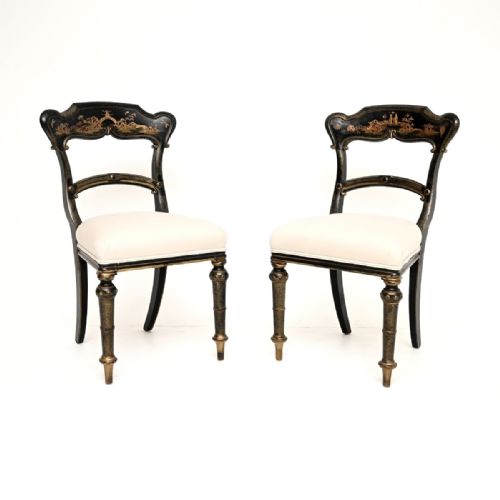
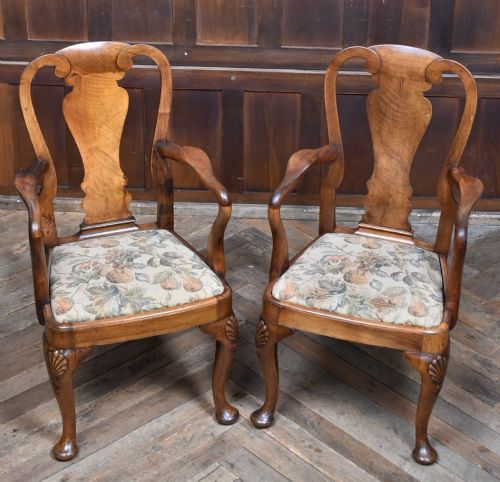
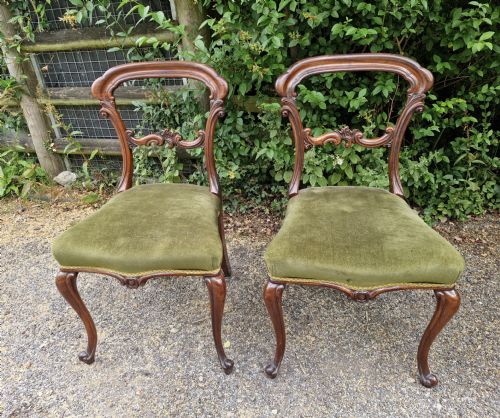
Pair Victorian Dining Chairs
Pair victorian dining chairs offer matching proportion and period timber, bringing balanced seating to a table from the nineteenth century.
Pair Victorian Dining Chairs
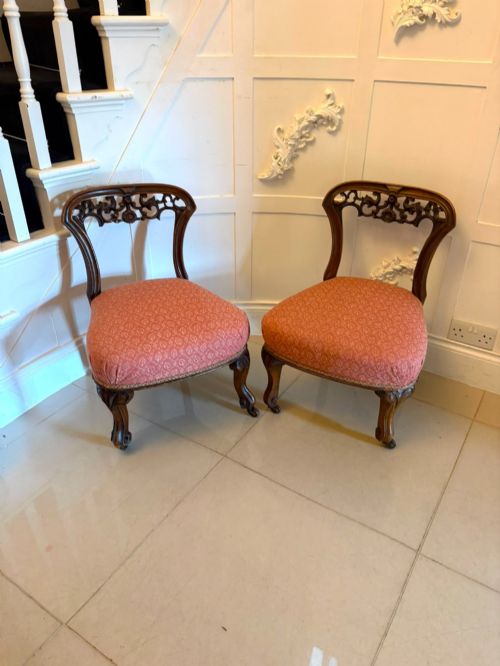
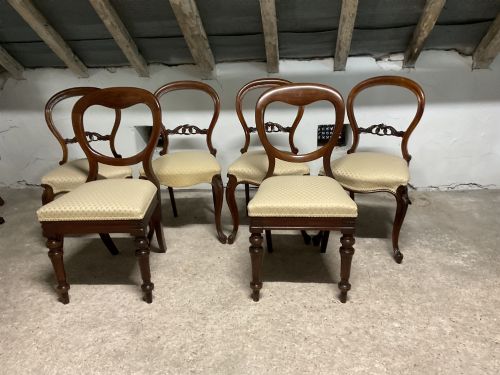
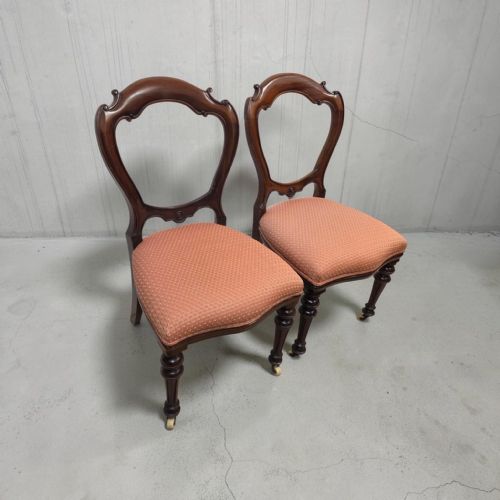
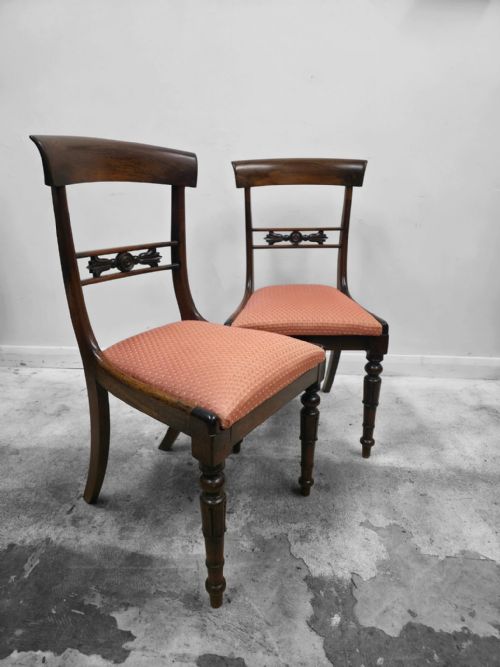
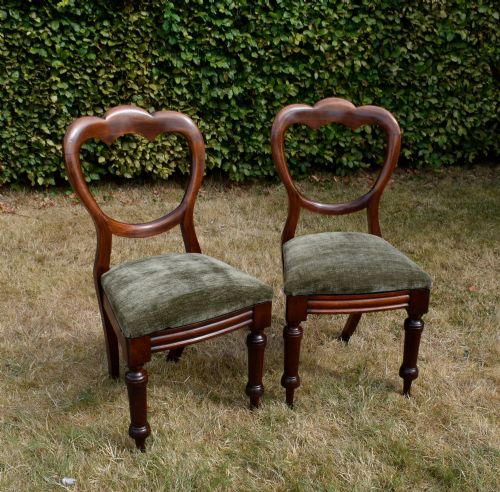
A search for pair victorian dining chairs directs attention to matched seating from the nineteenth century, most frequently encountered in mahogany, walnut, or rosewood with balloon backs or carved side frames. These duplicates were built for formal dining rooms, parlours, and country kitchens across the Victorian era.
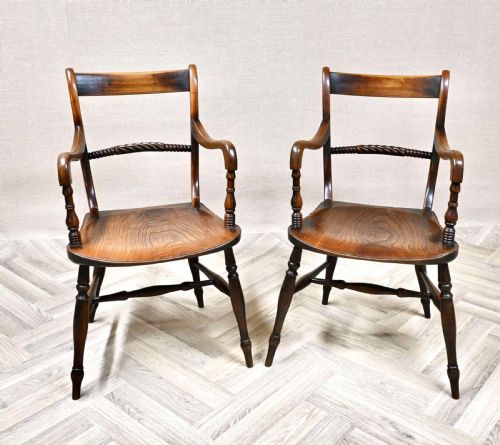
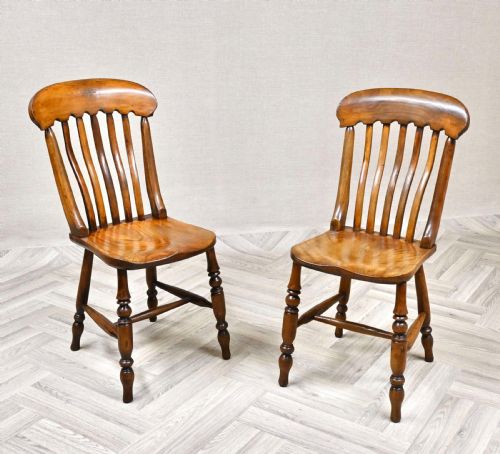
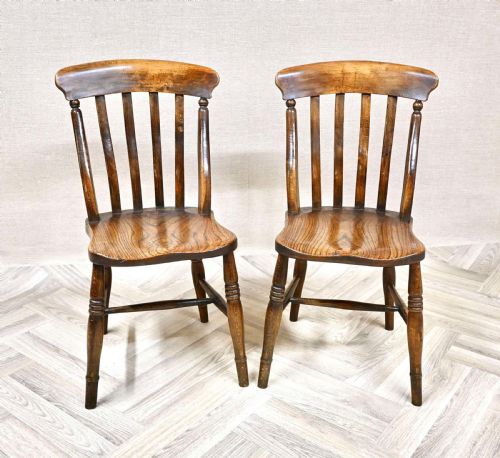
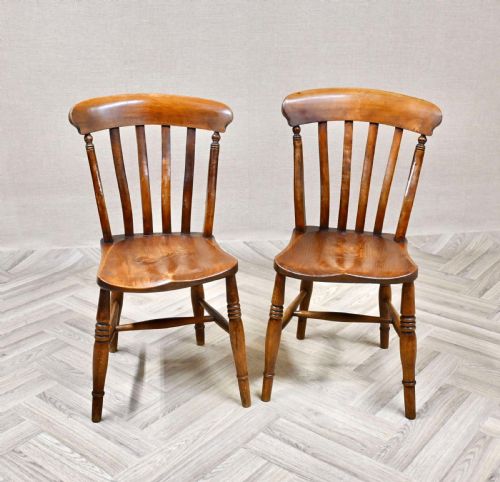
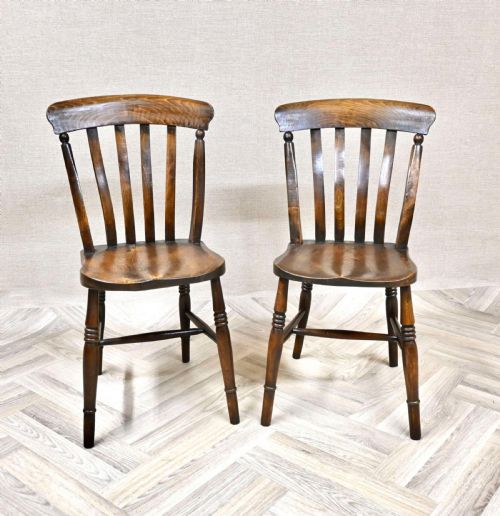
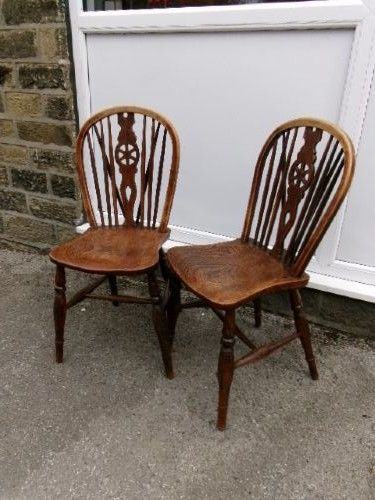
Beyond standard formal seats, the form encompasses Windsor kitchen chairs in elm, beech, and yew, alongside Gothic Revival, Chinoiserie, and Chippendale style variants. Buyers encounter both delicate parlor designs and robust farmhouse seating within this specific grouping.
Construction and materials
Cabinet makers utilised dense hardwoods such as mahogany, walnut, rosewood, and oak for formal frames, often turning or carving supports by hand. Country workshops relied on elm, beech, and yew for Windsor forms, bending wooden bows with steam and shaping solid seats.
Upholstery methods involved horsehair and webbing beneath fabric, leather, needlework, or velvet, fixed with brass tacks. Joinery relied on traditional mortise and tenon joints to withstand daily domestic use.
Some Victorian kitchen chairs show deep indentations from generations of sitters who clearly enjoyed lengthy meals.
Judging the standard
Quality rests in the crispness of carved details, the selection of figured timber veneers, and the structural integrity of the frame joints. Superior examples show thoughtful grain matching and robust timber thickness rather than thin plywood cores or excessive filler.
Original surface finishes, whether polished mahogany or lacquered Chinoiserie, distinguish better pieces from those stripped and overly refinished. The tightness of the joinery and the absence of clumsy repairs dictate the lasting value of the set.
Gillows·Gill and Reigate·William Morris·Liberty and Co
The Pair Victorian Dining Chairs Glossary
- Balloon back
- A rounded, oval-shaped backrest popular on nineteenth-century dining chairs. This curved form mimics the profile of a hot air balloon.
- Windsor
- A traditional wooden chair featuring a solid carved seat into which legs and spindles are wedged. These rural pieces often incorporate bentwood bows and comb backs.
- Carver
- An armchair designed to match a set of smaller side chairs, traditionally placed at the head of a dining table. They feature open arms for comfort.
- Chinoiserie
- Decorative style employing fictitious Asian motifs and lacquer work. This aesthetic saw revival during the Victorian period on occasional and side seating.
Pair Victorian Dining Chairs: Frequently Asked Questions
How do I match chairs?
Look closely at the timber species, leg profiles, and backrest proportions to ensure visual harmony around a table. Minor variations in grain or carving depth are normal in nineteenth-century pairs and near pairs.
Mixing chairs with identical back shapes but subtle regional differences was common in period households. Focus on uniform seat height and overall scale for practical dining use.
Can I use them daily?
Solid nineteenth-century hardwoods provide sturdy frames that withstand regular sitting when joints remain tight. Checking the underframe stability ensures safe daily use.
Modern users should inspect old webbing and padding before heavy seating. Professional reupholstery preserves internal integrity while updating the fabric surface.
What timber was preferred?
Mahogany and walnut dominated formal dining room production throughout the Victorian era. Rosewood appeared on finer parlor and drawing room seating.
Kitchen and farmhouse environments favored resilient native timbers like elm, beech, oak, and yew. These woods absorbed the heavy wear of daily domestic life.
How to date a pair?
Stylistic shifts from early carved rosewood frames to later balloon backs and revival designs indicate specific decades. Examining screw types, turning patterns, and tool marks aids precise dating.
Construction methods evolved from hand-cut joinery toward machine assistance by the end of the century. Comparing hardware and timber thickness to dated examples clarifies the timeline.