





Victorian Balloon Back Pair
A victorian balloon back pair brings domestic elegance to any room, offering curved wooden support and refined seating shaped in the nineteenth century.
Victorian Balloon Back Pair
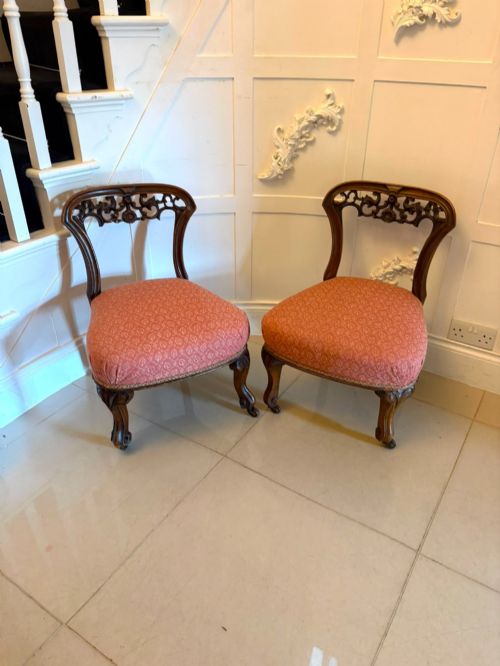
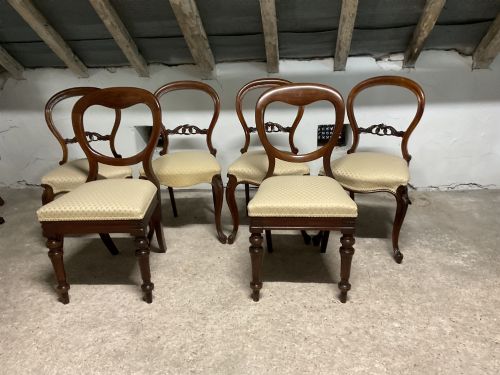
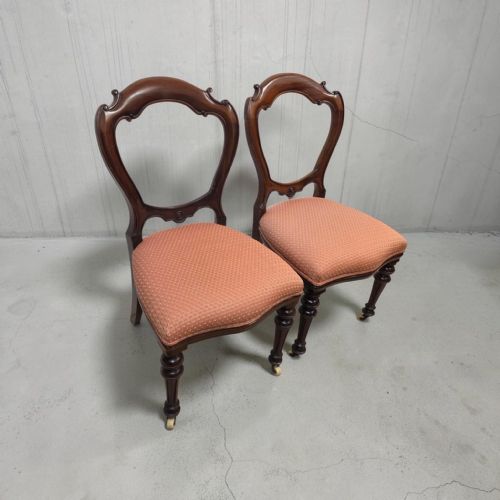
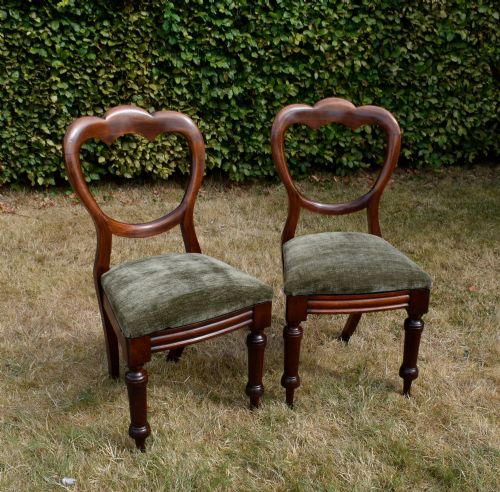
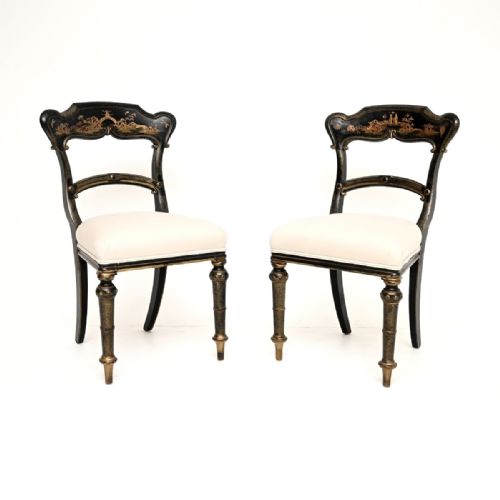
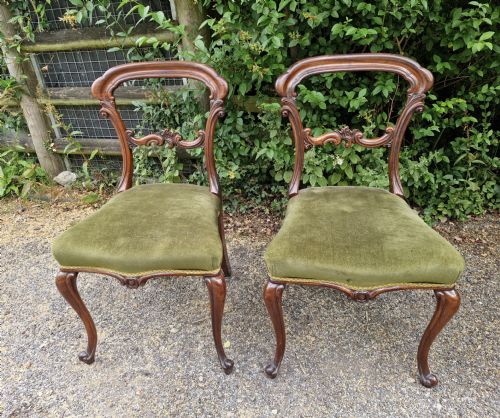
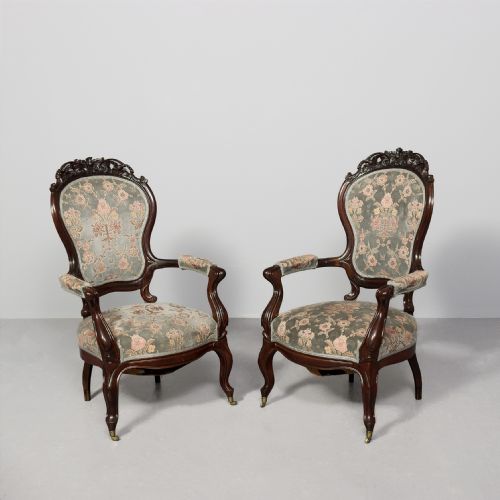
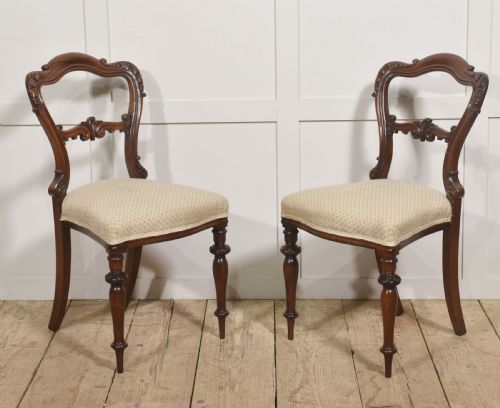
A victorian balloon back pair consists of matched seating featuring the distinctive oval or curved backrest that defines mid-nineteenth-century domestic furniture. These pieces appear primarily as side chairs, dining chairs, and occasional seating originating across the Victorian era.
Makers fashioned these duplicates for parlours, dining rooms, and bedrooms, frequently utilising rich timbers and supportive upholstery. Walnut and mahogany examples dominate the selection, often accompanied by rosewood framed variants dating from eighteen fifty onwards.
Materials and Construction
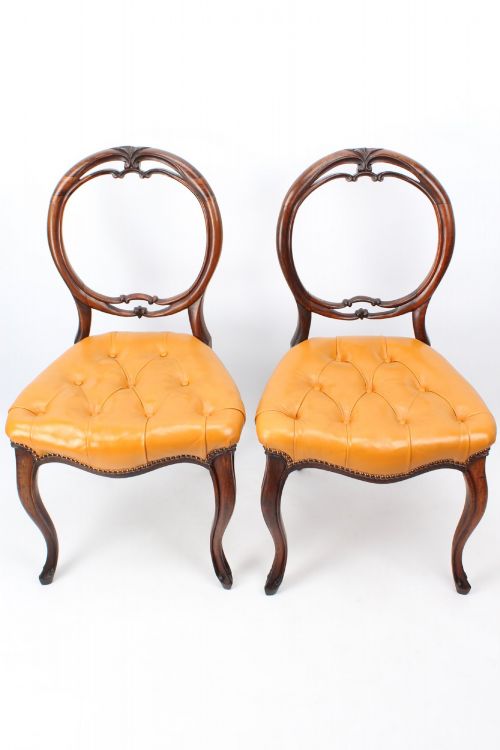
Cabinet makers constructed the iconic curved backrail by steaming and bending solid timber into a continuous oval loop. This technique required dense hardwoods like mahogany and walnut to maintain structural integrity under tension.
Upholstered drop-in seats and padded backs were covered in durable fabric, velvet, or contemporary textile variants. Carved details and cabriole legs were frequently shaped by hand to enhance the formal aesthetic.
Some pairs served as his and hers seating, offering subtly different proportions for the Victorian parlour.
Design and Execution
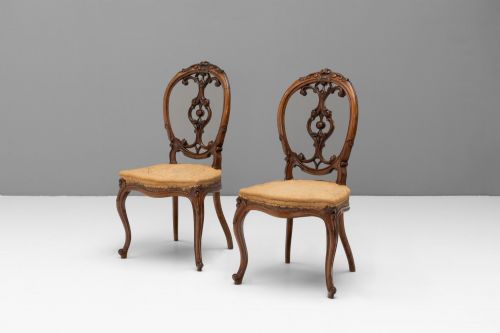
Distinction within this category rests upon the crispness of carved wooden ornamentation and the selection of figured timber veneers. Superior examples display deeply sculpted crest rails and robust cabriole legs rather than plain straight supports.
The choice of primary wood dictates much of the character, with dense rosewood and rich figured walnut sitting at the upper end of nineteenth-century production. Original matching frames with tight joinery maintain greater integrity than mismatched or heavily altered sets.
Hewetson & Milner·Gillows
The Victorian Balloon Back Pair Glossary
- Balloon back
- A chair back shaped in a continuous oval curve resembling a traditional balloon. This design became the dominant seating style during the Victorian period.
- Cabriole leg
- A furniture leg that curves outward and then tapers inward with a graceful arch. It often terminates in a plain or scrolled foot.
- Side chair
- An upright chair without arms designed for dining or occasional placement around a room. These form the majority of surviving paired sets.
- Rococo Revival
- A nineteenth-century decorative style inspired by eighteenth-century French design, featuring elaborate curves and naturalistic carving. This aesthetic heavily influenced Victorian seating ornaments.
Victorian Balloon Back Pair: Frequently Asked Questions
How are these chairs used today?
These chairs function well as dining sets, dressing table seats, or decorative accents in living spaces.
Their compact proportions allow them to fit easily around modern tables or into neglected corners as occasional seating.
Where should I place a pair?
A matched pair suits placement flanking a fireplace, framing a window, or serving as head chairs at a dining table.
Keeping them together preserves the visual balance intended by nineteenth-century makers.
How do I identify a rosewood frame?
Rosewood exhibits a heavy density, a dark reddish-brown hue, and distinct black grain figuring that feels exceptionally smooth.
Mahogany and walnut tend to show lighter tones and softer grain patterns compared to heavy rosewood timber.
What dates indicate early production?
Pieces dated around eighteen fifty often display William IV influences alongside early Victorian rosewood frames and simpler carving.
Later decades introduced heavier walnut structures and more exuberant revival ornamentation.