

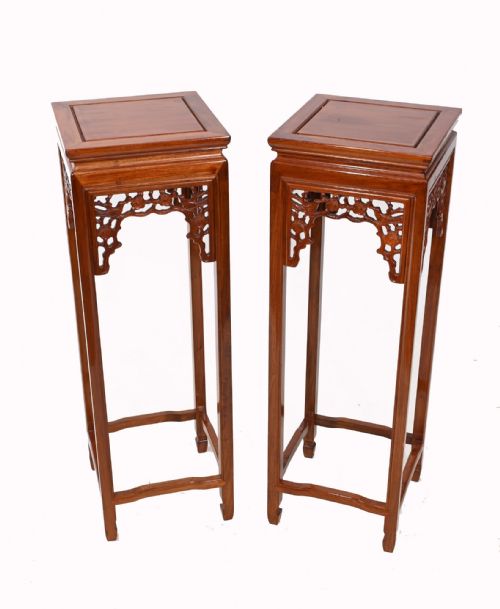


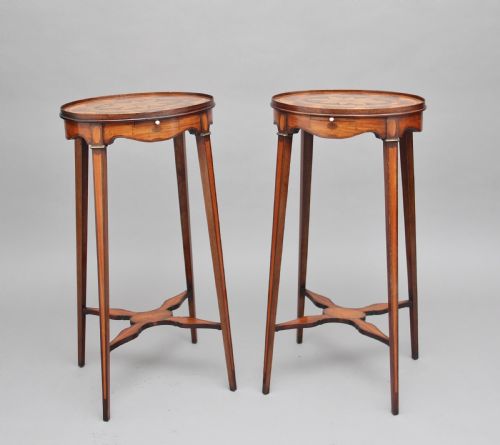


Pair Tall Side Tables
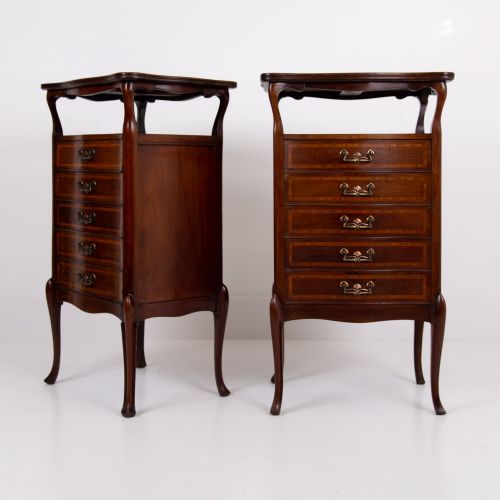
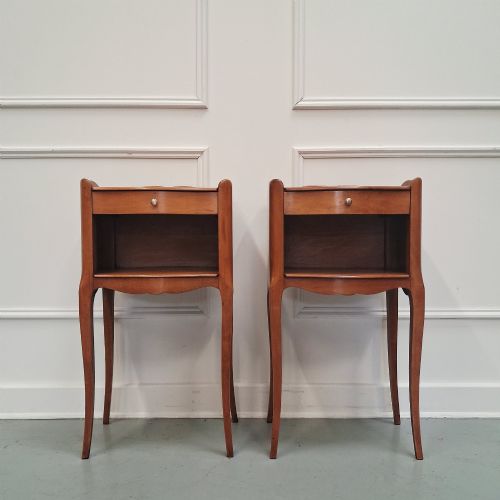
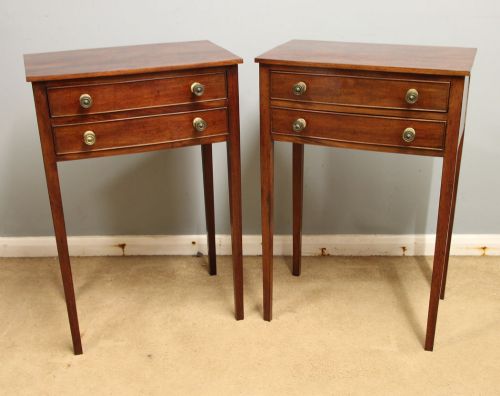
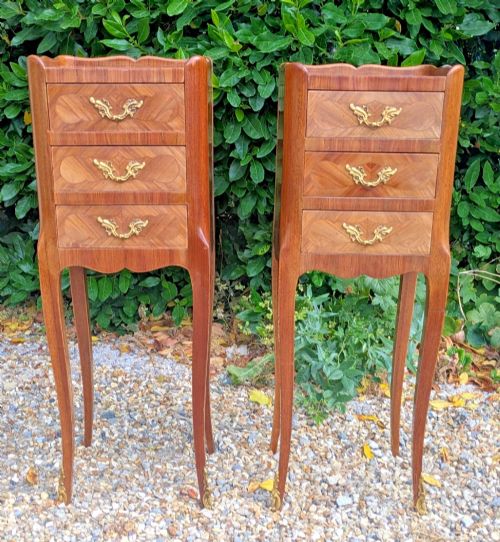
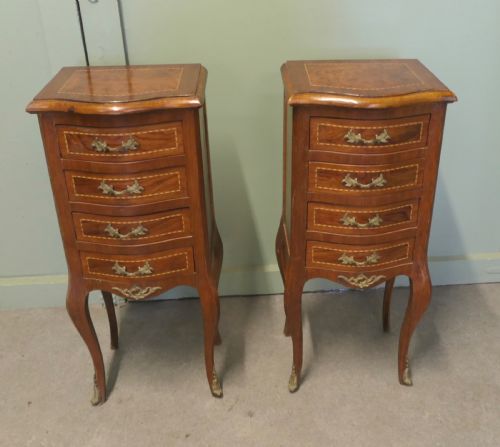
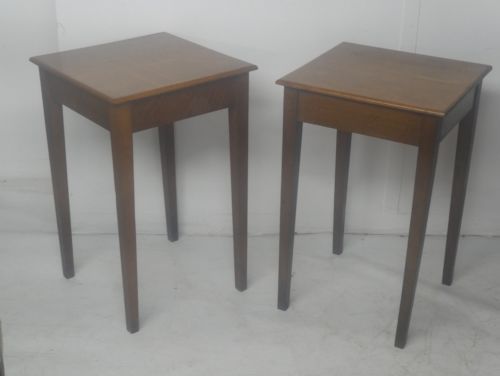
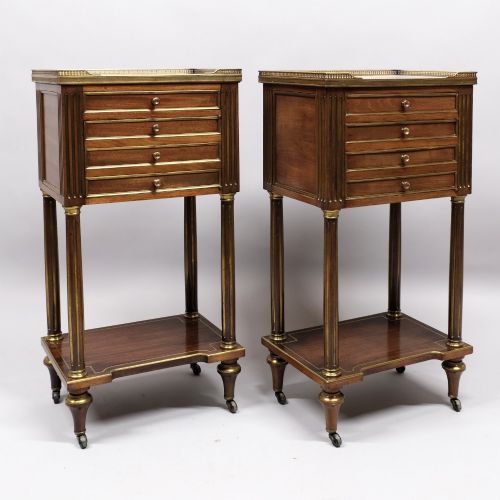
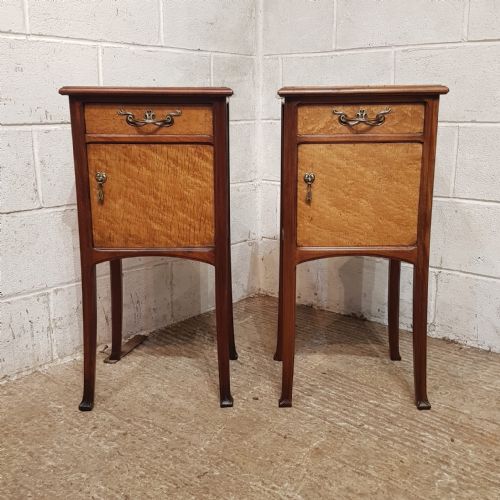
Pair tall side tables bring architectural height and symmetry to a room, functioning as bedside cabinets, lamp tables, and display stands.
Pair Tall Side Tables
Pair tall side tables encompass a variety of elevated furniture forms designed for display and utility, frequently encountered as bedside cabinets, lamp tables, and pedestal stands.
The selections span multiple eras from the nineteenth century through the interwar period, reflecting Victorian, Edwardian, French Louis XV, and Art Deco styles.
Origins range across English, French, Chinese, and Swedish workshops, providing versatile heights and proportions for diverse interior settings.
How they were made
Construction relies heavily on traditional cabinet timbers including mahogany, walnut, kingwood, and satinwood, frequently enhanced with floral marquetry and inlay.
Many examples incorporate decorative metal elements such as brass mounts, or utilise marble tops and painted finishes to achieve distinct regional aesthetics.
Periods represented span from nineteenth century Victorian and Qing Dynasty pieces to 1930s Art Deco.
What varies in quality
Quality rests in the precision of the timber matching and the subtlety of the inlay work, which separate standard production from finer cabinetmaking.
Structural integrity, the crispness of carved details, and the preservation of original mounts or painted surfaces determine the standing of each piece.
The Pair Tall Side Tables Glossary
- Marquetry
- Decorative veneer patterns applied to furniture to create pictorial or geometric designs. This technique utilises various wood types to form contrasting visual motifs.
- Ormolu
- Gilt-bronze mounts applied to furniture for ornamentation. Originating largely in French cabinetmaking, these metal accents define classical and revival styles.
- Kingwood
- A dense, richly figured timber utilised in fine cabinetmaking. It displays dark violet-brown tones with lighter streaks.
- Demilune
- Half-moon shape used for console tables and small side pieces. This form fits flush against a wall while offering surface utility.
Pair Tall Side Tables: Frequently Asked Questions
Where do pair tall side tables work best?
These elevated tables suit spaces requiring vertical balance without a large footprint. They function effectively flanking a bed or positioned beside seating.
Their height also makes them suitable for hallways and reception rooms as display surfaces for lamps or decorative objects.
How do I date a pair of tall side tables?
Dating relies on identifying stylistic markers, timber choices, and construction techniques associated with specific periods. Victorian and Edwardian pieces often display heavier mahogany or inlaid mahogany.
Later interwar and Art Deco items show streamlined forms or French influences like kingwood veneers and ormolu mounts.
Are these tables sturdy enough for daily use?
Most antique tall tables are constructed from solid hardwoods and dense veneers designed for practical utility. Their height requires sensible placement to avoid tipping in busy walkways.
Standard maintenance involves normal care for wood surfaces and checking the stability of joints over time.
What is the difference between a side table and a pedestal stand?
Side tables typically offer broader surfaces with integrated storage like drawers or cabinets suited for bedside or lamp use. Pedestal stands are narrower and taller, designed primarily to elevate urns, plants, or figures.
Both categories provide vertical presence but serve distinct functional roles within historical interiors.