

Green Neoclassical Tables
Green neoclassical tables bring together classical symmetry and rich mineral tones, offering functional surfaces defined by architectural restraint.
Green Neoclassical Tables
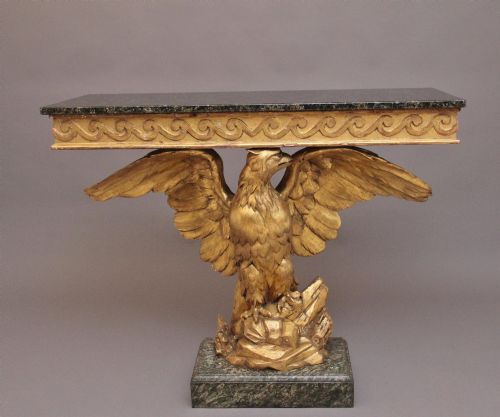
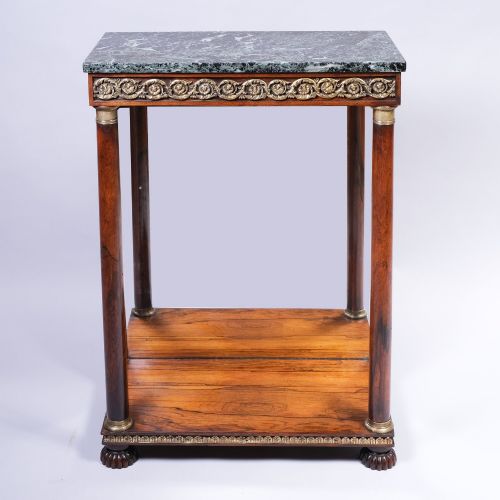
Green neoclassical tables encompass console tables, side tables, and coffee tables drawing upon classical antiquity, French Empire, and Louis XVI styles.
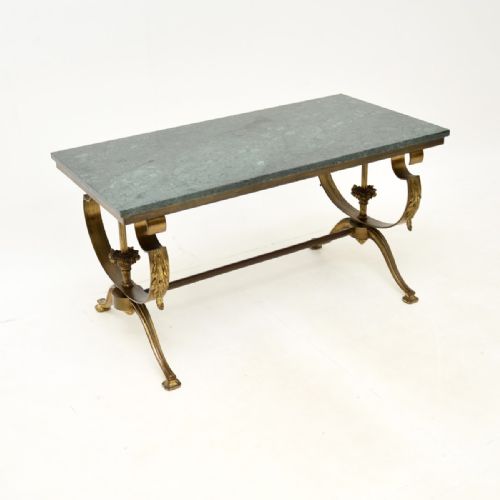
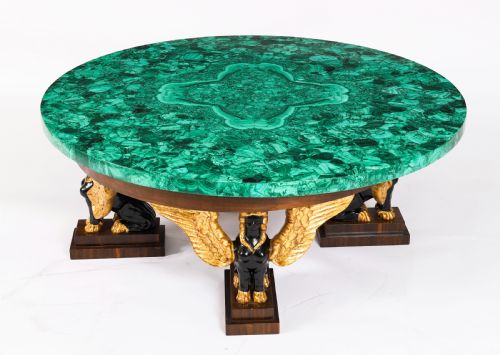
The versions most frequently encountered here pair painted woodwork, gilt bronze, or brass mounts with distinctive green marble, onyx, or specimen stone tops spanning the eighteenth, nineteenth, and early twentieth centuries.
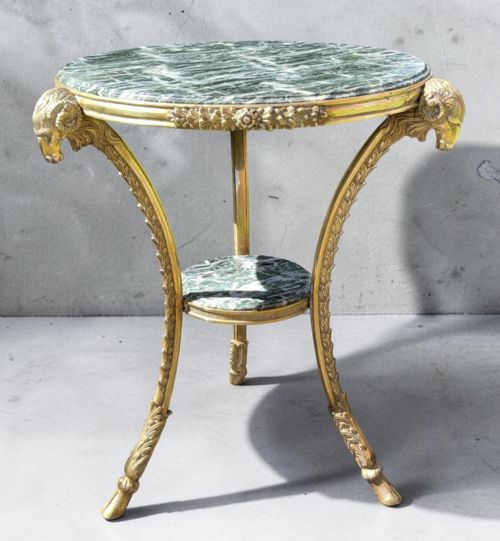
These forms incorporate architectural elements such as column supports, rams heads, and restrained geometric framing suited to formal interior spaces.
Construction and Materials
Craftsmen built these pieces using structural hardwoods such as mahogany, walnut, and ebonised wood alongside softwood foundations finished with paint, gilding, or gesso.
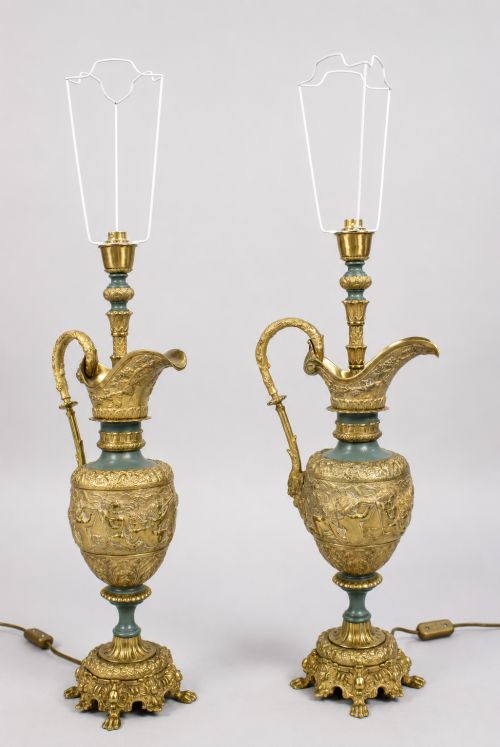
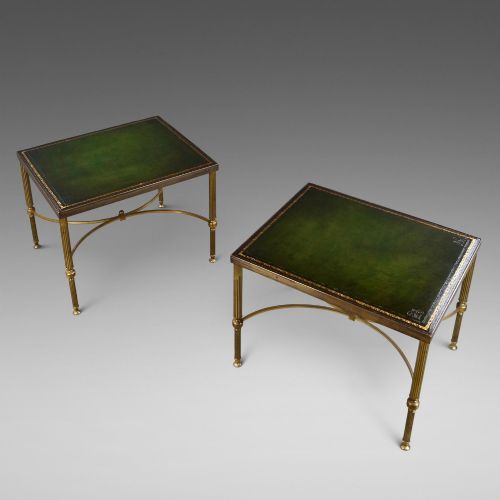
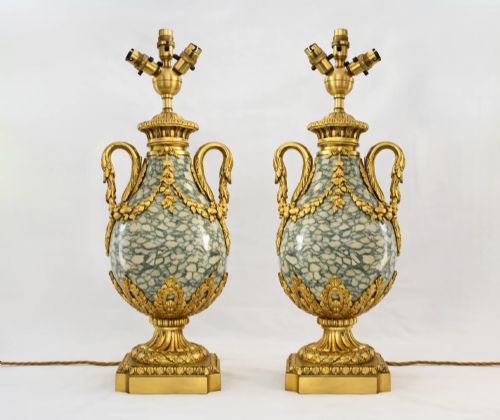
Decorative emphasis relied heavily on cast brass and gilt bronze mounts, known as ormolu, which frame the timber and stone components.
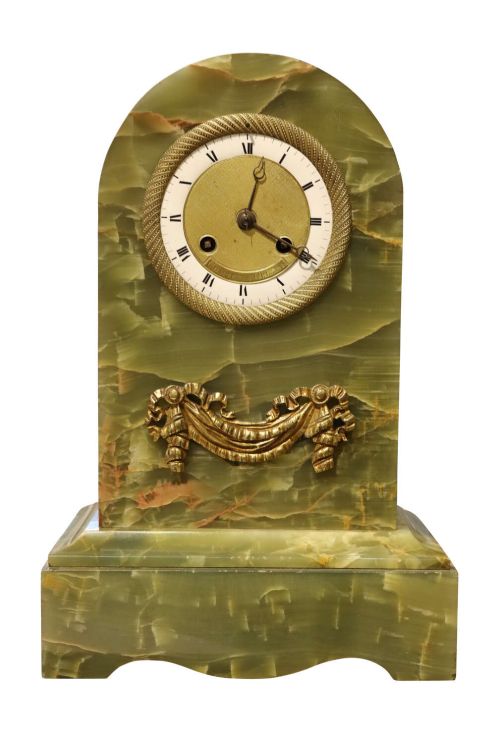
Table tops frequently utilise polished green marble, onyx, or inlaid specimen stones, cut and fitted to provide durable, smooth surfaces.
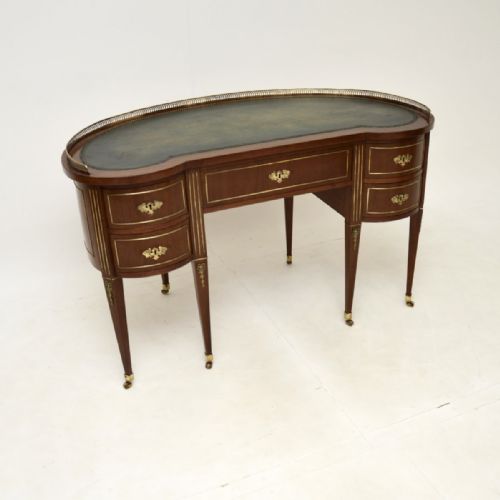
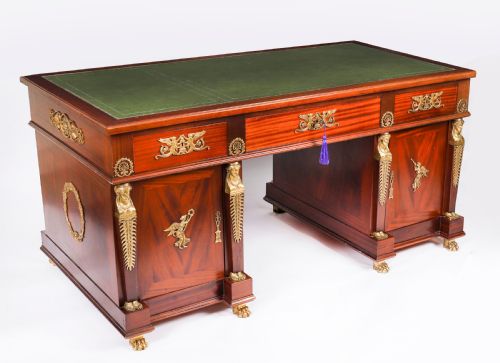
Table forms span coffee tables, console tables, side tables, and desks grounded in neoclassical and Empire design vocabulary.
Evaluating Quality
Quality rests upon the crispness of the cast bronze or brass mounts, where sharply chiselled detail distinguishes finer examples from softer, commercial casting.
The selection and density of the marble or onyx top dictate refinement, alongside the precision of the joinery and hand-carved wooden or gilt elements.
Charles à Orléans·Reiche
The Green Neoclassical Tables Glossary
- Ormolu
- Gilded bronze or brass mounts applied to furniture and decorative objects. This technique was widely utilised during the French Empire and Louis XVI periods.
- Console table
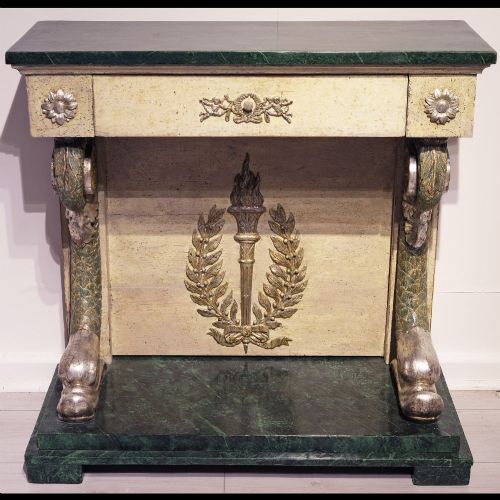
- A wall-mounted or freestanding table designed to stand against a vertical surface. These often feature elaborate legs and marble tops.
- Gueridon
- A small round table supported by a central pillar or figures. French makers frequently produced these in neoclassical and Empire styles.
- Specimen marble
- A top composed of various pieces of multi-coloured marble arranged in geometric patterns. Italian workshops frequently employed this technique.
Green Neoclassical Tables: Frequently Asked Questions
What defines a neoclassical table?
Neoclassical tables draw inspiration from the art and architecture of classical Greece and Rome, prioritising symmetry, straight lines, and balanced proportions.
They frequently incorporate motifs such as columns, fluting, and classical mounts rather than the ornate curves of earlier rococo designs.
Where should I place a console table?
Console tables function best against flat walls in hallways, drawing rooms, or dining areas where floor space is limited.
Their shallow depth allows them to serve as display surfaces for lamps, clocks, or decorative vessels without obstructing walkways.
How do I care for a marble top?
Marble surfaces require regular dusting with a soft cloth and immediate wiping of liquid spills to prevent staining.
Harsh chemical cleaners should be avoided in favour of mild soap and warm water to preserve the stone polish.
How can I distinguish Empire style?
Empire style pieces reflect the neoclassical taste of early nineteenth-century France, marked by militaristic and classical imperial symbolism.
Expect heavier proportions, dark wood veneers, and prominent gilt bronze mounts depicting motifs like wreaths, sphinxes, and classical deities.