
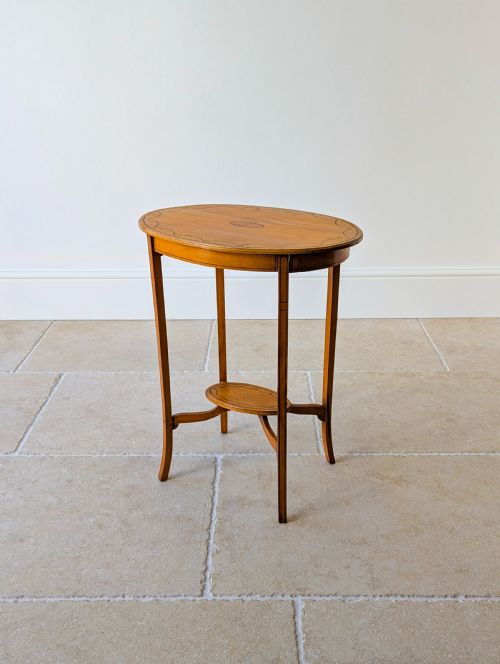


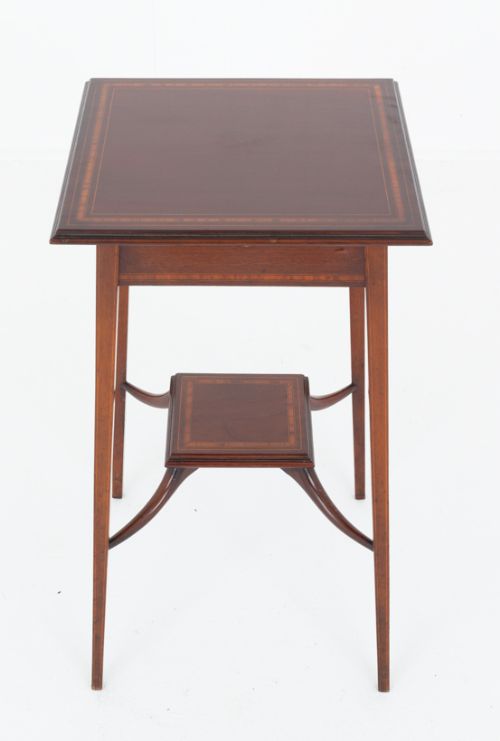


Satinwood Inlaid Wine Table
A satinwood inlaid wine table brings pale, figured timber and delicate stringing into a room, offering a small surface for a glass or a candle.
Satinwood Inlaid Wine Table
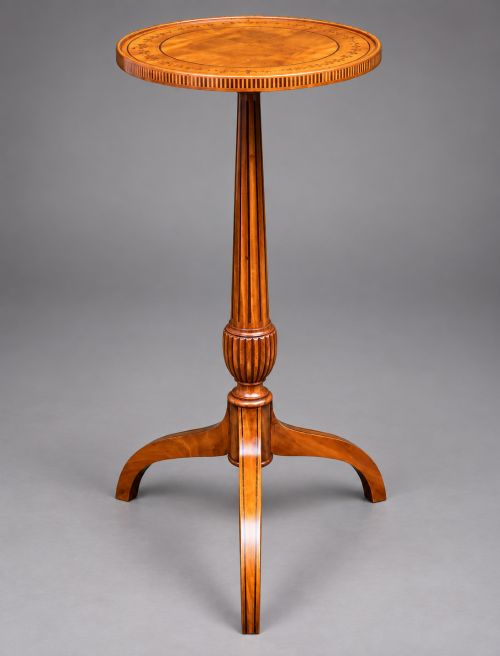
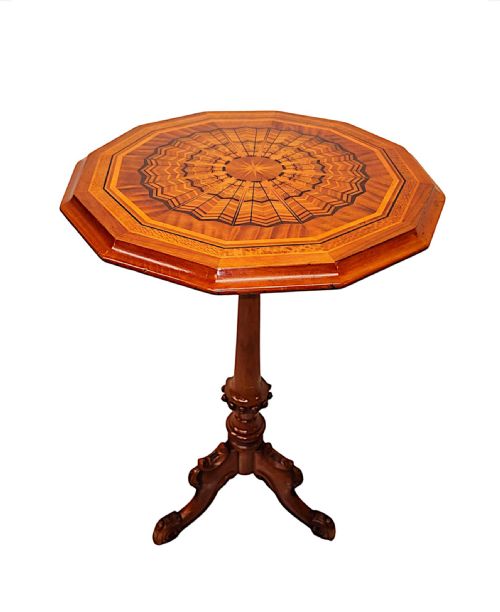
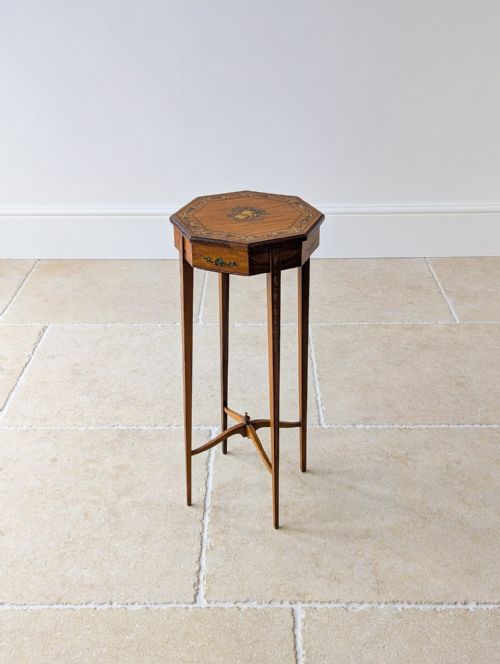
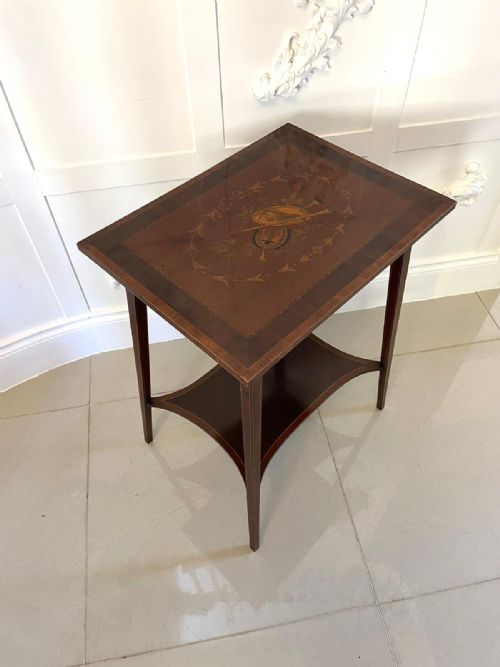
A satinwood inlaid wine table is a compact piece intended for portable use beside seating, appearing across the Edwardian, Victorian, and Georgian periods. These tables emerge in forms such as circular tops on tripod bases, slender candle stands, and oval occasional tables.
The most frequent examples seen on this page date from the Edwardian era and the nineteenth century, often reflecting Sheraton Revival tastes. Makers produced these pieces in satinwood and mahogany, frequently incorporating contrasting stringing and marquetry.
Beyond the standard tripod wine table, the listings include related small forms like kettle stands, urn stands, and occasional tables designed for lamps or side placement. These share the characteristic use of pale timbers and detailed inlay work suited to drawing rooms.
Construction and Materials
Craftsmen built these tables using foundational timbers like mahogany and satinwood, applying veneers to create smooth, pale surfaces that caught the light. Selected pieces introduce rosewood, boxwood, and ebony to form contrasting borders and geometric patterns.
Inlay techniques relied on boxwood and satinwood stringing, fitted into hand-cut channels to outline table edges, legs, and aprons. Marquetry motifs, including floral or classical ribbons, required precise cutting of diverse hardwoods assembled like puzzles before veneering.
Turning and joinery shaped the slender legs and central columns typical of these small tables. Tripod bases employed dovetail or wedged tenon joints to secure stability beneath the relatively light tabletops.
Materials recorded across the inventory include satinwood, mahogany, rosewood, boxwood, ebony, brass, and occasional specimen marble.
Judging Quality
The standard of a satinwood inlaid wine table rests on the crispness of its marquetry and the choice of veneer. Finer examples display tightly grained satinwood and sharp, undented boxwood stringing without lifting along the borders.
Proportion and stability distinguish better pieces from heavier or clumsier alternatives. A well-balanced tripod base and neatly tapered legs indicate careful proportioning by the cabinetmaker, whereas crude turnings suggest lesser workshops.
The preservation of the polished finish affects how the timber grain reflects light. Original French polish that retains a warm, mellow amber tone without heavy modern overfinishing preserves the character of the wood.
Gillows
The Satinwood Inlaid Wine Table Glossary
- Satinwood
- A hard, yellow-gold timber with a natural sheen, prized for fine cabinetmaking and decorative veneers. It forms the primary surface of many Sheraton Revival tables.
- Stringing
- Thin, narrow strips of contrasting wood inlaid into channels on a table surface to create borders and geometric lines. Boxwood and ebony are frequent choices for this linear work.
- Sheraton Revival
- A late nineteenth and early twentieth century design movement that reinterpreted the neoclassical furniture of George Sheraton. It heavily utilises satinwood, painted details, and classical symmetry.
- Marquetry
- The art of forming decorative patterns by fitting together veneer pieces of different woods, grains, and colours. It appears on table tops to render floral sprays or urn motifs.
- Tripod Table
- A small freestanding table supported by a central pillar resting on three spreading legs. This form allows the table to stand steadily on uneven carpets.
- Quartetto
- A set of four stacking tables of graduated sizes that nest beneath one another. They appear in mahogany with satinwood inlay.
Satinwood Inlaid Wine Table: Frequently Asked Questions
What is a wine table used for?
A wine table provided a convenient surface for holding a glass, cup, or candle beside a chair during the evening. Their small tops and portable designs allowed servants to move them about a drawing room as needed.
Today, they function as lamp tables or decorative accent pieces in sitting rooms and hallways, holding small objects rather than heavy items.
How do I tell Edwardian Sheraton Revival from Georgian?
Edwardian Sheraton Revival pieces, dating around 1900, often use machine-cut veneers, lighter secondary woods, and bright, uniform satinwood. They frequently display softer edges and lighter overall construction.
Georgian originals from the eighteenth century show heavier structural timbers, hand-cut dovetails, and a deeper, darker patina developed over a longer period of age and use.
Are these tables sturdy enough for daily use?
Most satinwood wine tables are relatively light and delicate, designed for gentle placement rather than heavy weight. Tripod bases balance well on firm floors but can tip if leaned upon heavily.
Placing them away from heavy traffic areas protects the slender legs and veneered surfaces from accidental knocks.
How do I care for satinwood furniture?
Satinwood benefits from being kept away from direct sunlight and strong heat sources, which can fade the pale timber and dry out the polish. Dusting with a soft, dry cloth maintains the surface.
Occasional applications of appropriate wax feed the antique polish without building up a heavy, cloudy residue.