



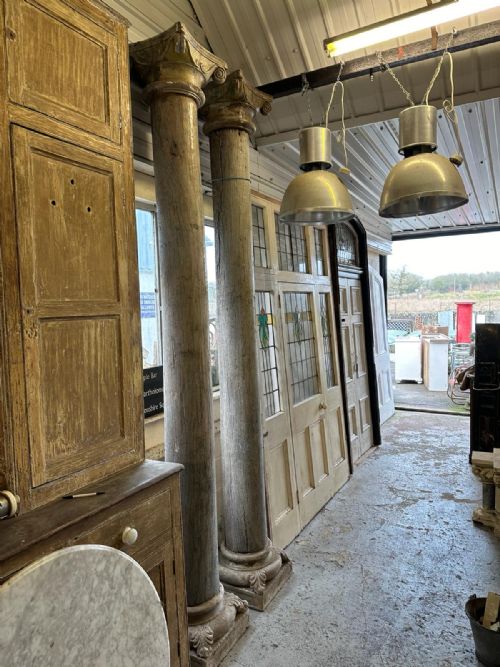


Pair Tall Pillars
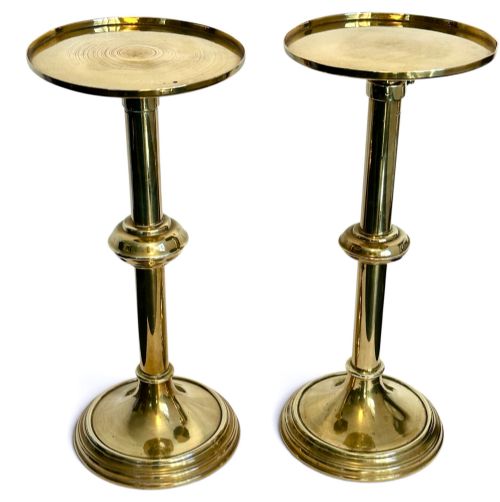
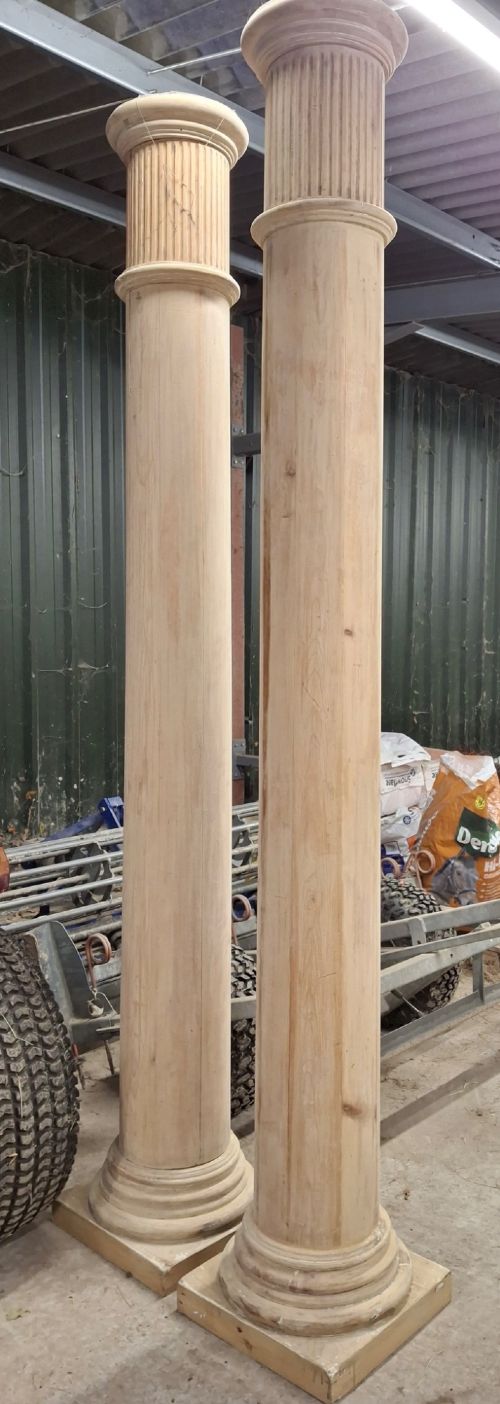
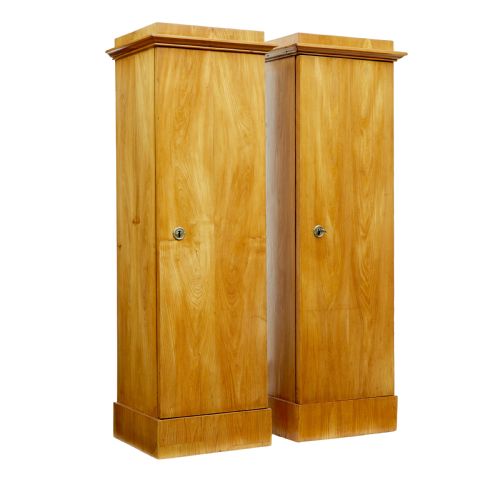
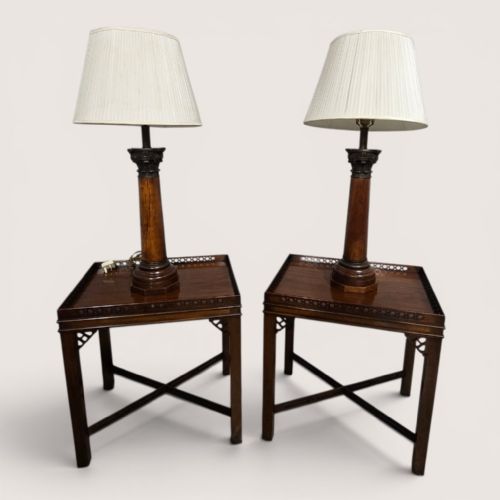
Pair tall pillars bring height and architectural presence to a room, taking the form of monumental candlesticks, carved columns, and display pedestals.
Pair Tall Pillars
When you search for pair tall pillars, you encounter vertical forms spanning centuries from the late eighteenth century through to the nineteen thirties. These objects encompass architectural salvage, carved wooden columns, ecclesiastical candlesticks, and substantial table lamps.
The versions most commonly met on this page range from neoclassical brass and oak column lamps to painted wooden pedestals and French theatrical columns. Makers and craftsmen utilised pine, elm, mahogany, brass, gesso, and stone to construct these striking vertical statements.
How they were made
Constructed primarily from hardwoods like elm, oak, and mahogany alongside durable metals like brass, these pieces rely on traditional joinery and turning techniques. Wood is frequently carved, painted, or parcel gilded to achieve classical architectural details.
Surface finishes include silvering, painted plaster, and gesso over wood bases, reflecting diverse periods from the eighteenth century to the twentieth century. Elements such as carved ionic and corinthian capitals demonstrate detailed hand craftsmanship.
Pair Tall Pillars Retail Price Guide 2026
Typical asking prices for pair tall pillars among the pieces listed under this phrase on Sellingantiques today, from the lower quarter to the upper quarter. They describe what is for sale here now, not the wider market.
Listings span the nineteenth century up to the nineteen thirties, featuring materials such as brass, elm, pine, and painted gesso.
What varies in quality
The distinction between standard examples and finer pieces lies in the crispness of the hand-carved capitals and the weight of the materials used. Superior items display deep, intentional carving in hardwoods or heavy cast brass rather than lighter, simpler constructions.
Proportion and surface preservation also dictate the standing of a piece, with intact original paint, parcel gilding, or patinated metal surfaces marking out the more accomplished examples.
The Pair Tall Pillars Glossary
- Capital
- The topmost member of a pillar or column, often decorated with carved foliage or classical motifs such as ionic scrolls.
- Gesso
- A plaster-like mixture applied to wood surfaces to provide a smooth base for painting or gilding.
- Parcel Gilt
- A technique where portions of an object are selectively covered in gold leaf while other areas remain painted or exposed.
- Neoclassical
- A style drawing inspiration from the classical art and architecture of ancient Greece and Rome, prevalent across several periods represented here.
Pair Tall Pillars: Frequently Asked Questions
How were tall pillars used originally?
These tall forms served various functions in historical interiors, ranging from church altars holding heavy candles to grand architectural supports in domestic spaces.
Over time, many of these vertical structures were adapted into substantial table lamps or utilised purely as decorative display pedestals.
Where do pair tall pillars work best?
Their vertical orientation makes them suitable for framing doorways, fireplaces, or large artworks within a room.
They also function effectively as freestanding display surfaces for sculpture or as primary lighting sources on large tables and sideboards.
What materials are common in these pillars?
Construction materials vary widely depending on the intended function, featuring heavy cast brass, carved hardwoods, and painted plaster.
Combinations of wood and stone are also found, particularly in pieces incorporating architectural capitals and bases.
How can I tell the period?
Dating relies on observing stylistic details such as neoclassical proportions, turned wood profiles, and the specific application of gesso or paint.
Examining the underlying materials, such as elm or mahogany, helps align the piece with its likely nineteenth or early twentieth-century origin.