




Decorative Wooden Pillars
These decorative wooden pillars bring distinct architectural presence to interiors, offering character forged from centuries of craftsmanship and diverse global traditions.
Decorative Wooden Pillars
Decorative wooden pillars encompass architectural elements originating from periods ranging across the eighteenth, nineteenth, and early twentieth centuries. Buyers seeking decorative wooden pillars encounter varied forms, from architectural salvage and grand painted pairs to carved pedestals.
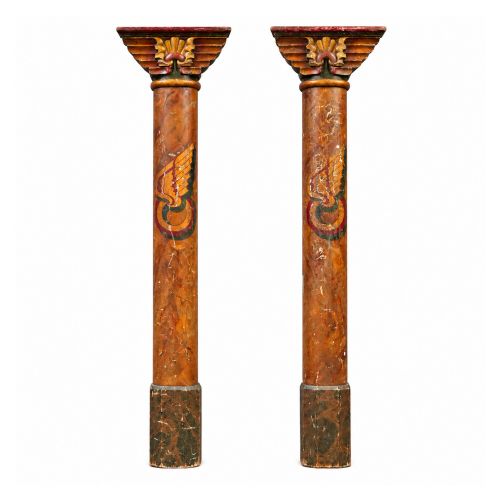
The selection includes specific regional and stylistic expressions, such as English carousel fairground columns, French painted examples, and Indian hardwood carvings. Many items present as matched pairs, suited for framing doorways, supporting displays, or standing independently.
How they were made
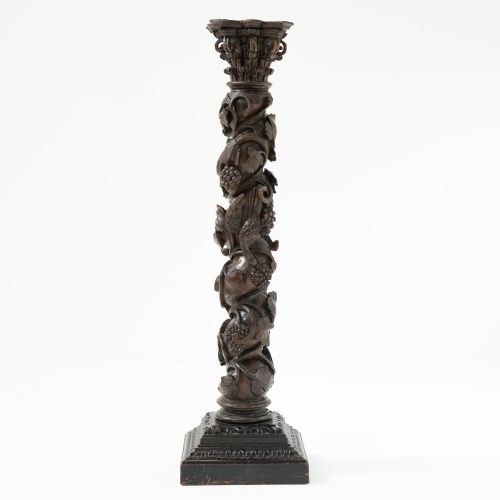
Construction relies heavily on carved wood and dense hardwoods, occasionally combined with stone bases or metal elements. Artisans utilised manual carving techniques to shape intricate capitals, such as Ionic designs, and helical twists found in Solomonic forms.
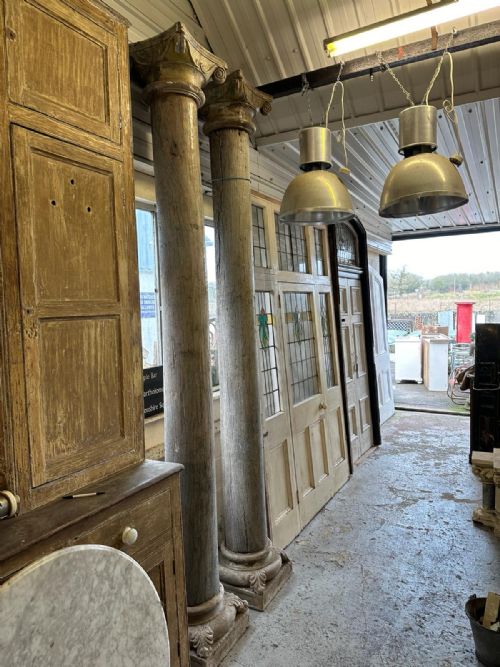
Surface treatments vary widely, incorporating original paint, parcel gilt, staining, or polished veneers like burr walnut and Macassar ebony. Pieces intended for architectural salvage retain the structural integrity of softwood or hardwood portico elements.
Some columns retain the vibrant speed of Edwardian fairground carousels, having traded bustling ride tracks for quiet domestic corners.
What varies in quality
Quality rests upon the depth and execution of the hand carving, distinguishing crisp architectural detail from simpler profiles. The choice of materials dictates the baseline, where exotic veneers or dense hardwoods command greater visual weight than basic softwood salvage.
The integrity of surface finishes, whether original polychrome paint, gilding, or polished grain, preserves the historical character of the piece. Scale and proportion further define the tier, with grand architectural proportions offering greater decorative impact.
Marguerite
The Decorative Wooden Pillars Glossary
- Solomonic
- A column characterised by a helical twist or spiral shaft, drawing on ancient architectural traditions. This form creates dynamic movement along the vertical axis of the pillar.
- Ionic Capital
- The uppermost member of a column featuring characteristic scroll shapes known as volutes. It represents one of the classical orders of architecture.
- Architectural Salvage
- Building components and structural fragments rescued from demolition or alteration for reuse in interior decoration. These pieces often bear marks of their previous structural function.
- Torchiere
- A tall stand or pedestal originally designed to hold a light source, now frequently utilised to display sculpture or decorative objects. It elevates items to prominent viewing heights.
- Parcel Gilt
- A decorating technique where portions of an object are covered in thin gold leaf while other areas show the underlying paint or wood. This highlights specific carved details.
Decorative Wooden Pillars: Frequently Asked Questions
How are decorative wooden pillars used in modern interiors?
These pillars function effectively as structural framing devices within large rooms, or as independent display pedestals for art and sculpture. Their varied heights and finishes allow them to anchor corners or define entryways.
Pairs of columns can be positioned to create visual symmetry on either side of a fireplace, doorway, or sideboard. Smaller torchieres and pedestals serve to elevate focal objects above floor level.
What periods do these wooden pillars typically represent?
The available selection spans from the eighteenth century through to the Art Deco period of the 1930s. Nineteenth-century examples form a significant portion of the offerings.
Earlier eighteenth-century pieces often display classical motifs like the Solomonic twist, while later nineteenth and twentieth-century items include fairground salvage and exotic hardwood carvings.
Are these pillars sold as single items or pairs?
Many of the architectural columns and decorative pillars are offered as matched pairs, originating from porticos, fairground rides, or interior schemes. This makes them suitable for symmetrical placement.
Single pedestals and large individual carvings also appear in the selection, intended for standalone display rather than flanking an opening.
What materials are used besides wood?
While wood forms the primary structure, makers frequently incorporated stone for column bases and metal for structural reinforcement. Surface finishes introduce additional media.
Decoration often includes paint, parcel gilt, and contrasting veneers such as Macassar ebony and burr walnut applied over hardwood cores.