



Pair Stoneware Urns
These pair stoneware urns bring robust weight and layered glaze to a room, offering a symmetrical focal point that draws the eye.
Pair Stoneware Urns
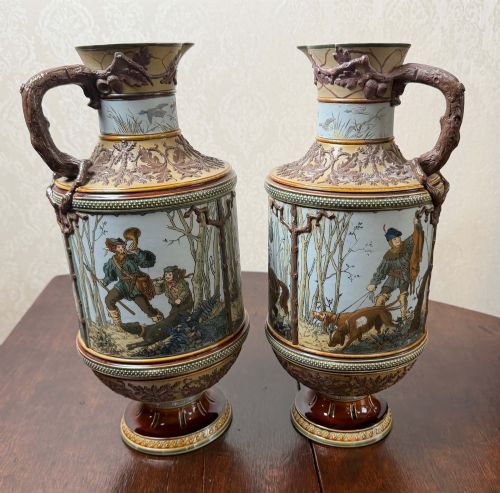
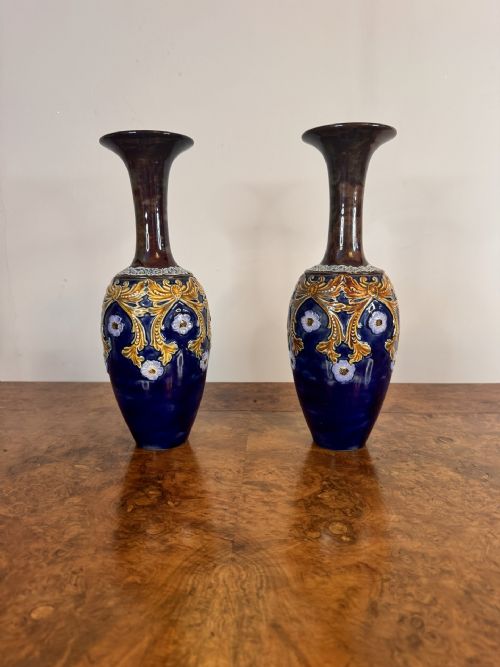
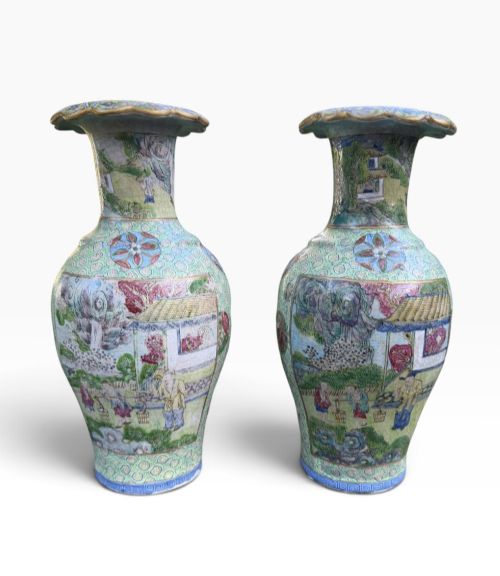
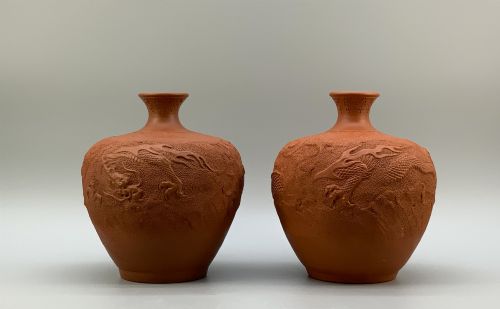
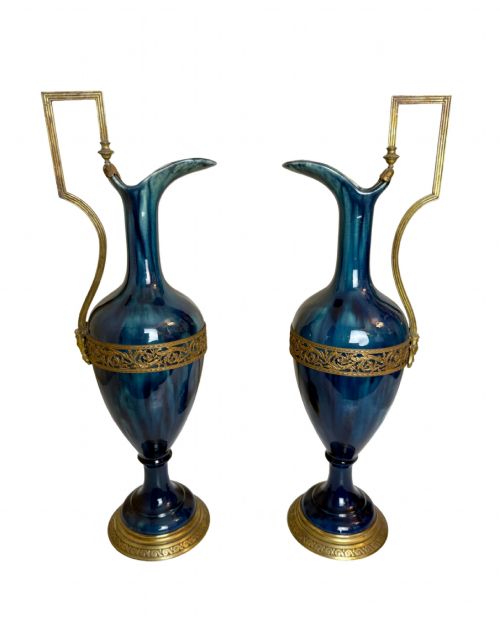
When searching for pair stoneware urns, buyers find dual vessels designed for symmetry and display, predominantly taking the form of vases, baluster shapes, and garden ornaments. These objects span the nineteenth and early twentieth centuries, reflecting Victorian, Art Nouveau, and Arts and Crafts movements alongside international traditions like Chinese Yixing and Japanese Tokoname.
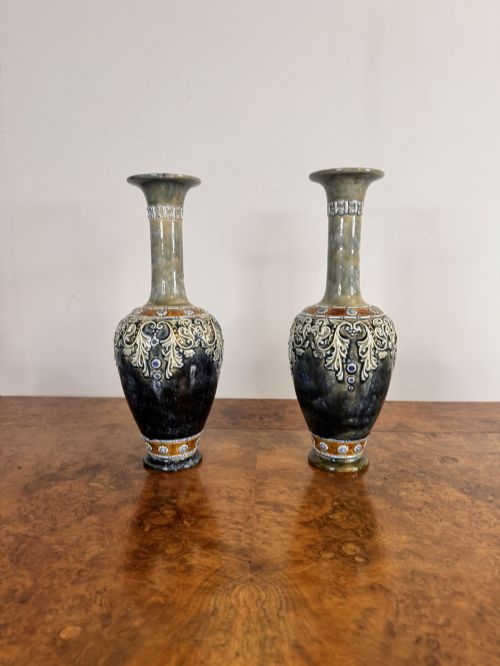
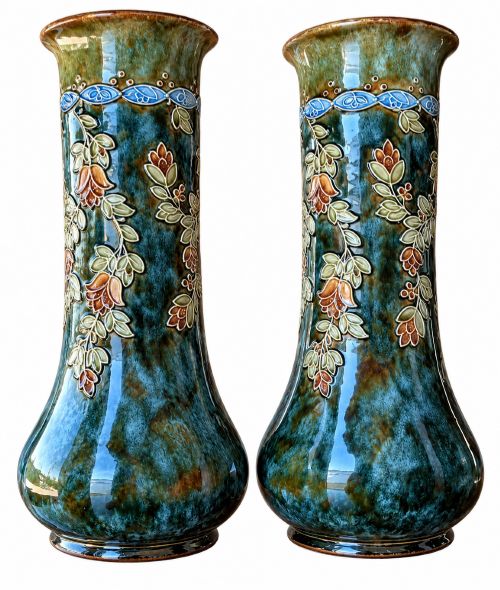
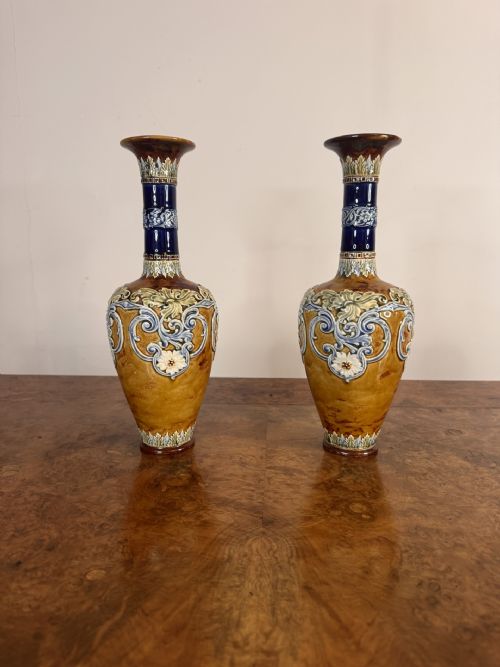
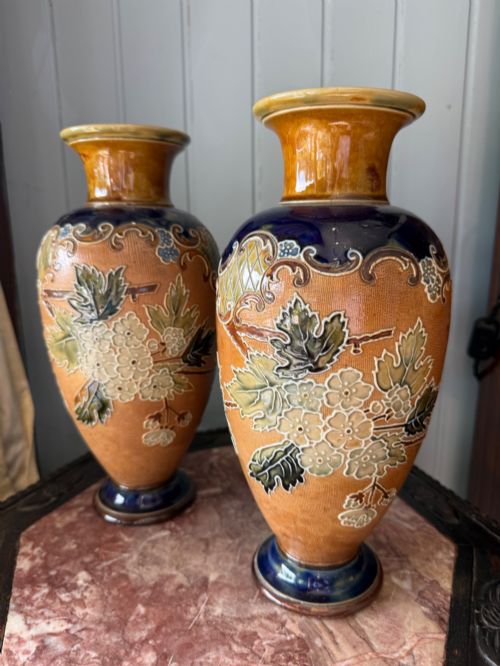
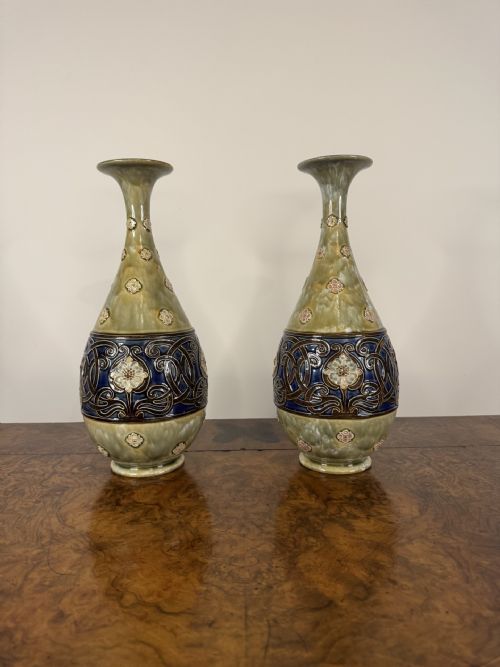
The version most commonly met on this page is the British stoneware vase, particularly those produced by Doulton Lambeth and Royal Doulton during the late Victorian and Edwardian eras. Such pieces frequently combine patterned textures with enamel floral décor or slip designs, reflecting both domestic mantelpiece display and larger decorative ambitions.
How they were made
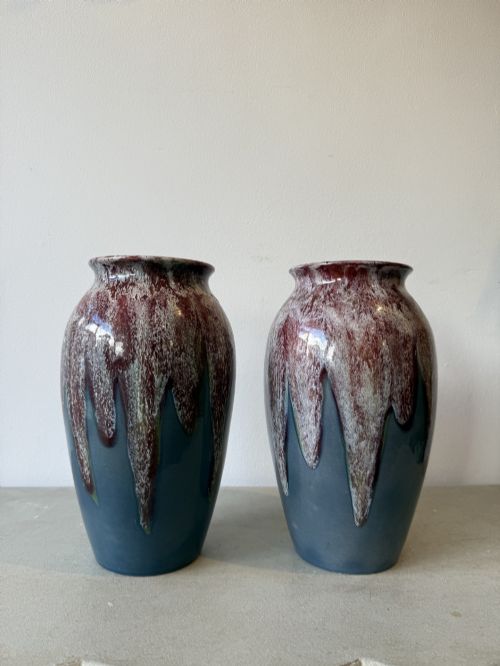
Makers shaped these vessels from heavy, vitrified clay bodies fired at high temperatures to achieve a dense, impermeable finish. This foundational stoneware substance was often paired with specialised surface treatments such as salt glazing, enamel, and applied white bas-reliefs.
Decoration relied heavily on specialised techniques including Slater's patent lace imprinting, hand-painted enamel floral motifs, and incised foliage. Workshops utilised distinct artist marks and factory stamps pressed directly into the clay before the final kiln firing.
Pair Stoneware Urns Retail Price Guide 2026
Typical asking prices for pair stoneware urns among the pieces listed under this phrase on Sellingantiques today, from the lower quarter to the upper quarter. They describe what is for sale here now, not the wider market.
Some Victorian Doulton vases preserve the actual texture of old lace pressed into wet clay by inventive studio decorators.
What varies in quality
The distinction between standard production items and superior examples rests upon the crispness of the modelled relief, the depth and consistency of the glaze, and the presence of named artist signatures. Pieces decorated by notable studio artists command greater attention due to the individual hand involved in their surface ornamentation.
Proportional harmony and the crispness of applied decorative elements also dictate the standing of a pair. Finer specimens display meticulous control over surface textures and colour transitions, whereas simpler examples rely entirely on basic factory moulds.
Royal Doulton·Doulton Lambeth·Mettlach·Wedgwood·Yixing·Tokoname
The Pair Stoneware Urns Glossary
- Stoneware
- A sturdy, heavy ceramic fired at high temperatures until the clay body vitrifies and becomes non-porous. This material resists moisture naturally even without an internal glaze.
- Baluster
- A vase form featuring a rounded body that tapers toward a narrow neck and flares slightly at the rim. This silhouette appears frequently in nineteenth-century decorative pottery.
- Campana
- An urn shape resembling an inverted bell, typically set upon a small pedestal or foot. Wedgwood frequently utilised this classical silhouette for jasperware pieces.
- Jasperware
- A fine-grained, unglazed stoneware developed by Wedgwood, usually featuring a solid coloured ground with contrasting white classical bas-reliefs applied by hand.
- Slater's Patent
- A Doulton technique involving the pressing of lace or woven fabrics into damp clay to create textured surfaces. These impressed patterns were often highlighted with coloured enamels and gilding.
Pair Stoneware Urns: Frequently Asked Questions
How do I date pair stoneware urns?
Dating relies heavily on impressed factory bottom marks, registry numbers, and specific stylistic movements such as Victorian historicism or Art Nouveau. Maker stamps often evolved across decades, allowing precise chronological placement.
Changes in glaze technology and the presence of specific artist monograms further help narrow the decade of production for individual pairs.
Can these urns be used outdoors?
Certain heavy salt-glazed varieties and terracotta or garden urns were specifically designed to withstand external conditions. However, many ceramic and fine enamel-decorated indoor vases require shelter from frost.
Checking the material density and glaze coverage helps determine whether a specific pair suits garden display or remains strictly for interior rooms.
What is the difference between stoneware and porcelain?
Stoneware is heavy, opaque, and fired at exceptionally high heat to achieve a vitrified, stone-like consistency without translucency. Porcelain remains lighter, whiter, and delicate in comparison.
Stoneware vessels typically showcase tactile textures, salt glazes, or matte finishes rather than the glassy smoothness characteristic of fine porcelain.
How should I clean glazed stoneware?
Maintenance requires only gentle dusting with a soft cloth or occasional wiping with a damp sponge to remove accumulated surface dirt. Avoid harsh chemical cleaners that might damage delicate enamel highlights or aged glazes.
Keeping unglazed interiors dry prevents mineral accumulation, preserving the original fabric of the pottery over time.