

Pair Small Side Tables
These pair small side tables offer symmetrical proportion and compact surface utility across periods from the eighteenth century to the twentieth.
Pair Small Side Tables
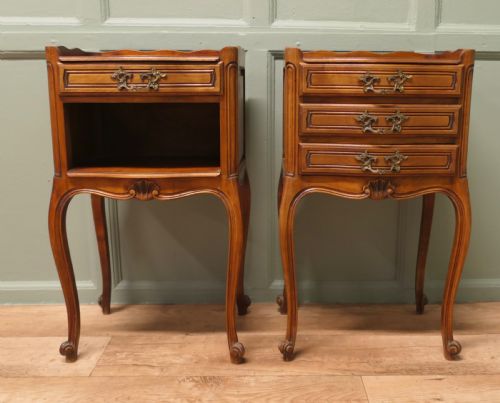
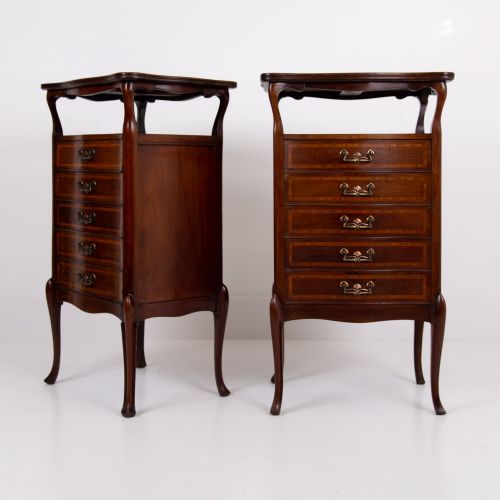
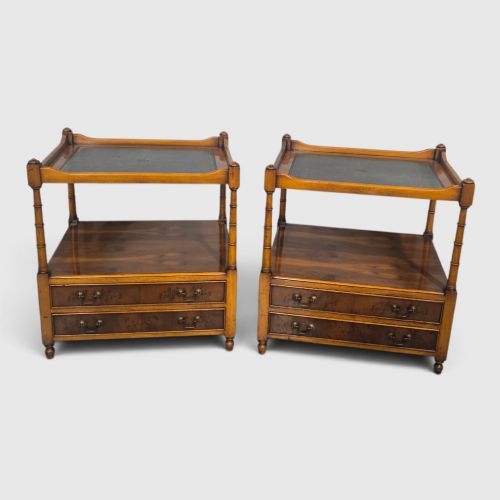
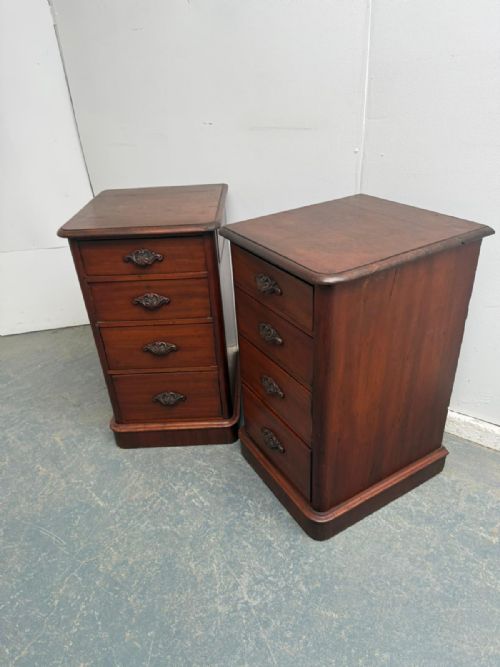
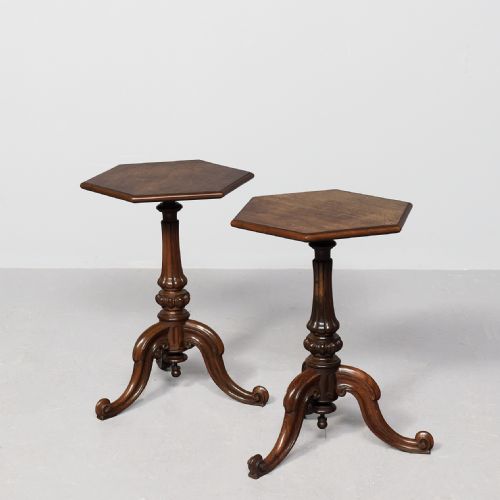
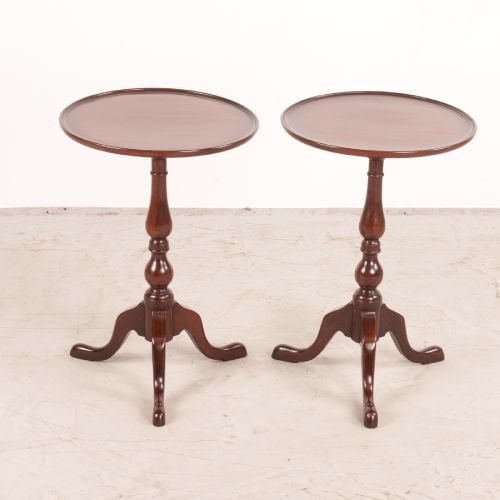
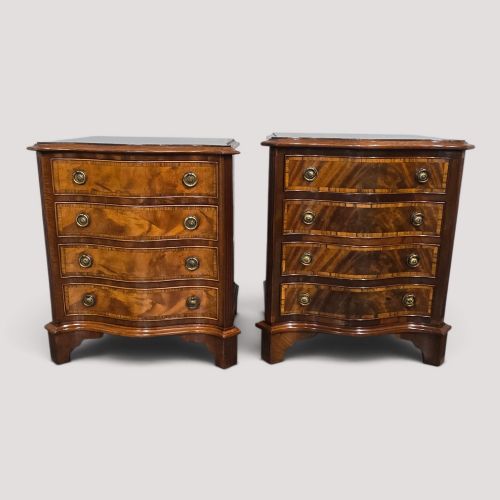
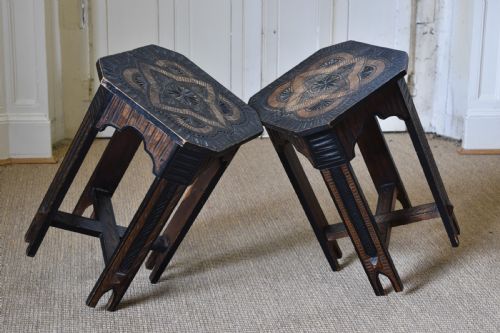
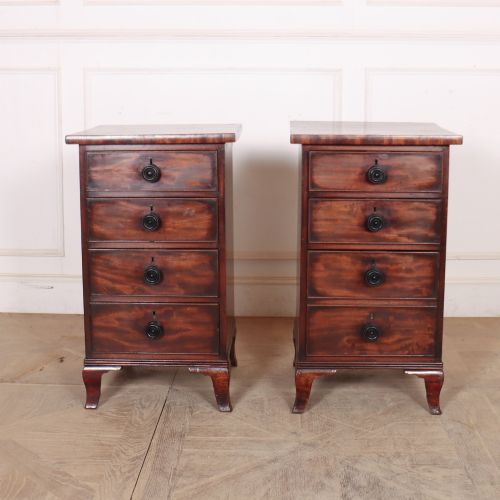
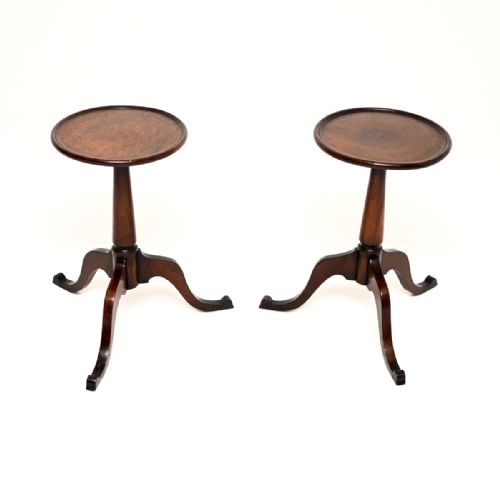
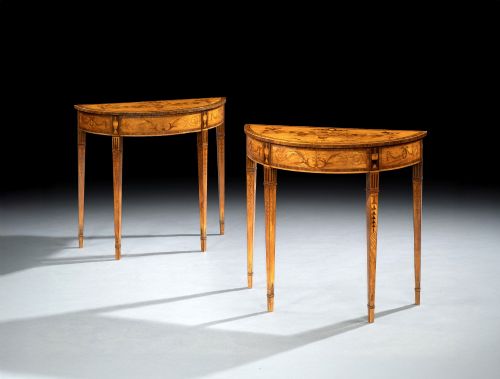
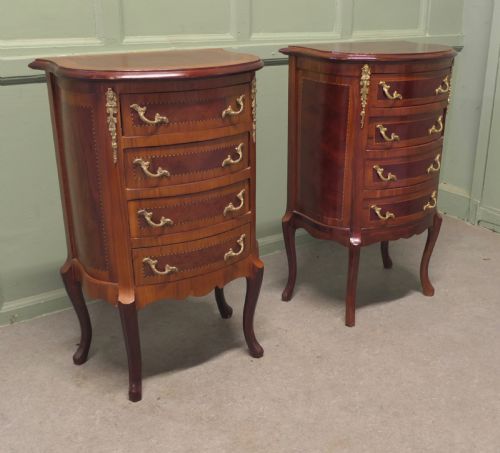
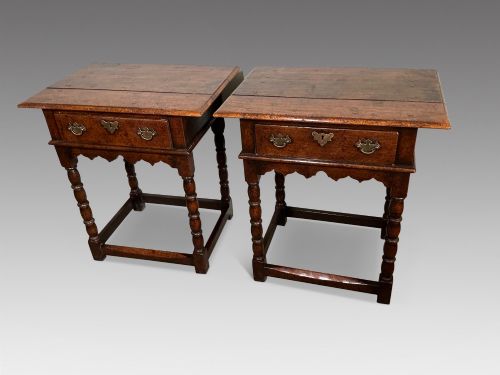
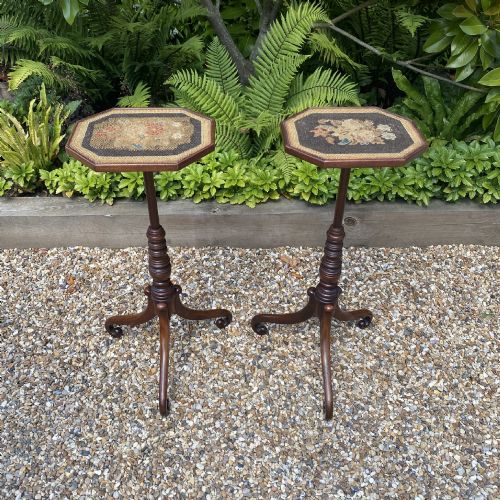
Pair small side tables encompass functional twin surfaces designed for compact spaces, frequently appearing as bedside cabinets, wine tables, lamp tables, and occasional tables. Buyers seeking this phrase encounter formats ranging from Georgian mahogany tripod tables and satinwood demi-lune consoles to early twentieth-century oak and walnut bedside chests.
The selection spans formal Georgian and Regency designs alongside Victorian, Edwardian, and later twentieth-century iterations including French provincial styles. Many examples serve specific domestic roles, such as holding bedside lighting, supporting plants, or flanking seating arrangements with matching timber grains.
How they were made
Cabinetmakers constructed these tables using dense hardwoods including mahogany, oak, walnut, and rosewood, often enhanced by decorative veneers such as satinwood, kingwood, and burr walnut. Surface decoration frequently incorporates intricate marquetry, parquetry, chip carving, and hand-painted chinoiserie motifs.
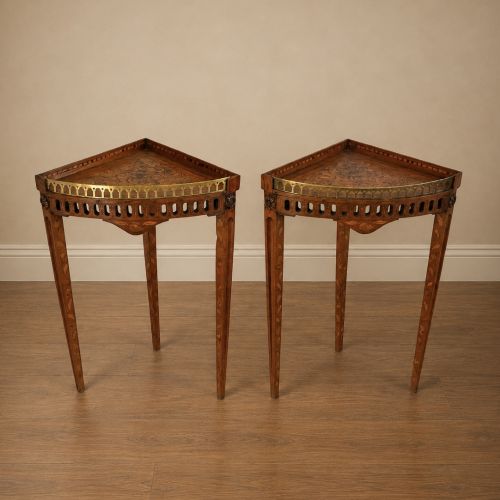
Metal hardware such as brass handles, gallery rails, and copper tops complement the timber structures. Construction methods rely on traditional joinery for drawer chests, while tripod wine tables employ turned pedestals fitted to shaped or dished wooden tops.
Listings feature mahogany, oak, walnut, and rosewood alongside decorative satinwood and brass elements.
What varies in quality
The standard of timber selection and veneer matching defines the visual harmony between the two pieces, particularly when dealing with figured mahogany, burr walnut, or geometric marquetry. Superior examples exhibit continuous grain patterns or balanced inlay work that unites the pair into a cohesive composition.
Refinement in secondary details such as cast brass hardware, finely turned pillar supports, and well-executed dovetail joints in drawer construction distinguishes master cabinetwork from simpler utilitarian output.
The Pair Small Side Tables Glossary
- Demi-lune
- A half-moon shaped furniture form, typically designed to stand flush against a wall as a console or side table. These pieces often feature inlaid veneers or marquetry tops.
- Tripod table
- A small freestanding table supported by a central pillar resting on three spreading feet. They frequently feature circular or dished tops designed for wine or occasional use.
- Marquetry
- The art of applying decorative veneer pieces in wood, metal, or shell to form intricate geometric patterns or pictorial designs. It appears prominently on eighteenth and early twentieth-century table surfaces.
- Serpentine
- A furniture front or edge shaped with a central convex curve flanked by two concave curves. This contour requires precise carpentry and adds visual movement to small chests and cabinets.
- Brass gallery
- A low decorative railing surrounding the top edge of a table or cabinet. It frequently accompanies lamp tables and bedside chests to keep items secure.
Pair Small Side Tables: Frequently Asked Questions
How do I use them in a bedroom?
These matching items function well as symmetrical bedside cabinets or nightstands positioned on either side of a bed. Their compact footprints provide surface space for lamps and reading material while keeping personal items stored within drawers or enclosed cupboards.
The matching nature of the pair creates visual balance in the sleeping quarters. They coordinate easily with various headboard styles and textile choices across different period interiors.
Are these tables sturdy enough for daily use?
Solid timber construction using hardwoods like oak, mahogany, and walnut ensures these pieces withstand regular domestic tasks. Their compact scale inherently limits heavy loading, making them ideal for holding lamps, drinks, or decorative accessories.
Period joinery provides structural stability when the furniture rests on level flooring. Occasional light waxing helps maintain the surface finish against normal wear.
How can I tell Georgian pieces from later reproductions?
Eighteenth-century examples display construction methods characteristic of hand-tooling, including irregular hand-cut dovetails in drawer construction and native timber secondary woods. Eighteenth-century surfaces often show patination developed through generations of handling.
Later Edwardian and twentieth-century interpretations exhibit more uniform machining and standardised hardware fittings. Examining the interior framework and timber shrinkage reveals the true age of the piece.
What is the difference between a wine table and a lamp table?
Wine tables typically feature small circular tops supported by a single central pillar and three feet, originally designed for holding glasses during social gatherings. Lamp tables offer broader surfaces, often with four legs or a cabinet base, intended to support illumination devices.
Both forms serve as flexible occasional furniture. Their diminutive proportions allow them to fit easily into tight corners or beside seating.