




Leather Insert Side Tables
Leather insert side tables combine timber frames with tooled surfaces, offering practical writing and display spaces for traditional interiors.
Leather Insert Side Tables
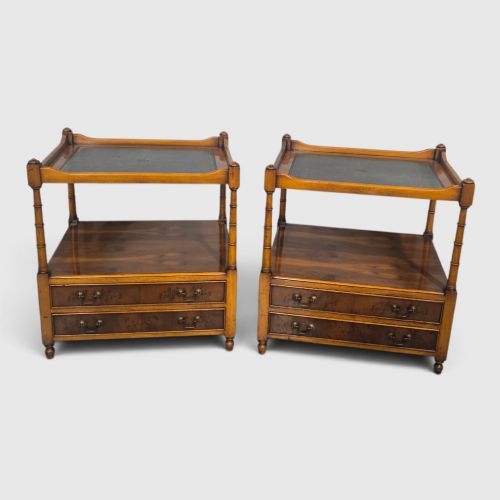
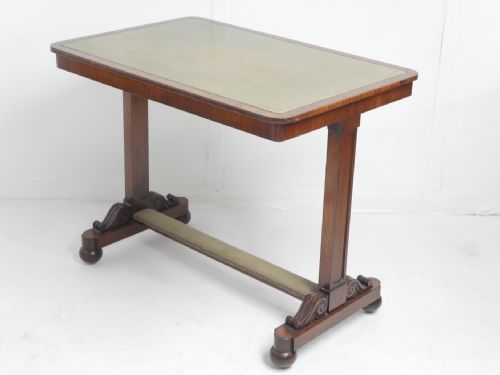
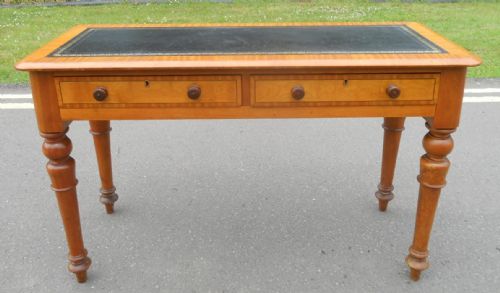
Leather insert side tables span multiple eras, appearing in forms such as compact lamp tables, two-tier occasional tables, and larger writing desks. These pieces serve functional roles beside seating or against walls, combining a sturdy wooden framework with a flat working surface.
Buyers encounter items ranging from simple nineteenth-century side tables to matched pairs from the nineteen-thirties. Forms extend beyond standard side tables into campaign coffee tables and dedicated writing desks equipped with leather tops.
How they were made
Cabinetmakers constructed the frames using solid timbers and veneers, with mahogany being the predominant wood alongside oak, yew, and satin birch. Carpenters shaped these woods into turned legs, tiered shelves, and solid rectangular tops designed to house inset writing surfaces.
Workshops applied leather directly into recessed channels on the wooden tops, often embellishing the perimeter with gold leaf tooling. Brass fittings appeared on campaign styles, providing structural reinforcement and flush handles suited for portable furniture.
Materials paired with leather include gold leaf, brass, and blond mahogany, appearing across lamp tables, campaign styles, and writing desks.
What varies in quality
The refinement of the timber selection dictates the visual weight of each piece, distinguishing dense figured mahogany and satin birch from standard utility hardwoods. Finer examples display meticulous attention to timber grain matching across the top and structural frame.
The execution of the decorative elements separates standard production from superior craftsmanship. Precision in gold leaf tooling around the leather insert and the crispness of carved details on oak or mahogany define the upper tier of execution.
Howard & Sons·Willmington & Cope
The Leather Insert Side Tables Glossary
- Leather insert
- A panel of animal hide fitted into the recessed top of a table or desk. This surface provides a tactile writing area distinct from the surrounding wooden frame.
- Gold leaf
- Beaten gold applied to decorate surfaces through tooling. It frames the perimeter of many leather inserts on period tables.
- Campaign style
- Portable furniture designed for travel, featuring recessed brass corners and flush handles. These pieces utilise sturdy timbers like mahogany for durability.
- Occasional table
- A small, movable table used for various domestic purposes. They appear frequently in pairs or tiered configurations.
Leather Insert Side Tables: Frequently Asked Questions
Where should I place a leather insert side table?
These tables fit well beside armchairs, in hallways, or serving as compact desks in home studies. Their finished wooden backs and inset surfaces allow them to sit away from walls.
Consider the height of surrounding seating to ensure the table surface remains accessible for daily use as a lamp or writing stand.
How do I care for the leather top?
Maintain the surface by dusting regularly with a soft cloth and applying appropriate leather balms periodically to prevent drying. Avoid placing damp items directly onto the hide.
Protect the gold leaf tooling from abrasive cleaners or excessive moisture during routine maintenance of the writing surface.
Are these tables sturdy enough for writing?
Most pieces function effectively as writing desks or occasional tables, supported by robust frames in mahogany, oak, or yew. Solid construction ensures stability for everyday tasks.
Writing tables and desks specifically designed with inset leather offer a stable surface optimized for correspondence and paperwork.
How can I tell the period of the table?
Dating relies on timber choice, construction methods, and stylistic cues such as Regency curves or Victorian turning. Finer details like hand-tooled gold leaf often indicate earlier manufacturing periods.
Comparing the secondary woods and joinery beneath the top helps confirm whether a piece belongs to the nineteenth or early twentieth century.