


Leather Top End Tables
Leather top end tables combine practical surfaces with classic hide inlays, offering compact timber tables for daily use.
Leather Top End Tables
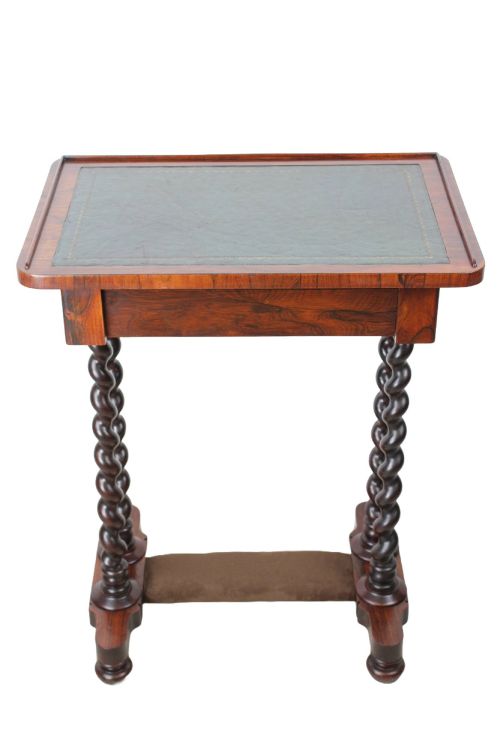
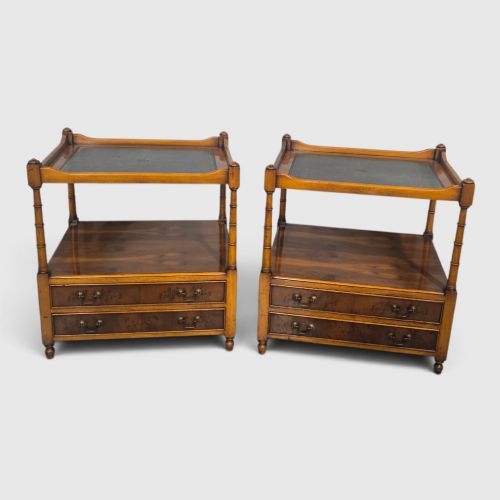
Leather top end tables appear across several periods including the nineteenth century, Regency, and Edwardian eras, alongside pieces from the nineteen-twenties and nineteen-thirties. These pieces emerge in forms such as side tables, lamp tables, nests of tables, writing desks, and library tables.
Buyers frequently encounter mahogany and rosewood examples alongside yew, pine, and hardwood constructions. Styles span Georgian, Regency, Regency style, Victorian, George IV, and Spanish Revival aesthetics.
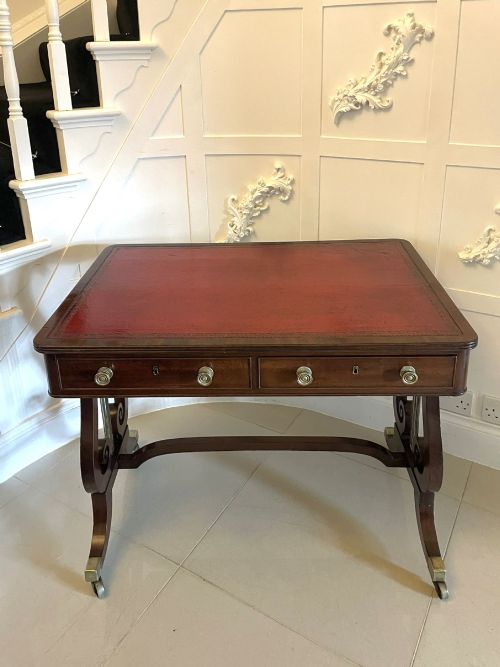
The selection ranges from single writing desks and side tables to matched pairs designed for placement beside seating or against walls. Smaller dimensions appear alongside broader writing surfaces suitable for study or display.
Materials and Construction
Cabinet makers utilised dense timbers such as mahogany and rosewood, incorporating brass details and embossed leather writing surfaces into the designs. Yew, pine, and hardwood also provide structural integrity for side tables and lamp tables.
Joinery methods support multi-tier configurations, nests of three tables, and free-standing writing desks with carved or polished finishes. Gilded accents appear on specific Spanish style works alongside standard timber polishes.
Listings feature mahogany, rosewood, yew, pine, and hardwood alongside embossed leather inlays.
Assessing Quality
Timber selection dictates the distinction between standard side tables and superior library or writing tables, with rich grains of mahogany and rosewood marking finer examples. The crispness of carved details and the integration of brass components further separate standard production from elevated workshop output.
The execution of the leather inlay, whether plain or embossed, contributes to the overall coherence of the piece alongside the stability of multi-tier structures and nests of tables.
Whytock and Reid
The Leather Top End Tables Glossary
- Side Table
- A small table designed to stand against a wall or beside seating. These pieces provide surface space for lamps and decorative items.
- Lamp Table
- A compact occasional table specifically sized to hold a lighting fixture. They frequently use timbers like yew or mahogany.
- Nest of Tables
- A set of graduated tables designed to fit one beneath another to save space. They appear in forms featuring leather top surfaces.
- Writing Table
- A desk or table equipped with a writing surface, often inset with leather. These include freestanding library tables and compact writing desks.
- Regency Style
- An aesthetic drawing on the classical motifs of the early nineteenth century. Pieces in this manner may date from later revival periods.
Leather Top End Tables: Frequently Asked Questions
What defines leather top end tables?
Leather top end tables are compact occasional furniture pieces featuring an inset leather writing or display surface.
They encompass side tables, lamp tables, and nests of tables produced across various nineteenth and twentieth century periods.
How were leather top tables used?
These tables served multiple functions including holding lamps, supporting writing materials, and displaying decorative objects in period rooms.
Smaller variants provided movable surfaces beside seating while larger library tables stood freestanding in rooms.
How do I identify a Regency table?
Regency tables typically display classical proportions, refined timber selection such as rosewood or mahogany, and occasional brass mounts.
Revival pieces from later decades imitate these specific stylistic characteristics of the early nineteenth century.
Where should I place a nest of tables?
A nest of tables works well beside a sofa or armchair where extra surface space is occasionally required.
The graduated tables can be separated when entertaining and stacked together when floor space is needed.