




Pair Small Mahogany Cabinets
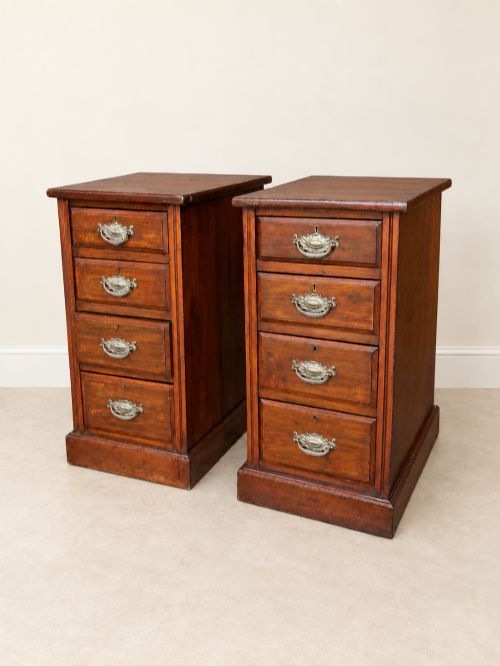
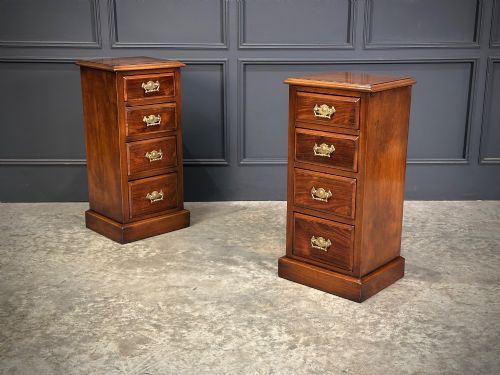
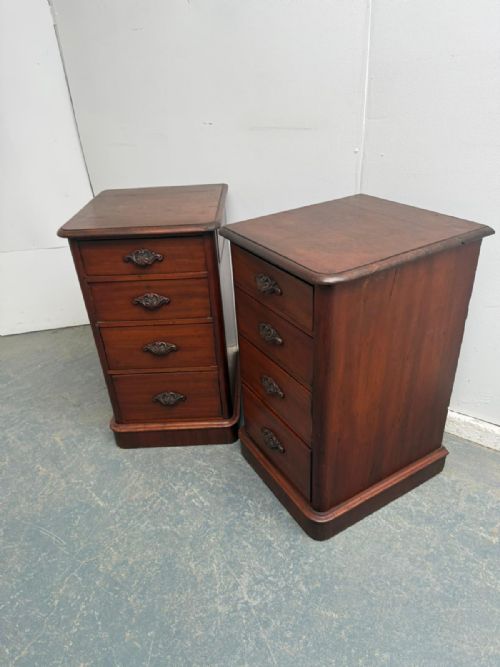
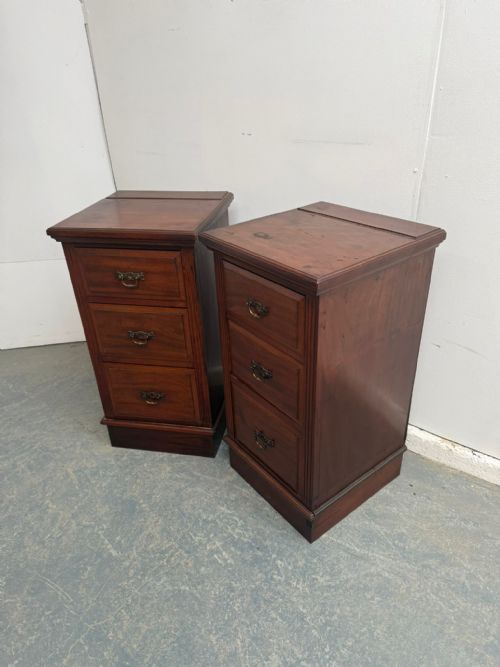
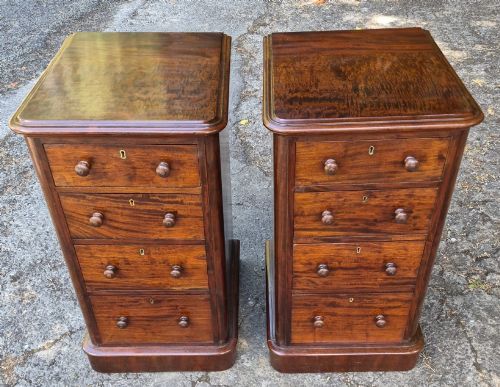
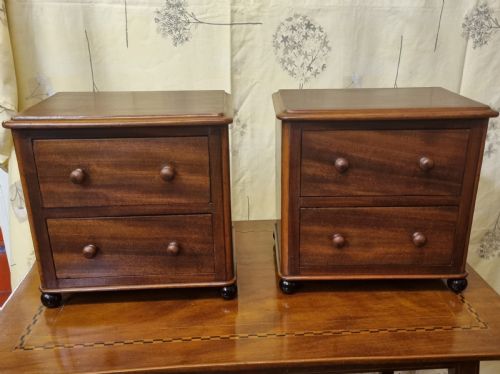
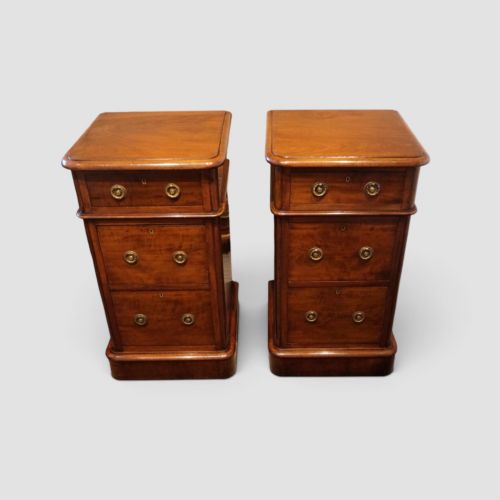
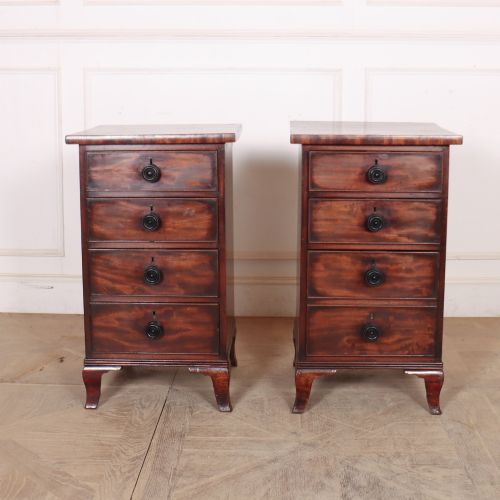
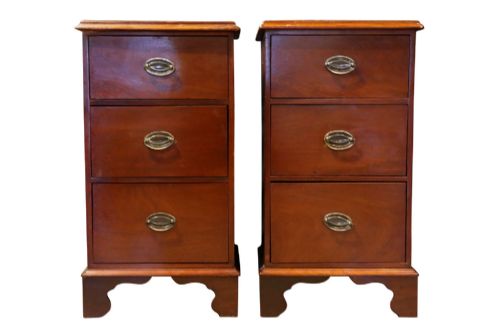
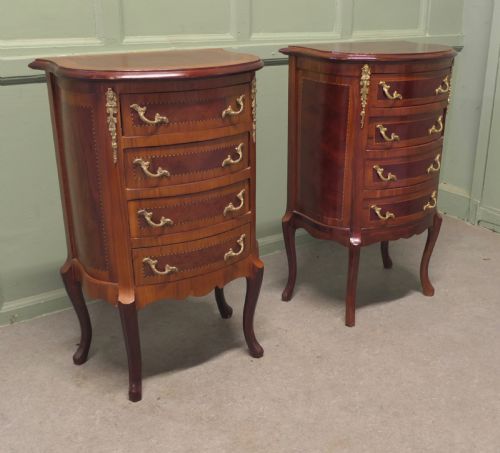
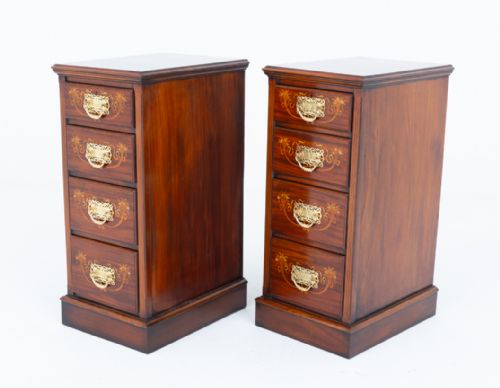
These pair small mahogany cabinets bring matching timber and proportions to bedside tables and side storage.
Pair Small Mahogany Cabinets
When you search for pair small mahogany cabinets, you encounter matched sets intended for bedsides, lamp tables, and compact storage. The most common forms on this page are Victorian and Edwardian bedside chests, often fitted with three or four drawers.
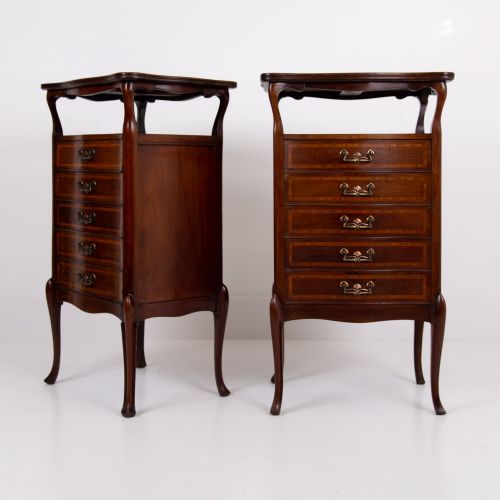
The selection extends from Georgian and Regency prototypes down to later twentieth-century interpretations. Beyond standard bedside tables, the listings include specialised pieces such as apothecary chests, small side cupboards, and tabletop specimen cases.
Makers and workshops from the nineteenth and early twentieth centuries produced these items in symmetrical pairs to flank beds or focal points in sitting rooms. Their modest footprints and timber surfaces suit modern interiors seeking period utility.
How they were made
Makers utilised solid mahogany alongside flame mahogany veneer to achieve rich timber grain across drawer fronts and top surfaces. Secondary woods provided structural stability within carcases and drawer linings.
Cabinetmakers incorporated decorative stringing and banding in lighter timbers such as boxwood and satinwood. Brass handles, key escutcheons, and occasional leather inserts completed the hardware and detailing.
Construction methods relied on traditional dovetail joints for drawers and panelled backs for stability. Wax finishes were applied to nourish the wood and create a subtle lustre.
Homeopathic medicine chests disguised as unassuming bedside drawers reveal that Victorians liked their remedies kept close at night.
What varies in quality
The balance of a matched pair determines much of its standing, as minor discrepancies in timber grain or height reveal whether pieces started life together or were later associated. Crispness in the inlaid boxwood or satinwood stringing also separates standard production from finer cabinet work.
Depth of colour and original surface patination distinguish untouched examples from those stripped or heavily refinished. Well-executed drawer construction with tight dovetails points to competent workshop origin rather than hurried manufacture.
Edwards and Roberts
The Pair Small Mahogany Cabinets Glossary
- Mahogany
- A durable tropical hardwood prized for its reddish-brown colour and stability. It forms the primary timber across these nineteenth and twentieth-century pieces.
- Flame mahogany veneer
- A thin slice of wood cut from the fork of the tree where branches meet. It creates a distinctive, flickering flame pattern on drawer fronts.
- Satinwood
- A pale, lustrous exotic timber used for contrasting inlay and stringing. It provides bright detail against darker mahogany surfaces.
- Boxwood
- A dense, pale yellow wood utilised for fine stringing lines and geometric borders. Craftsmen inlaid it into cabinet doors and drawer edges.
- Dovetail
- A traditional interlocking joint used in drawer construction. Its interlocking wedge shape provides enduring strength against daily pulling forces.
Pair Small Mahogany Cabinets: Frequently Asked Questions
Are these cabinets actually matching pairs?
Many sets were manufactured together by workshops to flank a bed or fireplace symmetrically. Others are near pairs assembled later by matching dimensions, timber grain, and period characteristics.
Slight variations in height or handle placement often indicate pieces brought together after initial production. Examining the timber grain helps determine whether two cabinets originated from the same bench.
What periods do these cabinets represent?
The selection spans from the nineteenth century through the Edwardian era and into the early twentieth century. Victorian and Edwardian examples appear most frequently among current listings.
Stylistic influences also stretch back to Georgian and Regency designs, alongside occasional French Louis XV interpretations. Construction details and secondary woods help confirm the actual manufacturing date.
How were small mahogany cabinets used originally?
Bedside chests and nightstands served to hold chamber candlesticks, night lights, and personal items within reach of the bed. Tabletop chests and small cupboards provided secure storage for documents, medical remedies, or collections.
Their compact dimensions allowed them to fit into tight spaces where larger case furniture would prove impractical. Today, buyers utilise them as lamp tables, bedside storage, or accent pieces.
How do I care for antique mahogany surfaces?
Polishing with traditional beeswax maintains the lustre and feeds the aged timber without building up artificial layers. Avoiding direct sunlight and sustained moisture prevents the wood from fading or warping.
Placing felt pads beneath lamps and decorative objects protects the top surface from rings and scratches. Gentle dusting with a dry cloth keeps the grain clear and defined.